Where stores break
Almost always at the product model.
A store that is slow, unsearchable or impossible to update rarely got that way through bad design. It got there through decisions about how products are represented, taken in week one and paid for every month afterwards.
Configuration bolted on with an app instead of built into the catalogue
Every made-to-order merchant gets sold a customiser app early, and they mostly work — until the catalogue grows. Then reporting does not understand the options, inventory does not track them, search cannot see them, and the app is billing monthly for the privilege. The alternative is to model configuration as Shopify variants, which is what we did for Team Concept: age group and size are product options, so one uniform is one product with its whole range underneath it. That is how a catalogue reaches 10,784 variants and stays maintainable.
One product duplicated into forty listings
The other half of the same mistake, arrived at from the other direction. A merchant who cannot model options creates a separate product per combination, and ends up with near-identical listings competing with each other in search, splitting their own reviews and making the collection pages unreadable. Most custom Shopify development USA merchants actually need is not a new theme — it is somebody restructuring the catalogue underneath the one they already have.
Fourteen apps, each solving one thing, all loading on every page
Apps are how a store gets slow, and the slowdown is invisible to the person who installed them because it accumulates a little at a time. Each one adds scripts, each one bills monthly, and two of them usually do the same job. Part of any serious store engagement is an inventory of what is installed, what it costs and what it would take to replace the three worst offenders with theme code that loads once.
Delivered
The American store first, then the rest.
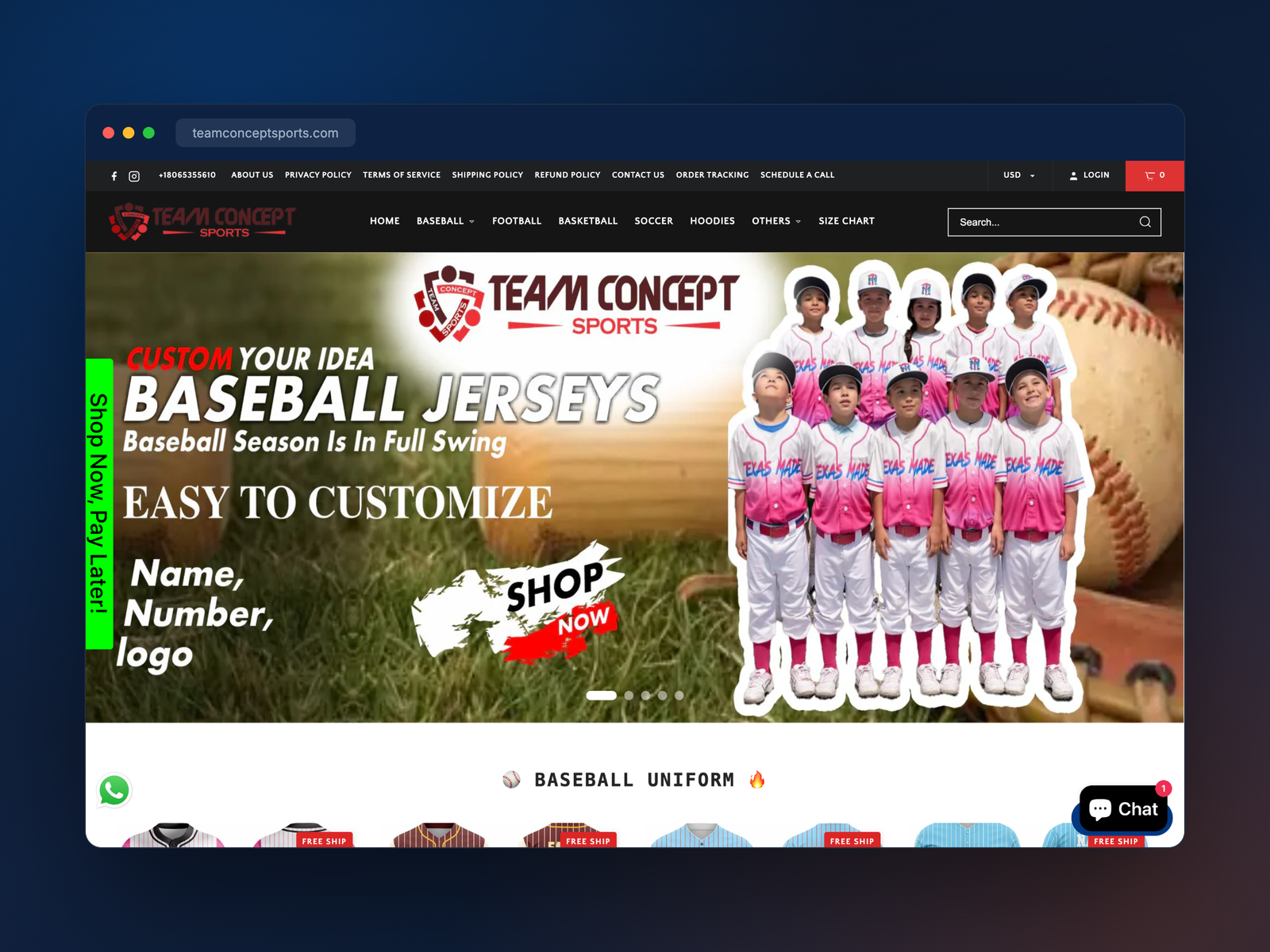
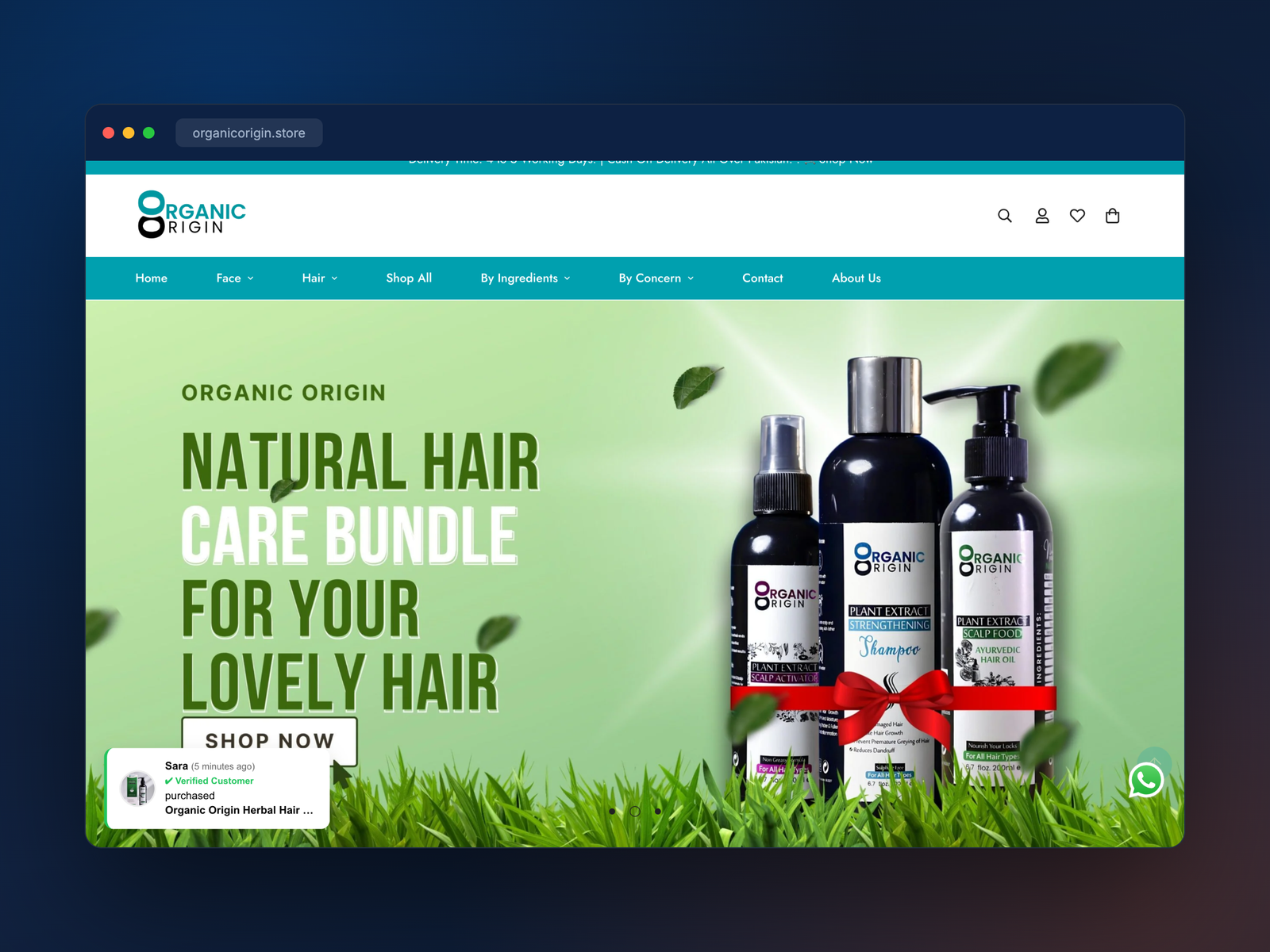

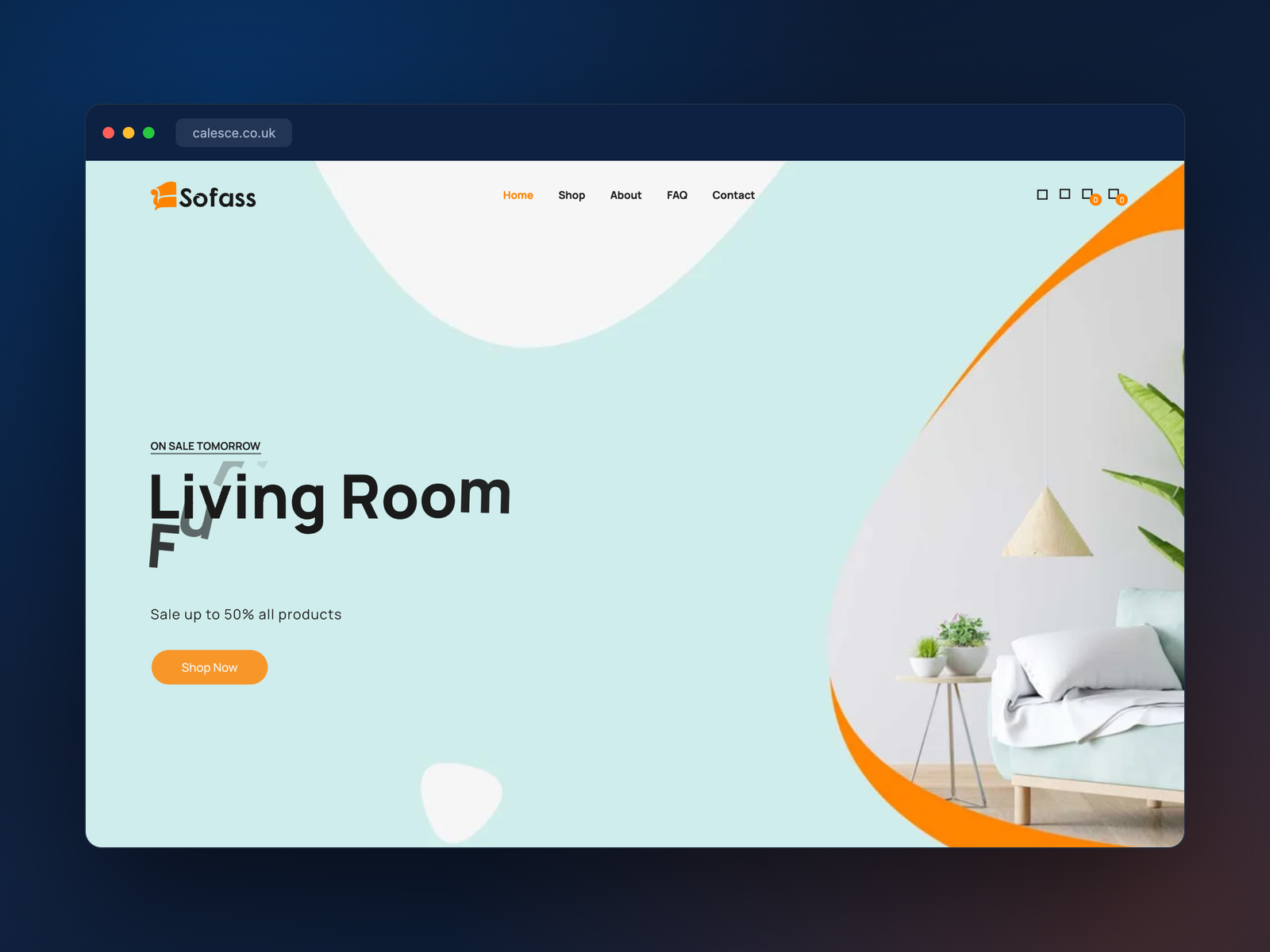
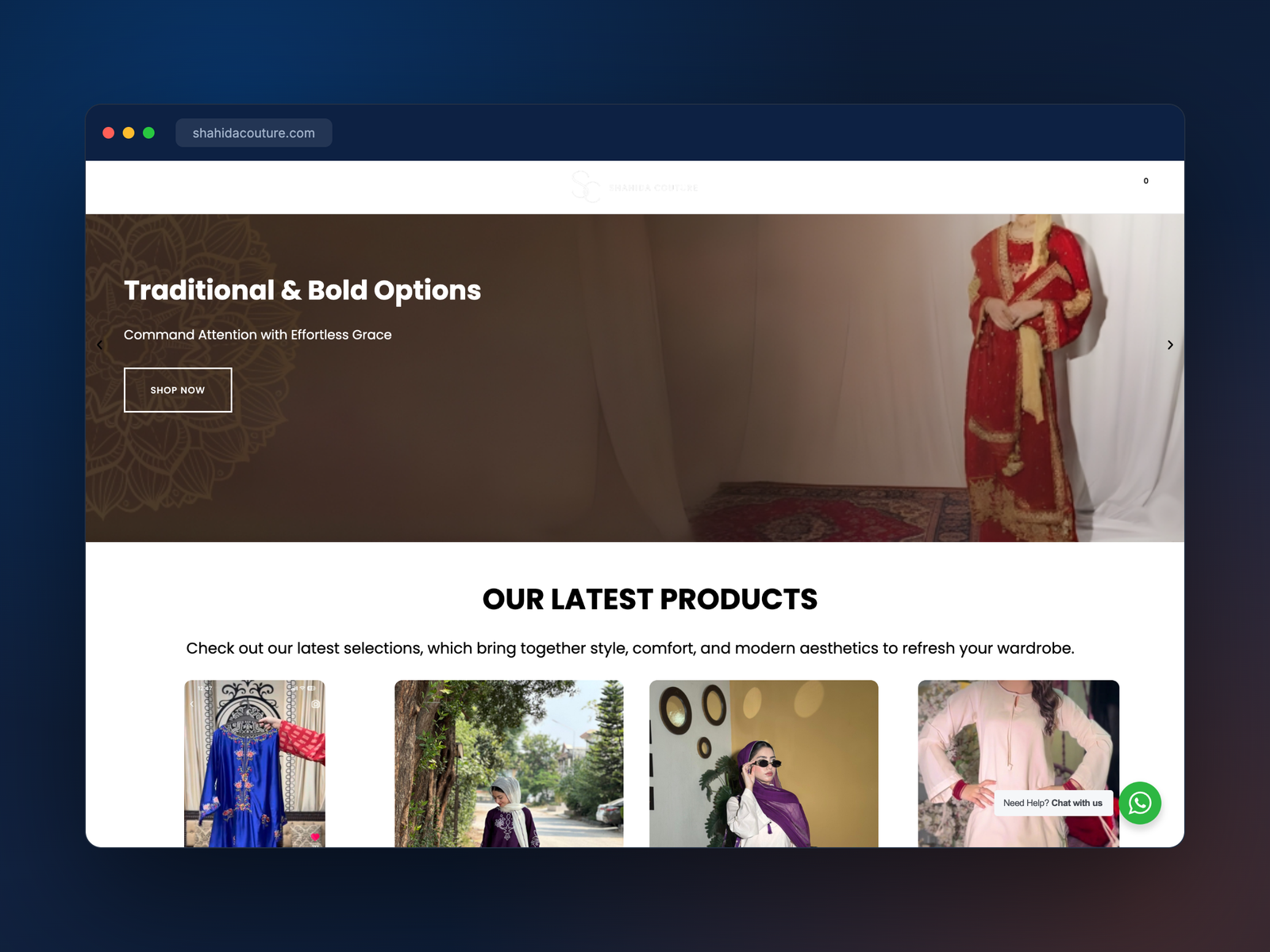
The store you can open and check
teamconceptsports.com sells made-to-order team kit — baseball, basketball, football, soccer and softball. We took it from design to launch in three weeks. Everything below was read off the live store on 12 September 2026 rather than recalled, and you can verify all of it in about two minutes.
What is actually on it
675 products carrying 10,784 variants between them, to a maximum of eighteen on a single item, across 45 collections. Ten of those collections are catalogue-wide — the sports, jerseys by button style, and the bags, hoodies and socks alongside them. Thirty-five are state-level: seven product lines each across Texas, Oklahoma, Colorado, Louisiana and New Mexico. Options are Age group and Size, which is the part that matters — a coach ordering for a roster configures a kit rather than hunting for the right SKU, and Shopify's own reporting, inventory and search all still understand what they are looking at.
What we will not claim about it
Two things. We are not going to tell you which of those 35 state collections were ours and which the client built afterwards, because our records cannot settle it and the flattering version would be the easy thing to write. And an older version of this case study asserted a specific accelerated checkout was in use; it is not detectable on the storefront today, so it has been removed rather than repeated. A Shopify ecommerce agency USA merchants can trust is one that takes claims out when they stop being checkable, not one that leaves them in because nobody usually looks.
What it demonstrates that a screenshot cannot
The store grew from what we handed over to what is there now with no developer on retainer. That is the single hardest thing to fake and the thing most worth knowing about a build: it was handed over completely enough that the client has been running and extending it since. Our other published stores are Pakistani — Organic Origin and Elodie on Shopify — and our British ecommerce delivery is Calesce on WooCommerce. We have exactly one American Shopify build and it is this one.
Related, and deliberately separate
The neighbouring problems have their own pages.
Coming off another platform
Replatforming from WooCommerce, Magento or BigCommerce without losing URLs, history or search visibility.
Traffic that is not converting
Where the money is once the store works — checkout, product pages and the arithmetic of testing honestly.
Weighing a New York agency
The comparison page for buyers deciding whether an agency in their own timezone is worth the difference.
Beyond one platform
Choosing between Shopify, WooCommerce and something bespoke — with the sales tax and shipping problems attached.
How it runs
You see the price at step two.
Store teardown
Free, written, inside 48 hours. What is slowing it down, what the apps are costing and what the catalogue structure is doing to search.
Scope and fixed price
Every template, every app decision and the product model, written down before anyone starts.
Build overnight
Work happens on a development store or a theme preview. You review at the end of your day; the next version is there in the morning.
Launch and hand over
Store admin, theme, domain and every app account in your name. You can change agency without asking us for anything.
Money
How we quote store work.
Fixed-scope build
A new store or a rebuild. One written scope covering templates, the product model and the app list, one price in dollars, inside 48 hours of the call.
- ✓Free teardown first
- ✓App costs listed per month
- ✓Out-of-scope stated explicitly
Catalogue restructure
For merchants whose store works but whose products are modelled wrong. Usually the highest-return work available and rarely what people arrive asking for.
- ✓Variant model rebuilt
- ✓Redirects mapped before launch
- ✓No listings lost in search
Ongoing store work
Monthly, for merchants shipping changes continuously. Scoped after a teardown, cancellable with notice, and reported against what actually shipped.
- ✓Cancel with notice
- ✓Named queue, agreed monthly
- ✓Nothing bundled you did not ask for
There is no rate card on this site, in any currency, deliberately. What is fixed is the process: free teardown, written scope, one price, agreed before anyone starts.
FAQ
Straight answers.
Built and run by us
Our own products, in production.
More from GOFTECH
Where to look next.
Shopify Development for UK Merchants
A Shopify development agency UK merchants can check: three published builds, and a free store teardown naming what is slowing yours down.
Shopify for New York Merchants
Weighing a Shopify agency New York merchants can visit against an Islamabad studio: what proximity buys, and where local plainly wins.
Shopify Agency in Islamabad
A Shopify agency in Islamabad with a real office on Main PWD Road. Store builds, rescues and cash-on-delivery order flows — come in person.