AI & Automation★ Featured
AI automation for DTC operations: what pays back
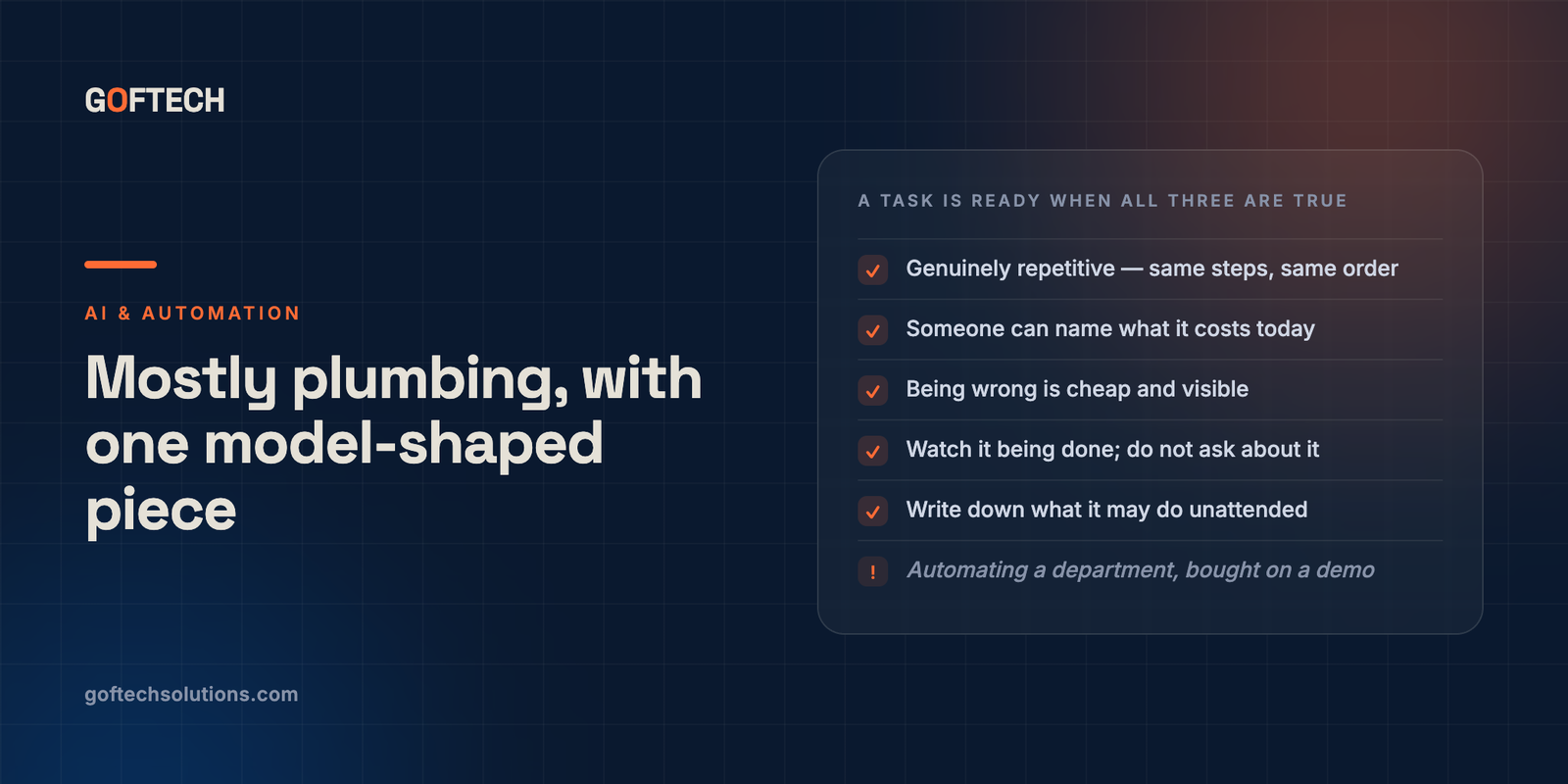
Most of what pays back is not AI. It is ordinary automation with one model-shaped piece in the middle — and knowing which piece that is saves most of the budget.
The blog
Tactical posts from our engineers, designers, and media buyers — what's working in DTC and SaaS right now, what's not, and the playbooks we're using on real client accounts.
One question accounts for most of what a store's WhatsApp inbox receives. Automating that single answer is worth more than a chatbot that tries to do everything.
We are the offshore option, so treat this accordingly. Here is the honest version, including the two situations where you should hire locally and not call us.
Headless buys you control over the storefront and costs you most of the platform's conveniences. For the large majority of stores that is a bad trade, and here is how to tell whether you are the exception.
Products and customers migrate fine. What breaks is everything built on top of them — coupon rules, custom fields, builder content and any product type Shopify does not model.
A migration is decided before anything moves, by the redirect map. Everything else is recoverable; rankings built over years are not.
A tool will hand you 400 issues. Perhaps six of them matter. The skill in a technical SEO audit is not finding problems — it is ranking them.
Shopify does several things by default that generate duplicate URLs. None of them are bugs, all of them are fixable, and most stores have never touched any of them.
If you cannot name the one assumption that would sink the business if it were wrong, you are not scoping an MVP — you are scoping version one and calling it something cheaper.
The honest test is not which technology is better. It is whether your app leans on anything platform-specific — and for most business apps the answer is no.
The real question is not which platform is better. It is whether anyone is already searching for what you sell — and that has a definite answer you can check in an afternoon.
Most ecommerce SEO advice is general SEO advice with the word ecommerce added. Two problems are genuinely specific to a catalogue, and they are where nearly all the opportunity sits.
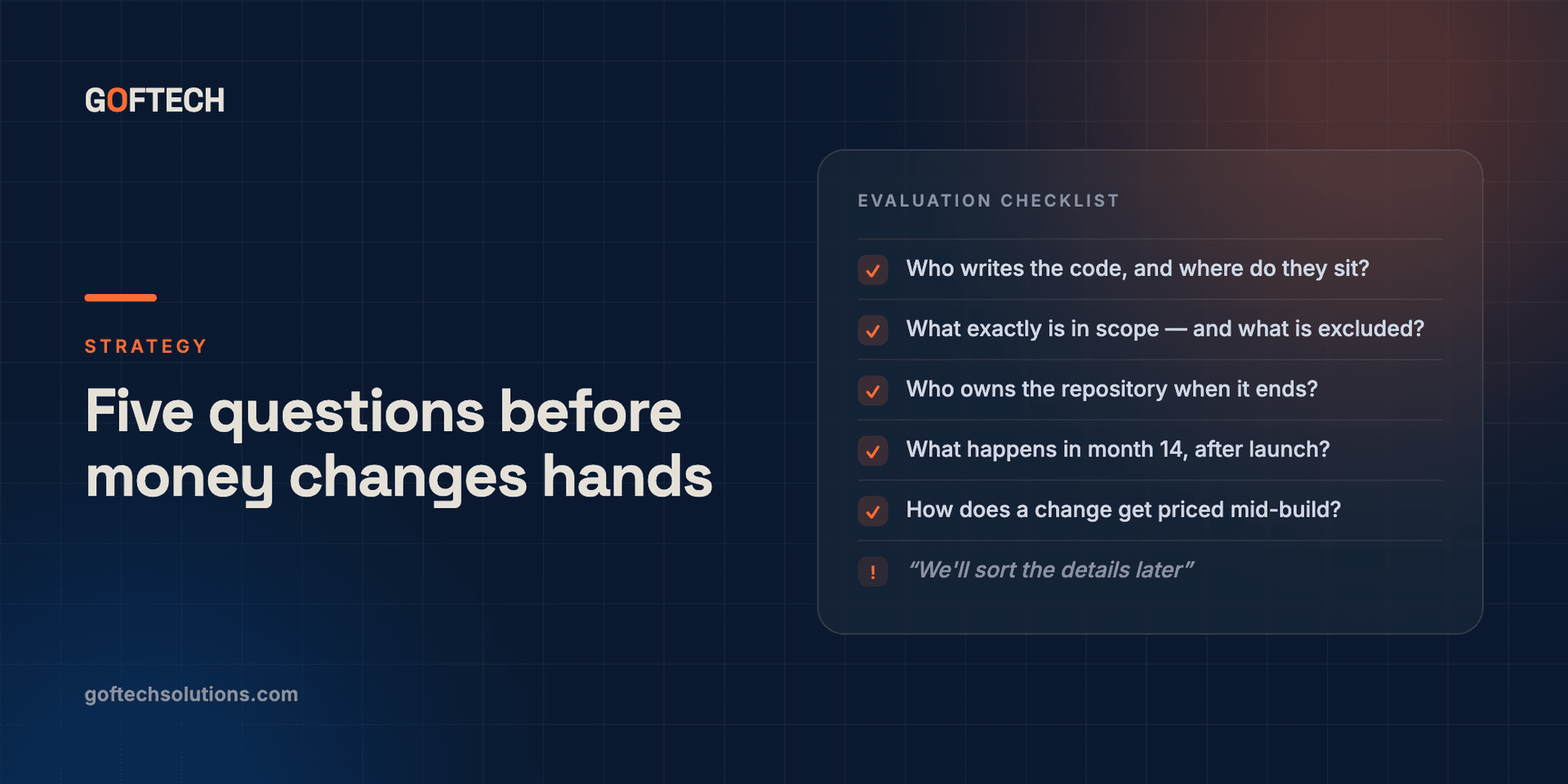
Portfolios are curated and testimonials are solicited. Here are the checks that are hard to fake, including the single request that tells you most about what you are buying.
Two founders describe what sounds like the same product and get quotes that differ by a factor of five. Usually both quotes are honest. Here is what they are disagreeing about.
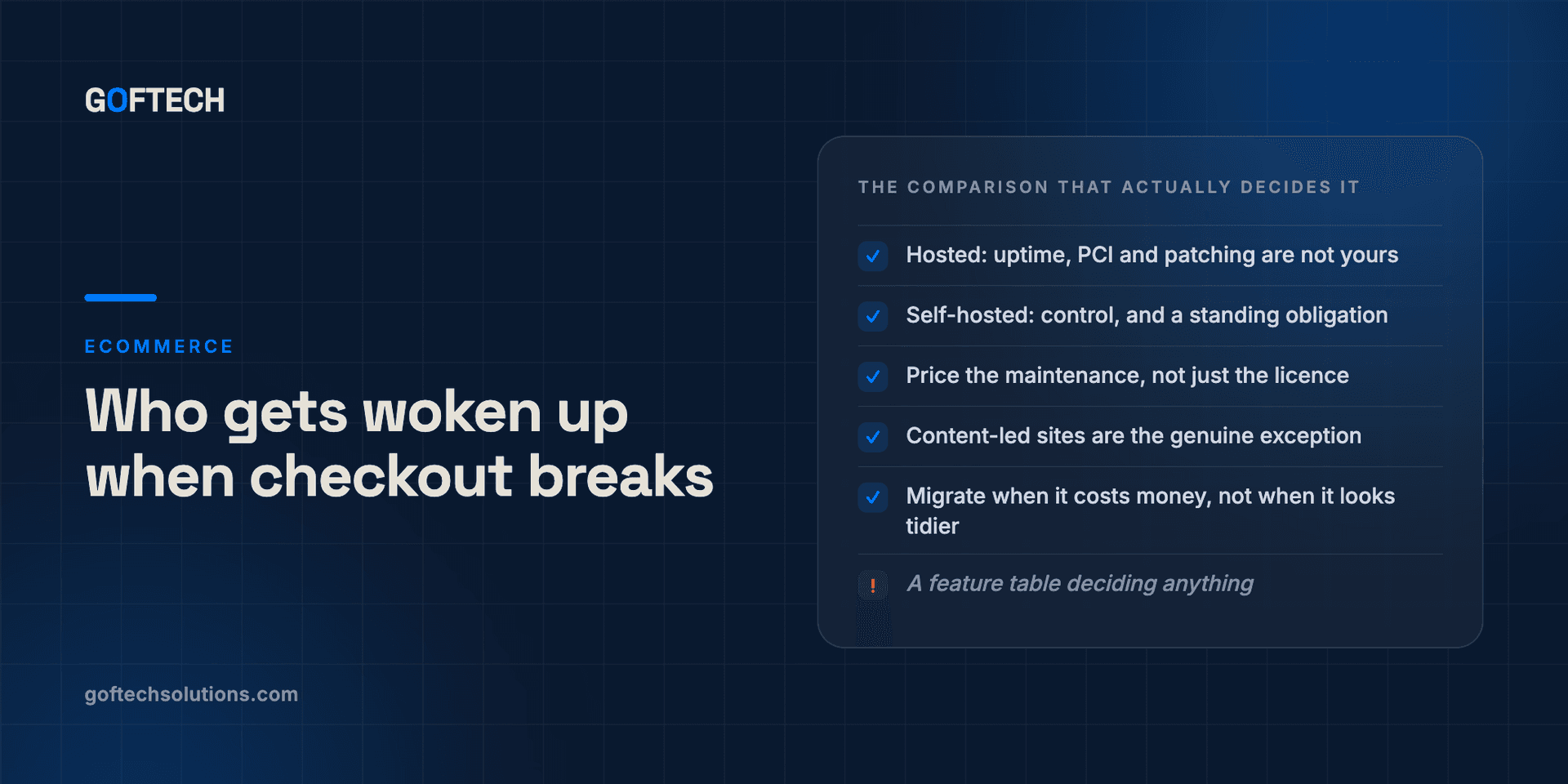
Most comparisons argue about features. The features are close enough that they rarely decide anything. What decides it is who carries the operational burden when something breaks at 2am during a sale.
No published figures, because we cannot verify one — and we are one of the three options, which you should know before reading. Instead: what each of the three prices is structurally made of, and the four questions that make incomparable quotes comparable.
The single biggest cost decision is made before anyone designs a screen: one codebase or two. Here is what that choice is worth, what store review adds, and the recurring costs that nobody puts in a build quote.
The build price is the part everyone compares and the smaller half of what a store costs to own. Here is what sits underneath it — the app stack, the theme decision, the plan tier and the work nobody quotes for.
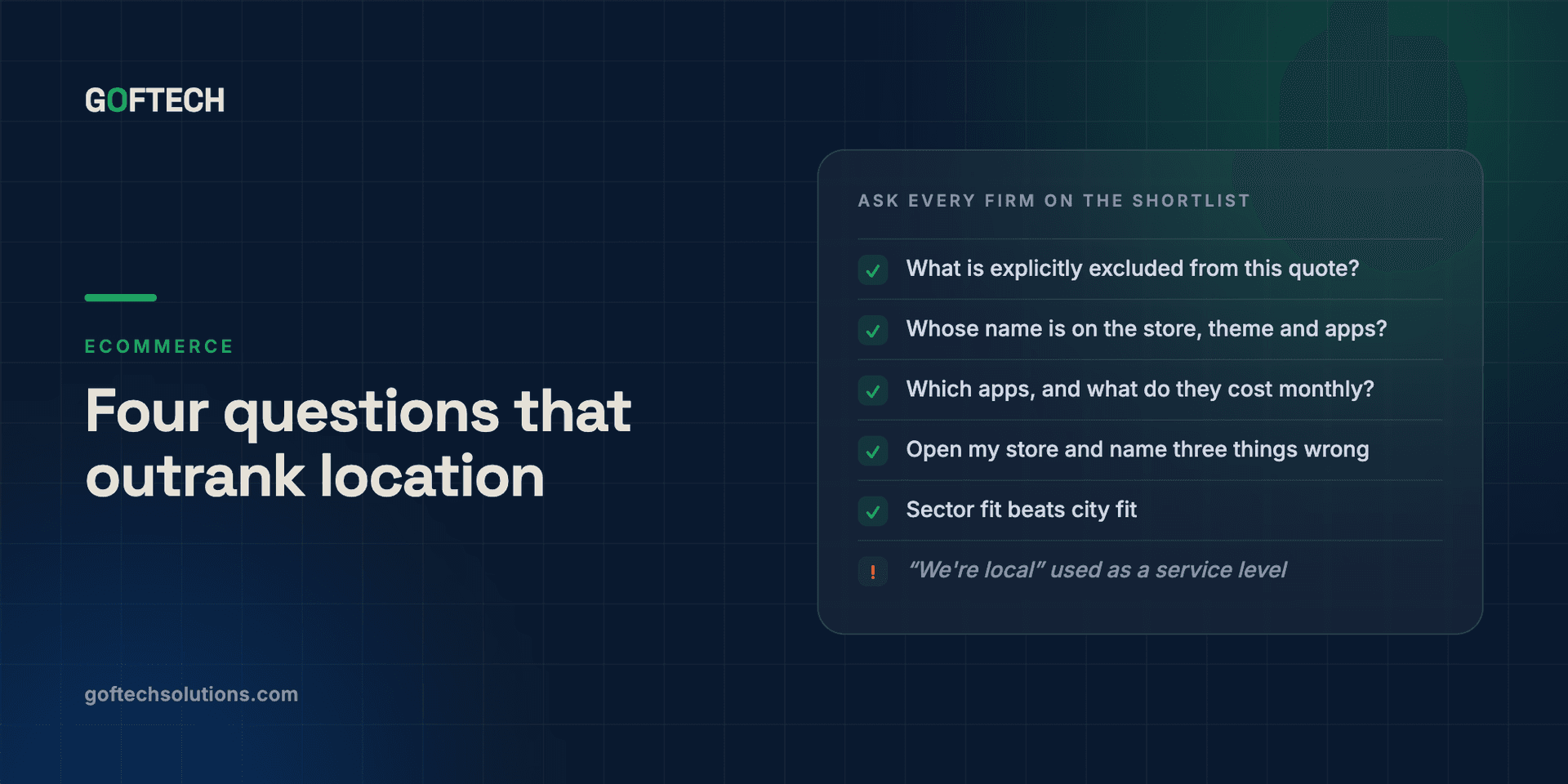
We have no office in either city and no page pretending otherwise. What we do have is a straight account of what a regional agency gives you that a London one does not, when being nearby is worth the money, and the four questions that outrank location entirely.
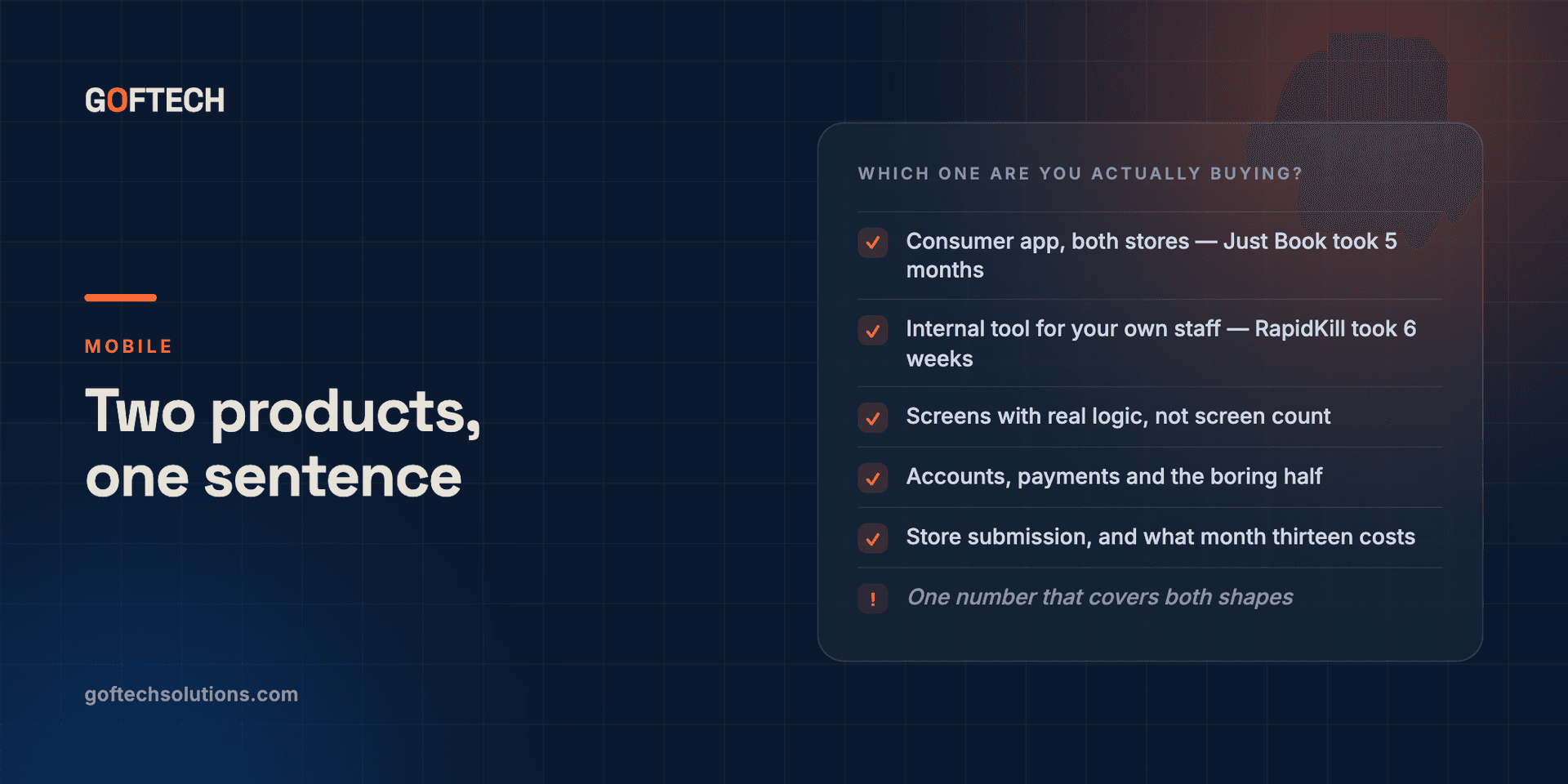
Most people asking this question have not yet established whether they need a consumer app or an internal tool. Those differ by roughly ten times, so any single figure spans the gap and hides it. Here is how to work out which you are commissioning.
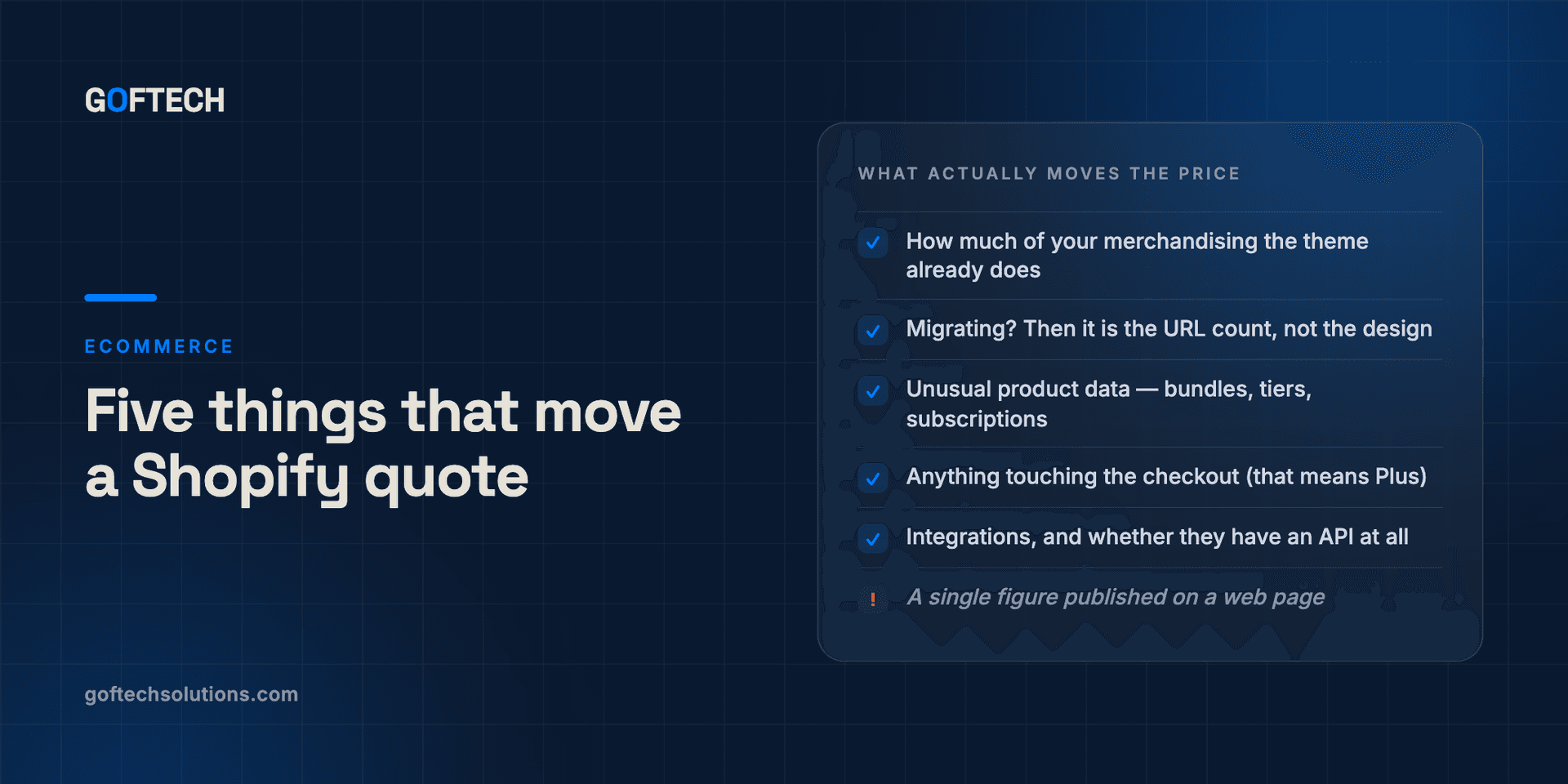
No rate card, because a published number would be wrong for your project or padded to cover everyone's. Instead: the five variables that move a Shopify quote, how to compare three that disagree wildly, and the costs nobody puts in the proposal.
A buyer's guide to picking a development partner in this city: the three non-technical failures that sink most projects, the five questions to ask before you pay anything, and the ownership clause to get in writing on day one.