GOFTECH is a registered software house with the Pakistan Software Export Board, the government body for Pakistan's IT exporters.
Before you commission anything
Most of what gets built bespoke did not need to be.
We turn down more of these than we take, because the honest answer is often a configured off-the-shelf tool. Three tests decide it, and they are worth applying before you brief anybody.
Is the process actually yours?
Invoicing, payroll and accounting are the same everywhere and there is mature software for all three. What is genuinely yours is the bit you cannot explain to an outsider in one sentence — a scoring rule, an approval chain, a pricing table nobody else uses. Build that, buy the rest, and connect them.
Does the spreadsheet actually hurt yet?
A spreadsheet is fine until two people edit it at once, until you need history, or until a number in it is wrong and nobody can say when it changed. If none of those has happened, a build is premature. If all three have, the spreadsheet is already costing more than the software would.
Who runs it after we leave?
A system nobody in your company understands becomes a dependency on whoever wrote it. That is a commercial risk you are taking on, not a technical one, and it is the reason handover here includes documentation written for a different team, not a wiki page written for us.
What gets built
Systems, not brochures.
Internal CRMs
Leads, quotes, follow-ups and reporting in one place, shaped around how your sales actually happens rather than how a SaaS vendor imagined it.
Booking and scheduling engines
Availability, capacity, deposits and cancellations — the four rules that make every booking system different from the last one.
Admin panels behind a storefront
Stock, pricing, orders and dispatch for a store that has grown past what its platform admin can express.
Portals for customers and staff
Role-based access, document handling and approval chains, with an audit trail that survives an argument.
Integrations between what you own
The accounting package, the courier API, the payment gateway and the CRM, wired so nobody re-types anything.
An app on top
When the system needs to be in a hand rather than on a desk, the same backend serves a Flutter build on both stores.
Systems we run
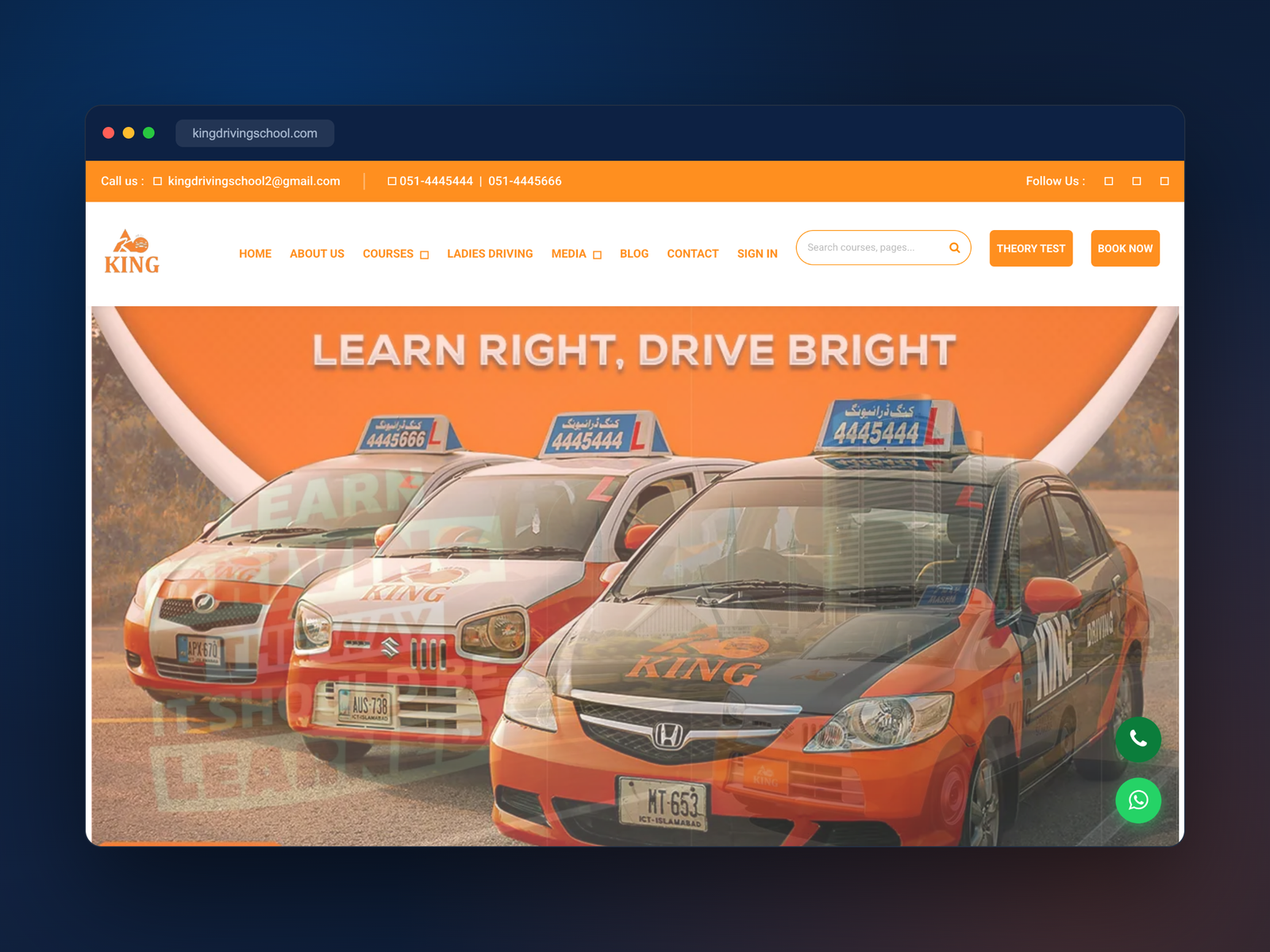
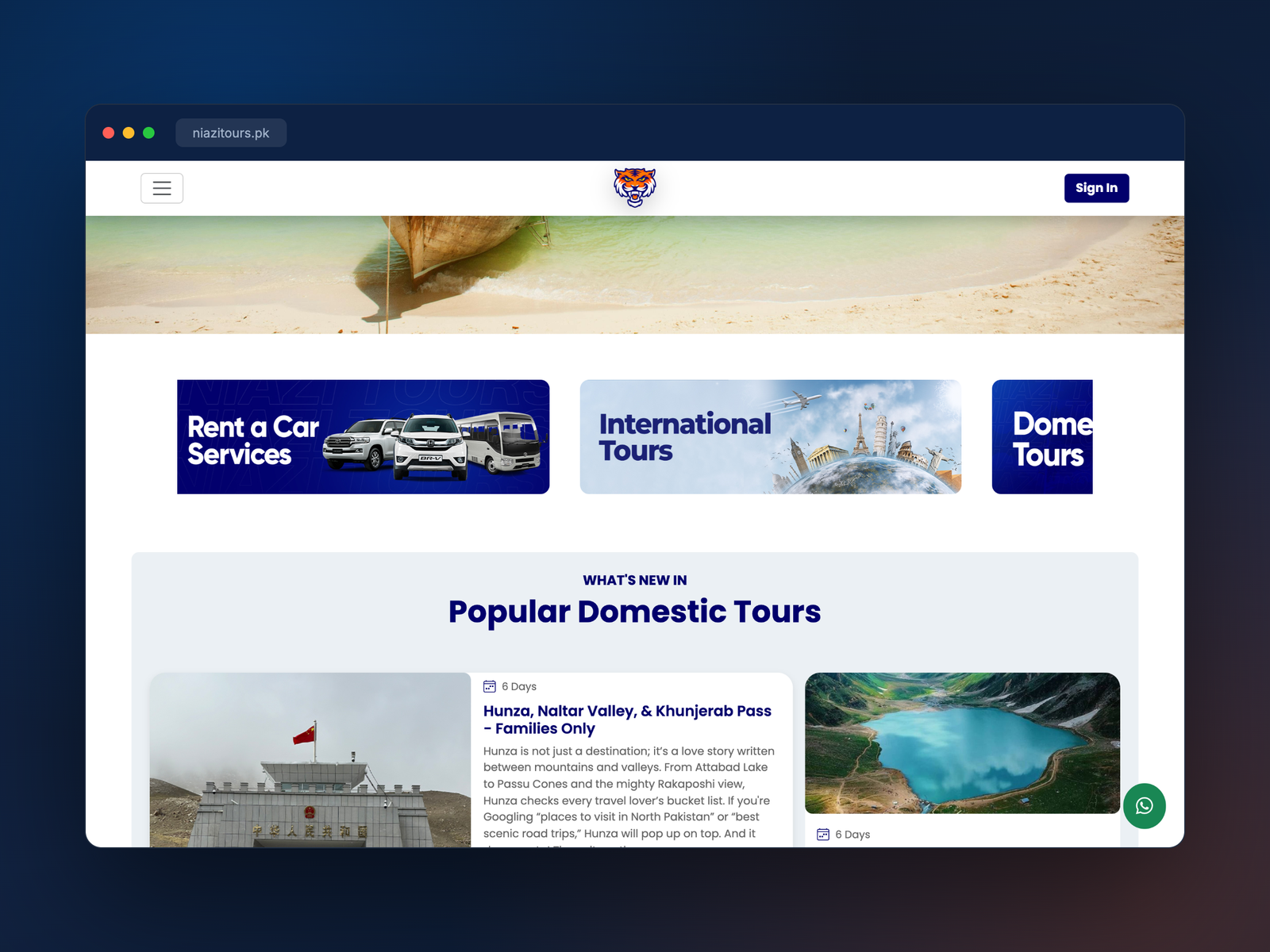
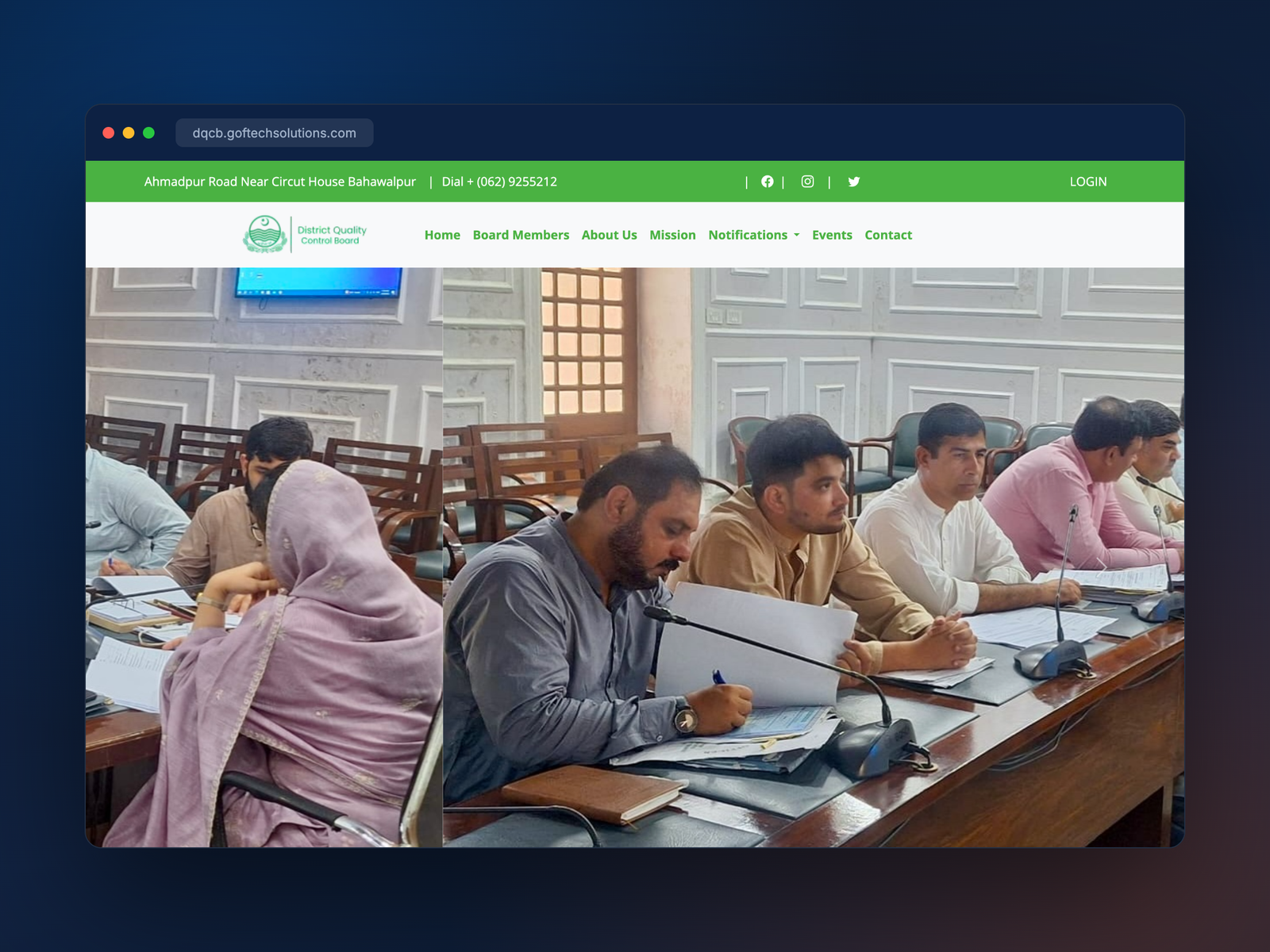
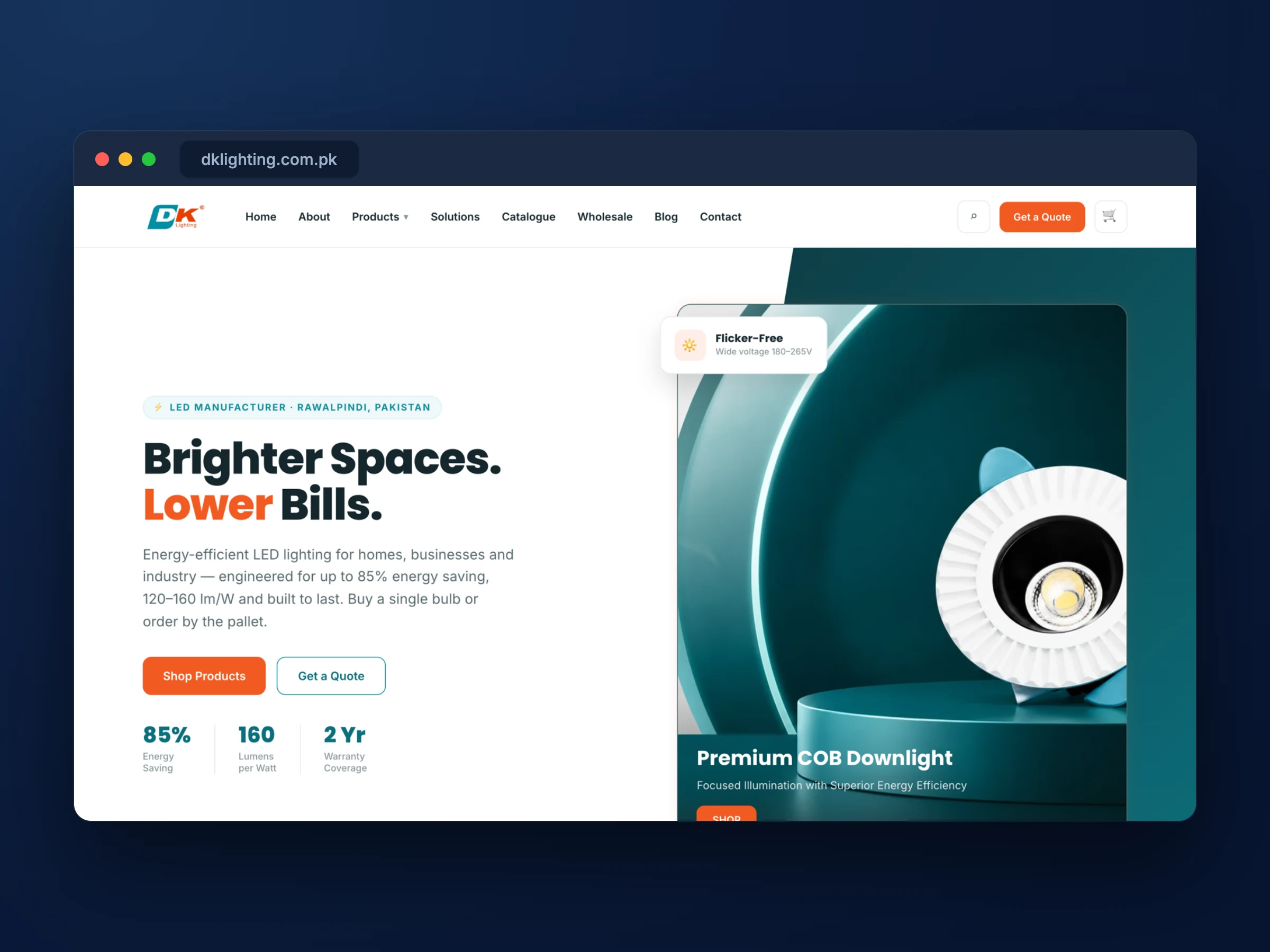
Four builds that are still in daily use.
How a bespoke build is scoped so it does not run away
The failure mode for custom software is not bad code. It is a scope that was never finished being written, discovered halfway through, at which point the choice is to absorb the cost or have the argument. Three things prevent it, and all three happen before anyone opens an editor.
The process gets drawn before it gets built. Every screen, every role, every state a record can be in, and every rule that moves it between states. This is boring and it is where the real requirements surface — usually the exception nobody mentioned because it is obvious to everyone inside the company and invisible to everyone outside it.
Phase one is the part that hurts. Not the login screen and not the dashboard. The King Driving School build started with the student record and the lesson schedule, because that was the spreadsheet that was breaking; the CRM around it now carries over two hundred and thirty thousand records. The Niazi Tours system started with booking and payment for the same reason. A dashboard built first is a dashboard with nothing real to show.
You watch it from week one. A staging URL, updated as it goes. The single most expensive thing in this category is a three-month build revealed at the end, because the misunderstanding that could have been corrected in week two has by then been built on top of.
Choosing a firm for this in Pakistan
Custom software development in Pakistan is where the gap between the best and worst firms is widest, because the output is unverifiable to a non-technical buyer for months. Two questions cut through it. Ask to see a system they built that is still in daily use two years later — a lot of portfolios are launches, not survivors. Then ask who owns the repository. If the answer involves an escrow arrangement, a licence, or anything other than "you do, from day one", you are being sold a dependency rather than a system.
The third question is about the government and enterprise end of this market specifically: ask whether they have delivered under a procurement process, with the documentation and revision cycles that come with it. The District Quality Control Board build ran that way. It is a different discipline from commercial work, and firms that have not done it tend to discover that mid-project.
How it runs
Four steps, and the price lands in the second one.
Process mapping
A session with the people who do the work, not only the person paying. Every screen and every state, written down and agreed.
Scope and fixed price
One document, one number, sent within 48 hours. Phases are priced separately so you can stop after phase one if it is enough.
Build in phases
The painful part first, on a staging URL you can open any day. Each phase ends with something usable rather than something demonstrable.
Handover and documentation
Repository, server, database and credentials in your name, plus a technical document written for the team that replaces us.
Money
Phased, so you can stop.
Discovery and scope
The process map and the written specification, delivered as a document you own outright. If you take it to another firm afterwards, that is a legitimate outcome and it is priced as one.
- ✓Every screen and state listed
- ✓Yours to keep either way
- ✓Fixed, quoted up front
Phased build
Each phase scoped, priced and approved on its own. Phase one is the part of the business that is currently breaking, so the system pays for itself before it is finished.
- ✓Stop after any phase
- ✓Staging URL from week one
- ✓Fixed price per phase
Support and iteration
Monthly, after launch, for the changes a live system always needs. Optional — the handover is complete whether or not you take it.
- ✓No lock-in
- ✓Your infrastructure, your accounts
- ✓Cancel with notice
No figures appear anywhere on this site. For bespoke work a published rate would be meaningless — the same brief costs three different amounts depending on how many exceptions your process has — so the quote for custom software development in Pakistan follows the scope document rather than preceding it, and arrives within 48 hours of the mapping session.
FAQ
The questions that actually get asked.
Built and run by us
Our own products, in production.
More from GOFTECH
Where to look next.
Custom Software Development for UK Operators
Custom software development UK operators can maintain after we leave: booking platforms, CRMs and portals. Two live British platforms, full…
Custom Software Development for US Operators
Custom software development USA operators can maintain after we leave: booking platforms, CRMs and portals. Seven published builds…
Shopify Development in Pakistan
A Shopify development agency in Pakistan building stores around how buyers here pay: cash on delivery, third-party gateways and courier-led…