GOFTECH is a registered software house with the Pakistan Software Export Board, the government body for Pakistan's IT exporters.
Where the money actually leaks
Your losses are after the order, not before it.
Sellers arrive asking for more traffic. In the accounts we tear down, the expensive problem is usually somewhere between the order being placed and the parcel being paid for.
Return to origin
Every undelivered cash-on-delivery parcel costs you the outbound leg, the return leg, the packaging and the time. It appears in no platform dashboard, so most sellers cannot say what their rate is — and the ones who start measuring it by product, by city and by traffic source almost always find one segment that is losing money on every order.
Orders that were never real
Wrong numbers, joke orders and duplicate submissions are a normal share of unconfirmed cash-on-delivery volume. Confirming before dispatch — by WhatsApp, automatically, within minutes — removes most of it. Doing it by hand does too, until you get busy, which is exactly when it stops happening.
Working capital tied up in transit
With prepayment the money arrives before the stock leaves. With cash on delivery it arrives days or weeks later, through a courier's settlement cycle. That gap is a real financing cost that shapes how much stock you can hold, and a store built without it in mind will happily sell you into a cash crunch.
What a store here needs
The six things worth building properly.
Order confirmation that runs itself
An automated WhatsApp confirmation within minutes of the order, with a reply that updates the order status. The highest-return thing on this list.
Courier integration
TCS, Leopards and M&P booked from the order, with tracking pushed to the customer and status coming back into your admin.
Payments, local and card
PayFast or a bank gateway alongside cash on delivery, with a small prepayment incentive if you want to shift the mix.
Return-to-origin reporting
Delivery outcome tracked against product, city and acquisition source, so the loss-making segment is visible rather than averaged away.
Speed on a mid-range phone
Page weight treated as a revenue number, tested on the devices your buyers actually hold, not on the office connection.
The platform decision, honestly
Shopify or WooCommerce, argued from your volume and your team rather than from what we prefer to build.
Stores we launched
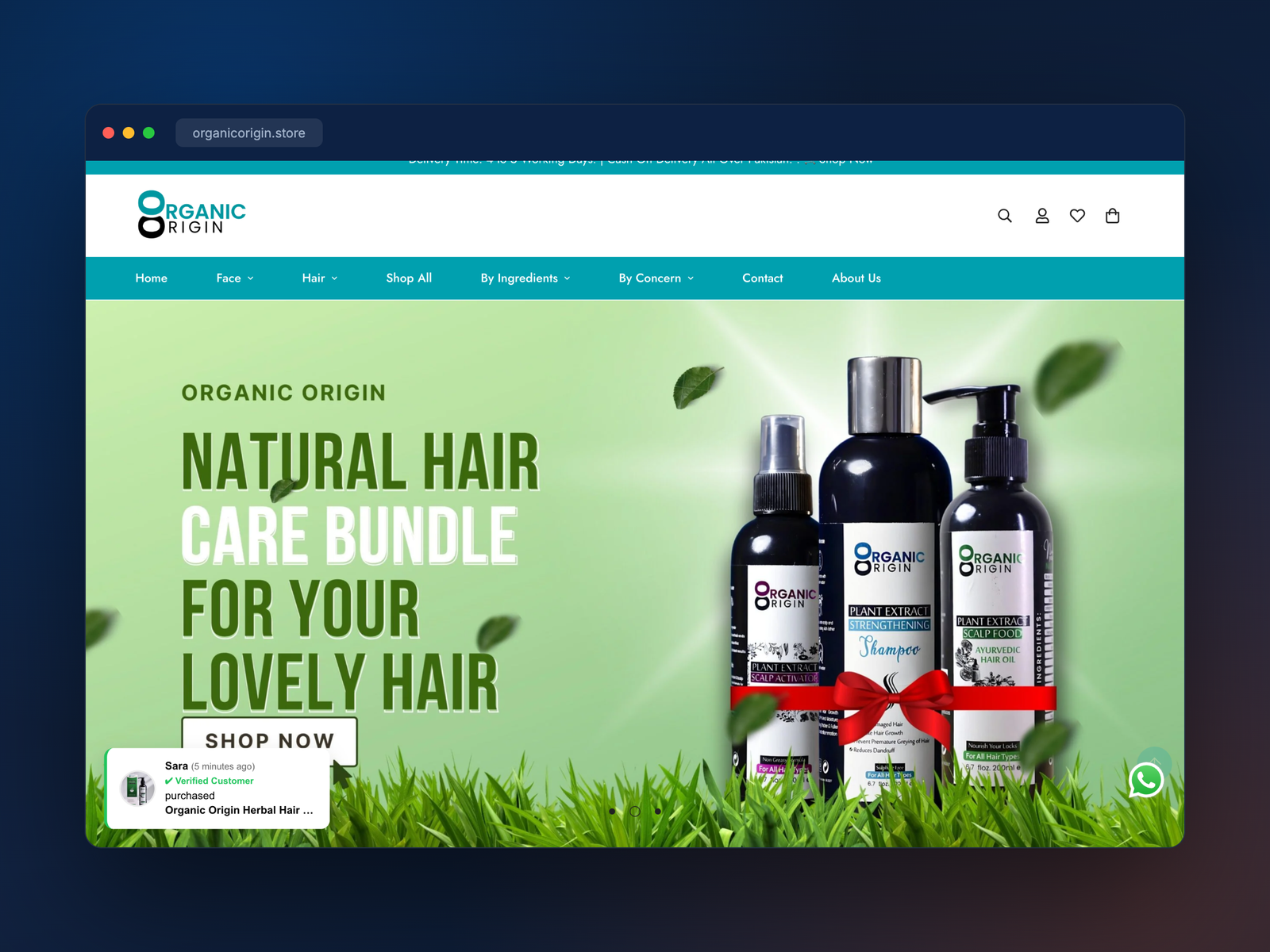
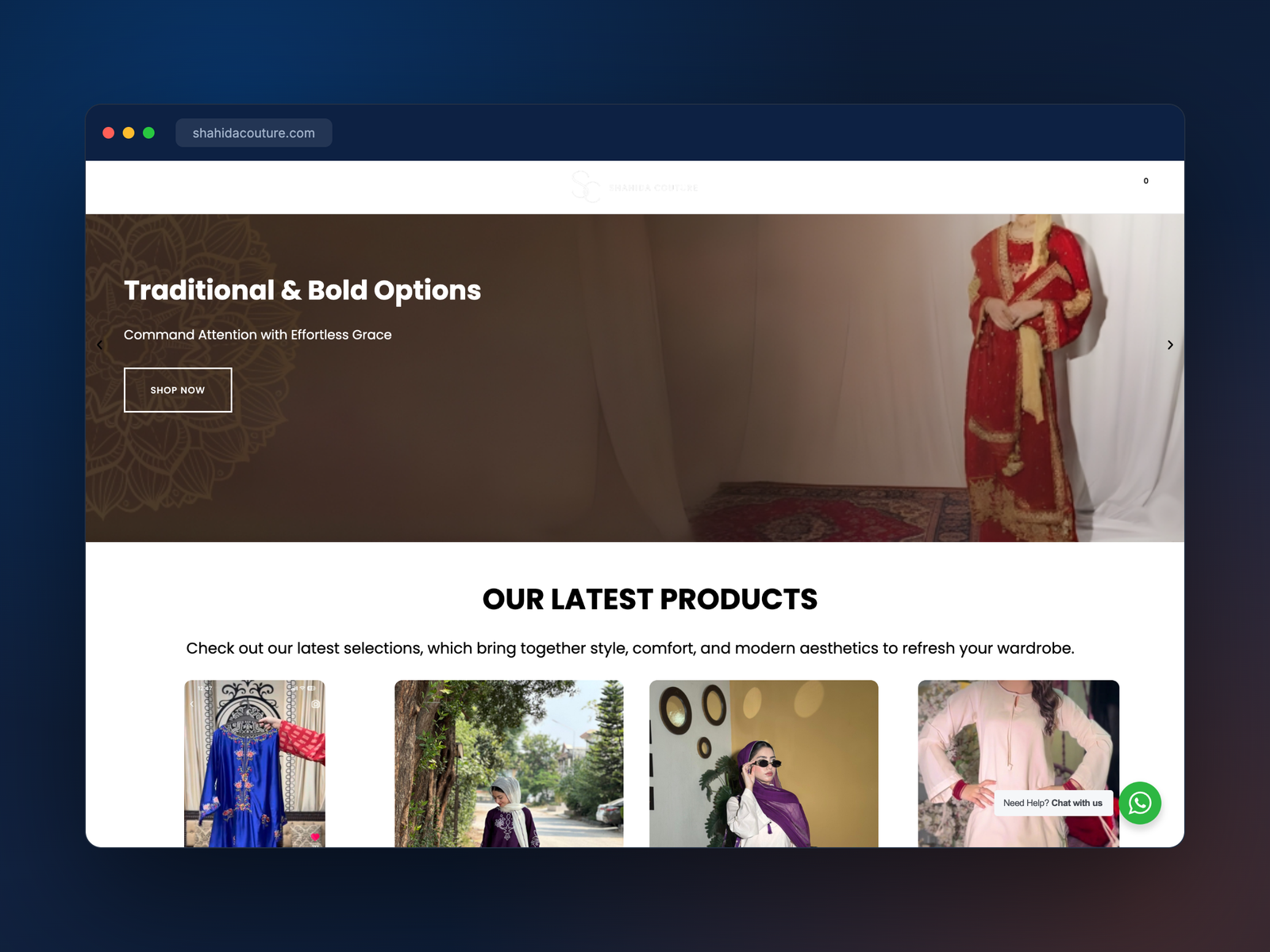
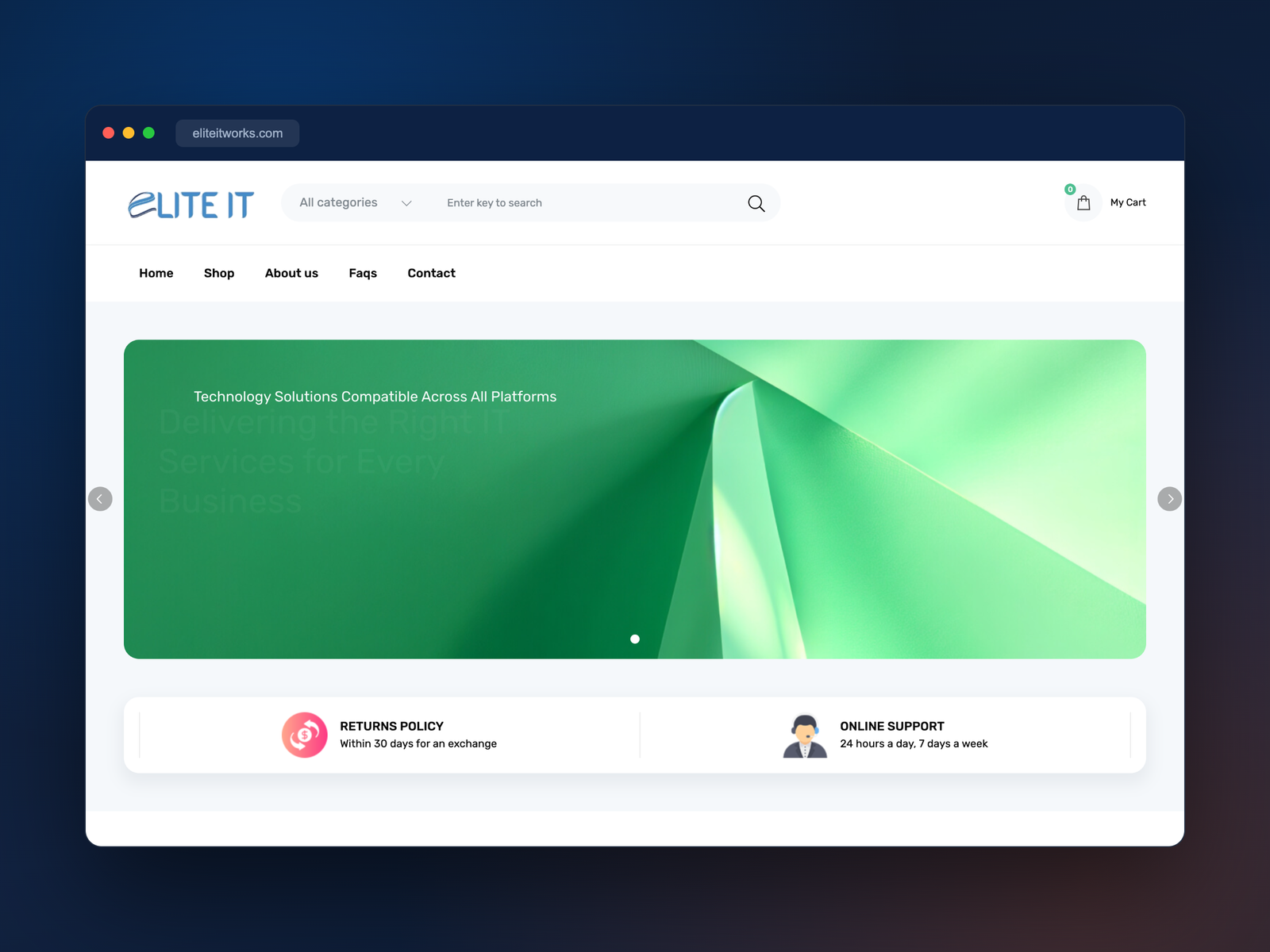
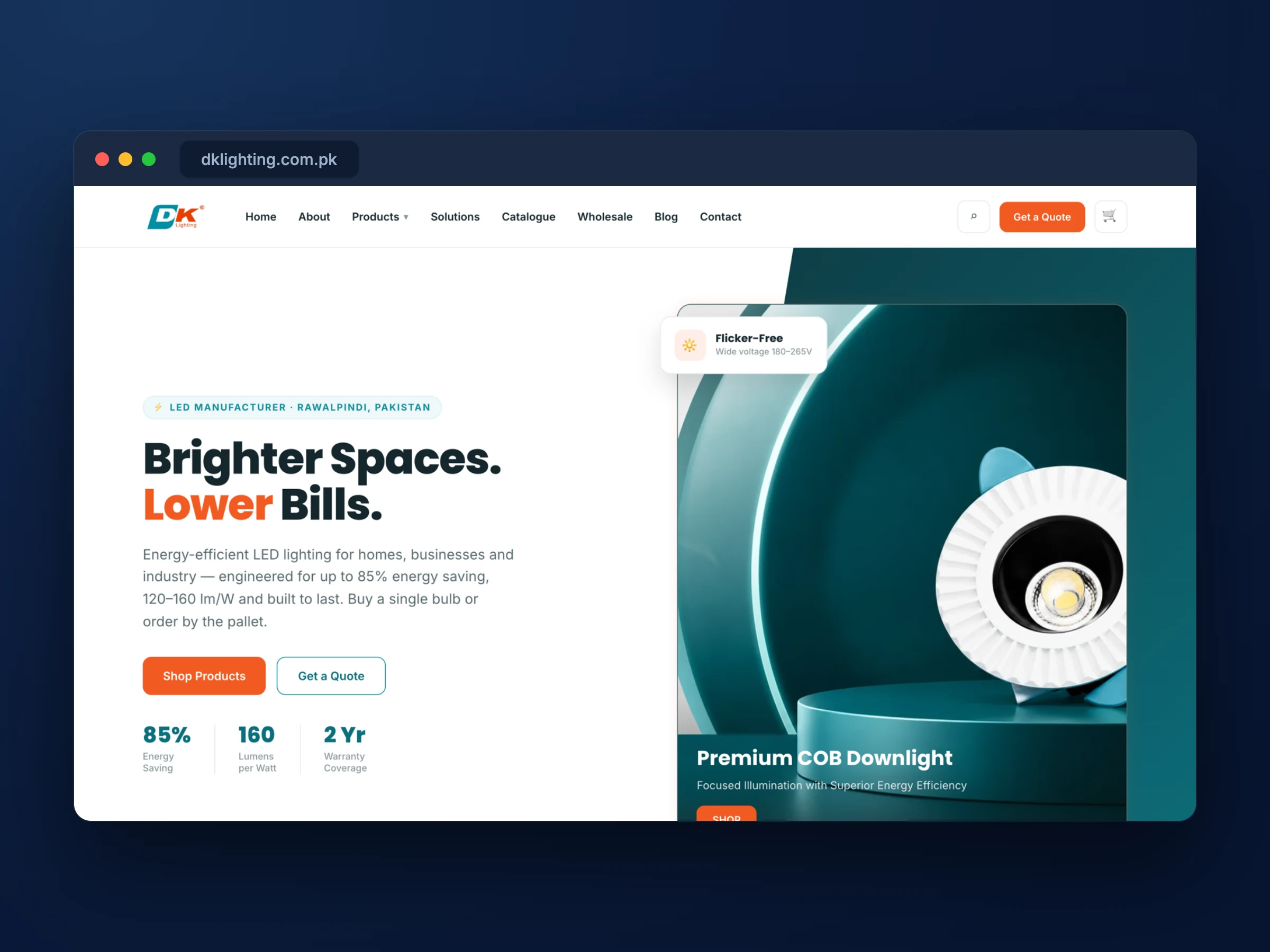
Six shops, two platforms.


The confirmation step, in detail
If you take one thing from this page, take this one, because it is cheap and it is the difference between a store that grows and a store that grows its courier bill.
An unconfirmed cash-on-delivery order is a request, not a sale. The gap between the two is filled with wrong phone numbers, second thoughts, duplicate submissions and the occasional deliberate waste of your time. Every one of those becomes a real cost the moment it goes into a courier bag.
So the order flow gets one extra step. Within minutes of checkout, an automated WhatsApp message repeating what was ordered, the total and the delivery address, asking for a confirmation. Replies update the order automatically; non-replies get one follow-up and then sit in a queue somebody looks at once a day rather than being dispatched by default. It is not sophisticated. It routinely removes a meaningful share of undelivered parcels, and it is the reason the automation page is linked from the middle of a page about building stores.
Then measure what the courier tells you
Couriers return a delivery outcome for every parcel. Most stores never join that back to anything. Joined to product, city and traffic source it answers questions no analytics package can: which product gets ordered impulsively and refused at the door, which city has a delivery problem rather than a demand problem, and which advertising campaign is producing orders that never get paid for. That last one changes where you spend, and it is invisible until it is built.
Store and demand from the same team
People searching for an ecommerce marketing agency in Pakistan usually want one accountable party for the store and the traffic, which is a reasonable thing to want — a campaign is capped by the page it lands on, and an agency that only buys ads has no way to fix the cap. We do run search and paid for stores, from the same office. One caveat, stated plainly because it is the sort of thing firms hide: the campaign write-ups for our Pakistani growth clients are still in draft and not published, so the proof on this page is Build proof. The account teardown is free and it is the honest way to judge whether the growth side is any good, rather than a case study you cannot verify.
How it runs
Order lifecycle first, storefront second.
Order-flow session
What happens from checkout to cash in your account, including confirmation, dispatch, delivery failure and returns. Half a day, and it defines the build.
Platform and fixed price
The platform argued from your volume and team, then one written scope and one number, sent within 48 hours.
Build against a real catalogue
Your actual products and prices on a live preview from week one, because catalogue reality is where store builds get complicated.
Launch and hand over
Store, gateway, courier accounts and domain in your name, with a walkthrough of the admin and the reports.
Money
Priced from the order flow.
First store
A clean, fast store with payments, cash on delivery and confirmation built in from launch rather than added after the first bad month.
- ✓Confirmation flow included
- ✓Local gateway configured
- ✓Courier booking wired in
Store plus operations
For sellers past the point where a platform admin is enough: stock, dispatch, delivery outcomes and reporting in a system built around your process.
- ✓RTO reporting by segment
- ✓Admin panel built to fit
- ✓Integrations with what you run
Fix what is live
An existing store losing money somewhere between the order and the payment. Written teardown first, then a fixed price for the work worth doing.
- ✓Order-flow audit
- ✓Checkout and speed fixes
- ✓Written, prioritised findings
No figures anywhere on this site. Store cost is decided by the catalogue and by how much of the order lifecycle needs building, and those vary far more between two similar-sounding businesses than a package price could express. The quote follows the order-flow session, inside 48 hours.
FAQ
What sellers ask.
Built and run by us
Our own products, in production.
More from GOFTECH
Where to look next.
Web Development in Pakistan
An Islamabad-based web development company in Pakistan building sites, stores, apps and internal systems. 110+ projects delivered, full…
SaaS Development in Pakistan
A SaaS development company in Pakistan building multi-tenant products: accounts, roles, subscriptions and the admin behind them. Repository…
SEO in Pakistan
An SEO agency in Pakistan reporting from Search Console rather than tool estimates: technical repair first, agreed target lists, free audit.