GOFTECH is a registered software house with the Pakistan Software Export Board, the government body for Pakistan's IT exporters.
Before you pick the platform
The checkout question decides the platform, not the theme.
Almost every store that regrets its platform regretted it for the same reason, and it was visible before the build started. Three things to settle first.
How the money arrives
Shopify Payments is not offered to merchants here, so a Pakistani store runs a third-party gateway — and Shopify applies an additional transaction fee when you do. That is a real, ongoing cost that has to be weighed against what the platform gives back. It does not make Shopify the wrong answer; it makes it a decision rather than a default, and any firm that does not raise it before quoting has not thought about your margin.
Cash on delivery is most of your orders
COD is not a payment method you switch on, it is an operating model. It changes the confirmation step, the fraud problem, the returns policy and your working capital. A store built on the assumption that orders are prepaid will quietly cost you money on every undelivered parcel.
The theme was bought, not built
A purchased theme with the demo content swapped out is a real, legitimate starting point and we use them. What is not legitimate is charging for a custom build and delivering that. You should be told which parts are theme, which are custom sections, and what happens to your changes when the theme updates.
What we do on Shopify
From a two-day launch to a store that runs an operation.
New store builds
Structure, theme, sections, products and launch. Elodie went live in two days; that is a real timeline for a focused catalogue.
Custom sections and templates
The parts a bought theme cannot express — bundles, size guides, made-to-order flows, subscription-shaped catalogues.
Payments and checkout
Gateway selection, cash on delivery, order confirmation, and the abandoned-cart path that recovers the rest.
Courier and fulfilment
TCS, Leopards and M&P wired into the order flow, with tracking that reaches the customer without anyone re-typing a number.
Migration onto Shopify
From WooCommerce or a hand-built store, with URLs preserved so the search traffic you already earned does not vanish overnight.
Growth after launch
Speed, product-page structure and the search visibility a new store has none of. Same team, different page.
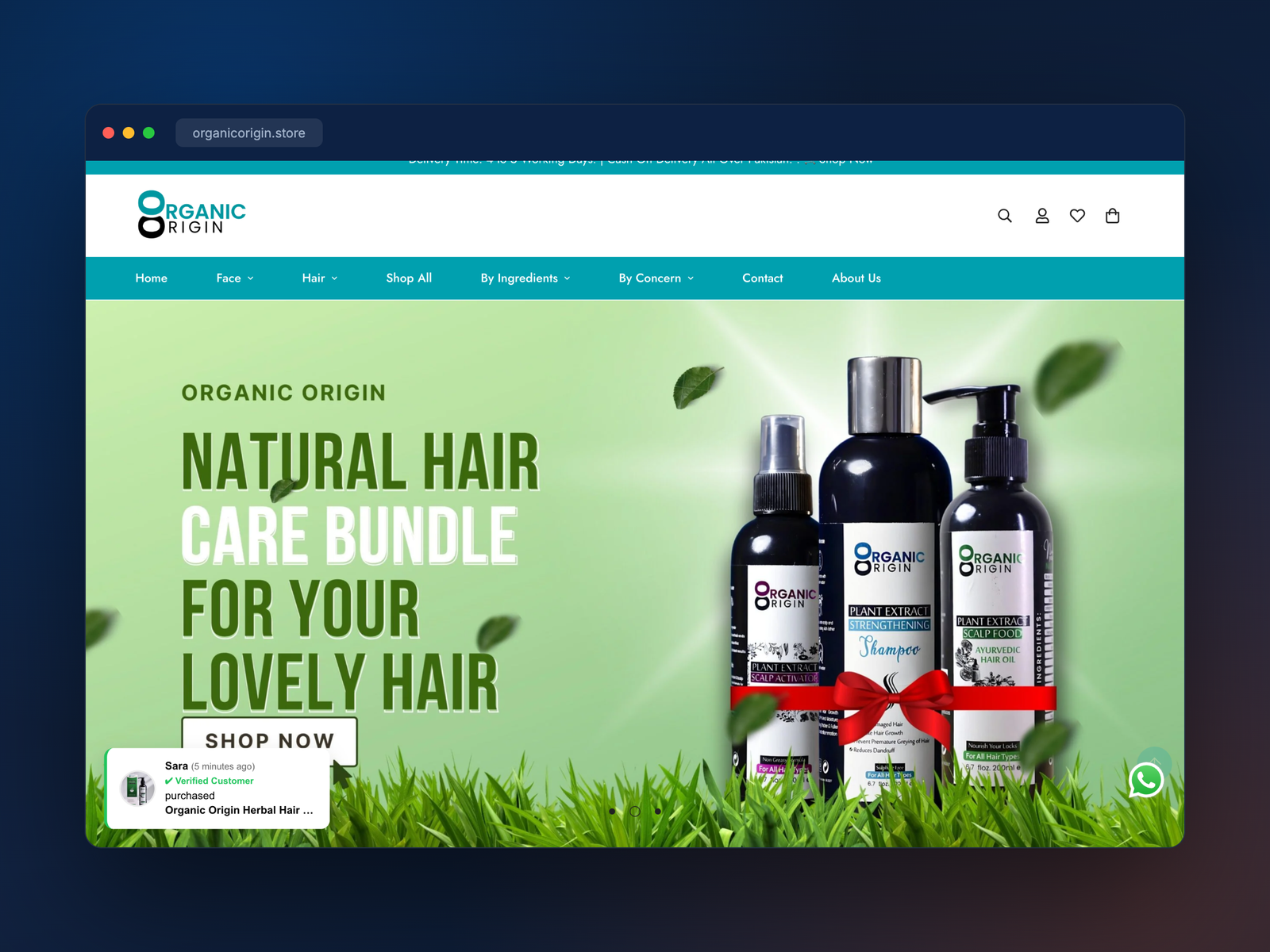
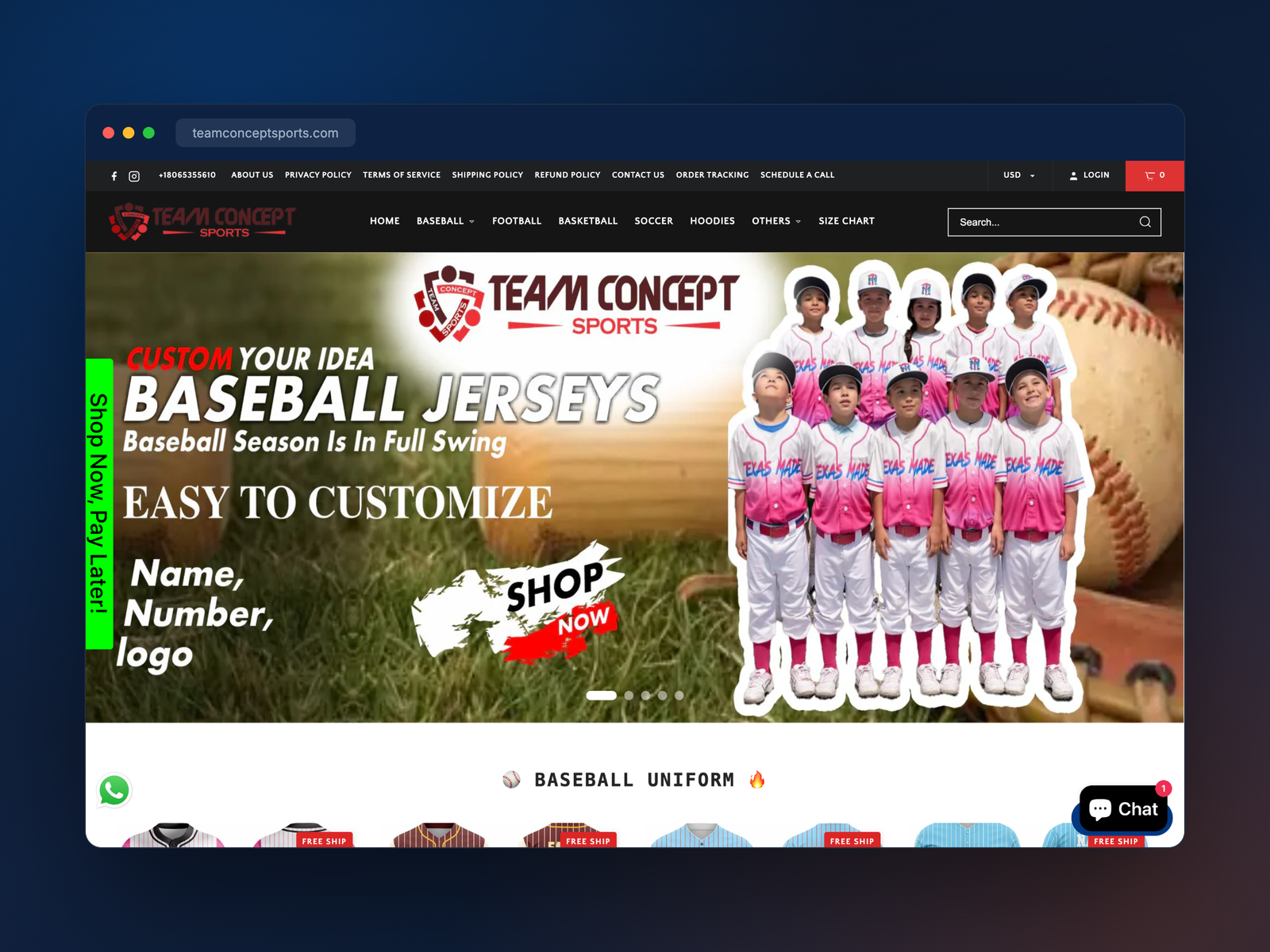
Stores we launched
Three you can shop in right now.

What a Pakistani store has to get right that an American one does not
The template advice written for a Los Angeles brand is not wrong here, it is simply about a different business. Four differences do most of the work.
Confirmation is a step, not an email. With cash on delivery, an order is an intention rather than a sale. Stores that confirm by WhatsApp or a call before dispatch see materially fewer parcels come back, and the ones that skip it pay the courier twice for the privilege of learning that. This is the single highest-return thing to build into a Pakistani store, and it is usually the cheapest.
Return-to-origin is a line in your P&L. Undelivered COD parcels carry a real cost each and they do not show up in any dashboard the platform gives you. Tracking them by product, by city and by acquisition channel is how you find out that one campaign is producing orders that never get paid for.
Your customer is on a mid-range Android on mobile data. Page weight is a revenue number, not a technical preference. Hero video, four fonts and six apps that each inject a script cost real orders here in a way they do not on fibre in London.
Delivery expectations are set by the courier, not by you. Publishing an honest range and wiring tracking through to the customer removes most of your support load. Promising two days everywhere creates it.
Shopify, or something else
We build on WooCommerce too and the honest comparison is short. Shopify costs a monthly fee plus a gateway fee and gives back hosting, security, uptime and a checkout you do not maintain. WooCommerce has no platform fee and gives back the responsibility for all four. For a seller doing meaningful volume with a small team, Shopify usually wins on total cost of attention rather than on price. For a seller with an existing WordPress site, a tight budget and someone technical in-house, WooCommerce often wins. Anyone who answers this question the same way for every client is selling what they build rather than what you need — the WordPress page exists precisely because the answer is genuinely different for a lot of businesses.
How it runs
Catalogue first, decoration last.
Catalogue and checkout review
Products, variants, gateway and delivery model. This is the half-day that decides whether the build is simple or complicated.
Fixed price from the section list
Which sections are theme, which are custom, and what is out. One number, sent within 48 hours.
Build on a live preview
A shareable store preview from the first week, so pricing, copy and photography can be fixed while it is cheap to fix them.
Launch and hand over
Store ownership transferred to your Shopify account, gateway in your name, and a walkthrough of how to change things yourself.
Money
Priced from the section list.
Focused launch
A clean store on a well-chosen theme, catalogue loaded, payments and delivery configured, live in days rather than weeks. The right answer for a first store or a tight catalogue.
- ✓Theme selection and setup
- ✓Gateway and COD configured
- ✓Launch checklist run
Custom build
Custom sections, bespoke product templates and the flows a theme cannot express, on a store designed around your catalogue rather than around a demo.
- ✓Custom sections built
- ✓Speed budget enforced
- ✓Courier integration included
Rescue and migration
A store that is slow, broken, half-migrated or inherited. Assessed in writing before anything is quoted, with URL preservation planned before the move.
- ✓Written assessment first
- ✓Redirect map before migration
- ✓Full account handover
No figures anywhere on this site. Store cost is decided by catalogue complexity and how many flows the theme cannot handle, so the quote follows the section list rather than a package name. It arrives within 48 hours of the catalogue review.
FAQ
The questions sellers actually ask.
Built and run by us
Our own products, in production.
More from GOFTECH
Where to look next.
Shopify Agency in Islamabad
A Shopify agency in Islamabad with a real office on Main PWD Road. Store builds, rescues and cash-on-delivery order flows — come in person.
WordPress Development in Pakistan
A WordPress development agency in Pakistan building fast, maintainable sites and WooCommerce stores — plugin budgets and hosting in your…
Shopify Development for UK Merchants
A Shopify development agency UK merchants can check: three published builds, and a free store teardown naming what is slowing yours down.