A petrol pump is not a shop. It runs on shifts, meters and trust — and the gap between what the meters say and what is in the drawer is where the money goes missing. Most pumps in Pakistan find that gap at month end, when it is far too late to ask anyone about it.
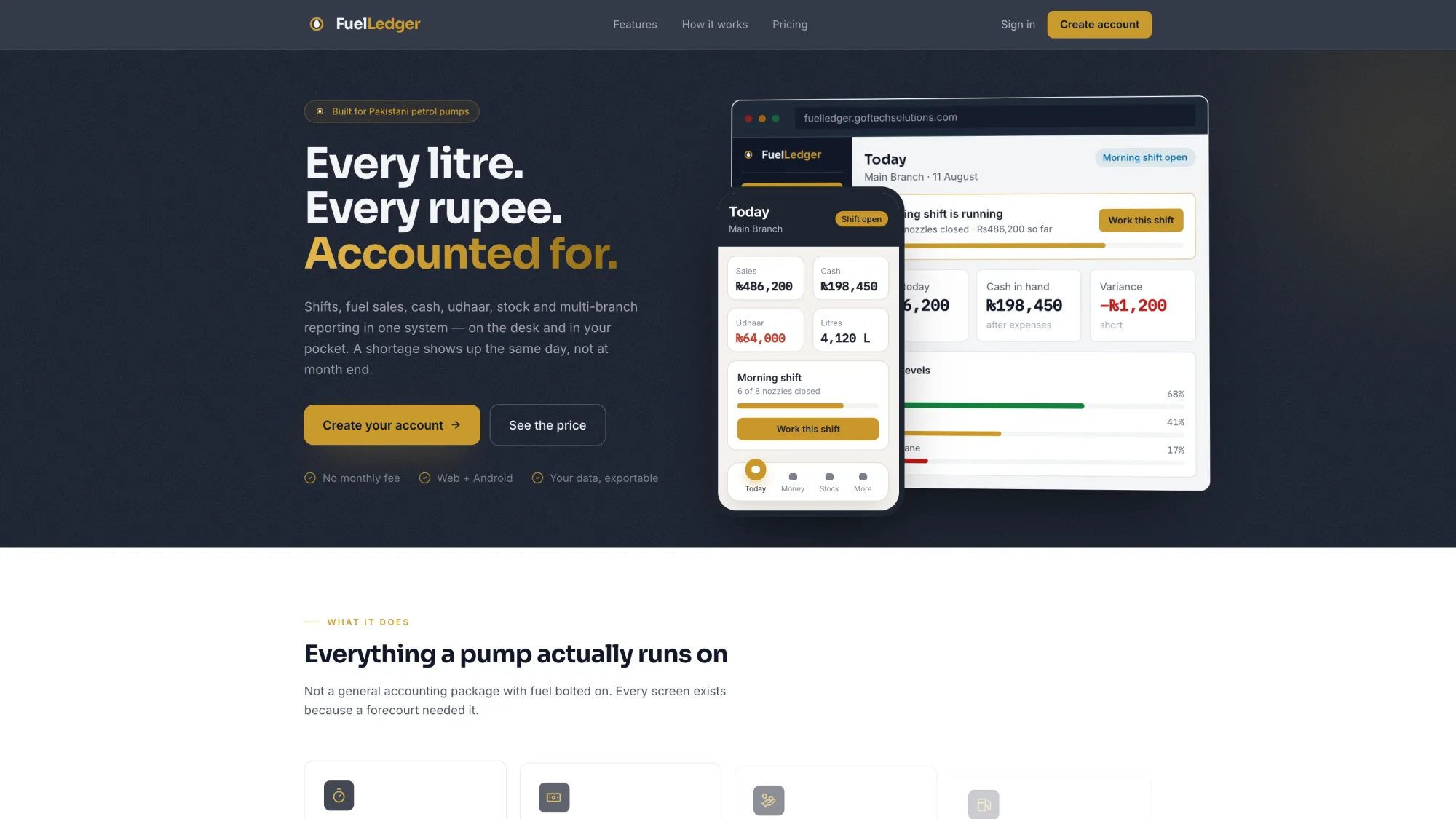
FuelLedger closes the loop daily. Every shift opens against nozzle readings and closes against declared cash, so expected sales are calculated from the meters rather than typed in by the person handing over the money. A variance is not an accusation — it is a number on the screen the same evening, next to the shift it belongs to.
The second problem is udhaar. Credit is how forecourts keep fleet and farm customers, and it is also how they quietly lend out their working capital. FuelLedger gives every customer one running balance across fuel, product and cash, with a limit that means something: crossing it queues an approval rather than passing silently.
Stock works the same way. Book levels fall as litres sell and rise when a tanker is received, so the dip reading has something to be compared against, and supplier settlement reflects what was actually paid for rather than what was ordered.
We built FuelLedger because the alternative on offer was a general accounting package with fuel bolted onto the side. Every screen in it exists because a forecourt needed it.