Where these projects go wrong
The expensive failure is never the code.
Bespoke build projects fail for three reasons and none of them is that the engineering was too hard. All three are visible before you sign, if you know where to look.
Two systems where there should be one
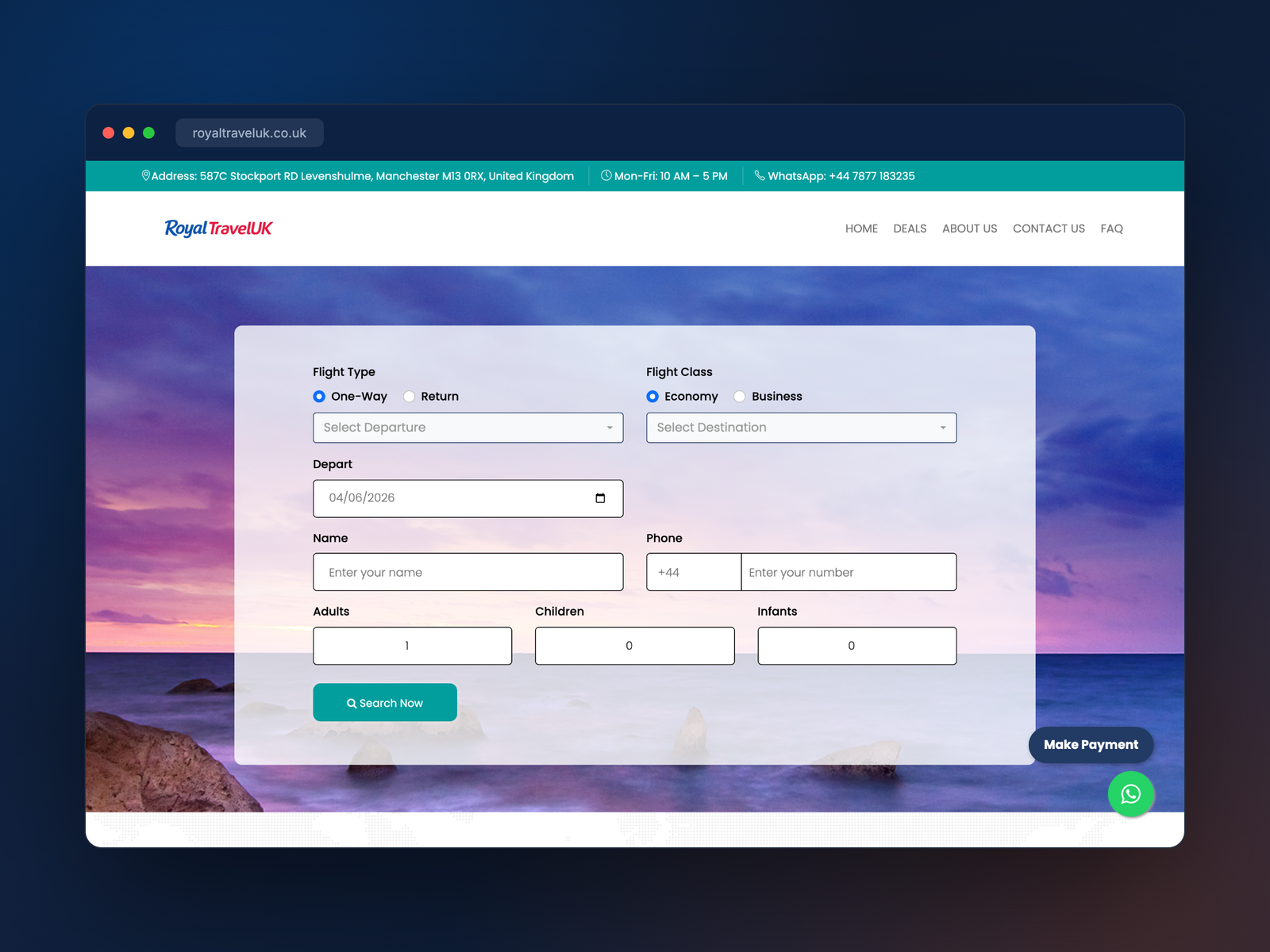
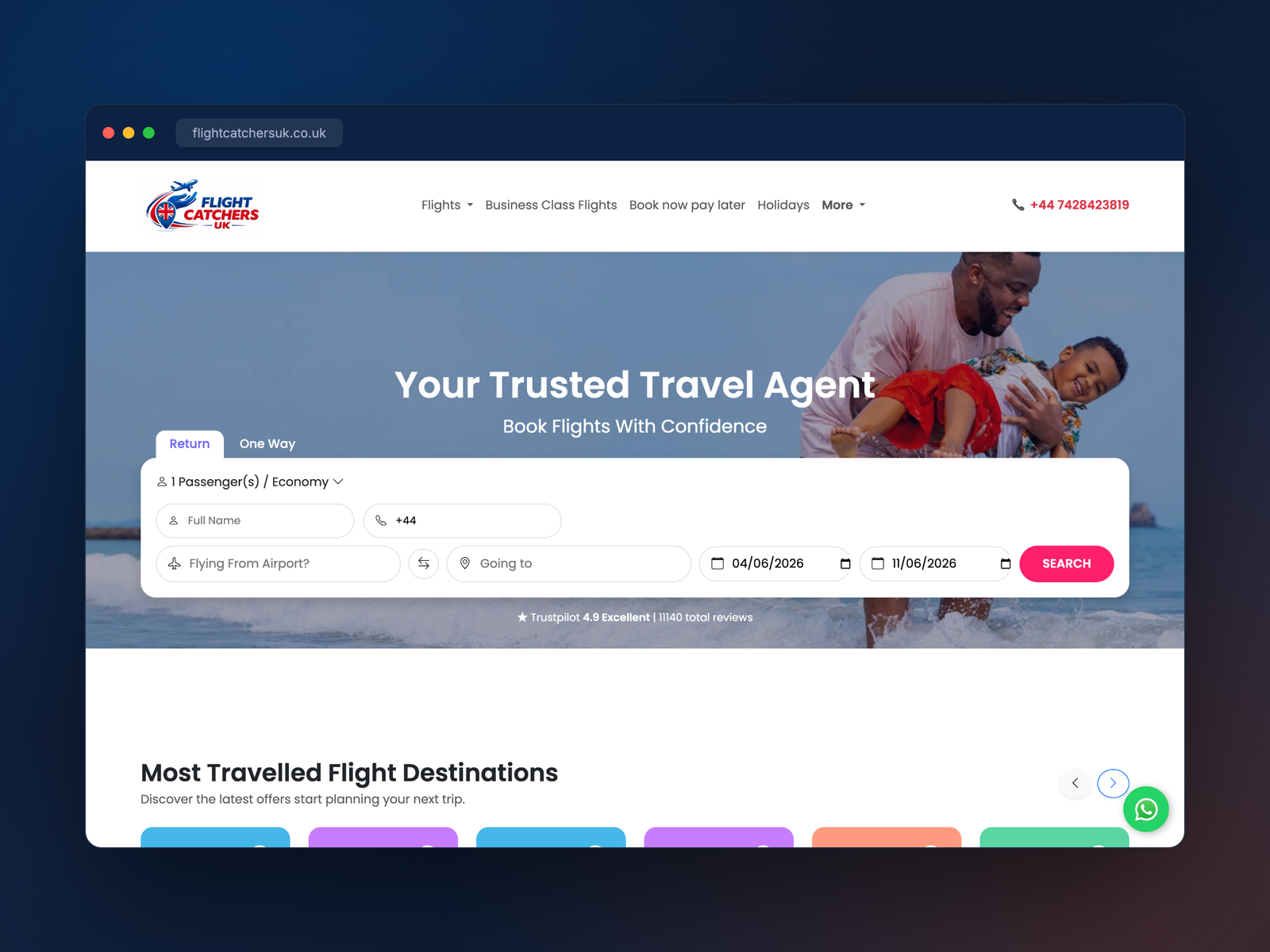
The commonest shape we inherit: a website built by one supplier and a CRM bought off the shelf, joined by an integration nobody owns. Every lead that goes missing goes missing in that seam. The travel platforms we have built were specified the other way — one application, one database, one login — precisely because the handover between systems is where the revenue leaks out. Custom web development USA buyers are usually paying for is exactly this: not a fancier website, but one that is the same thing as the system behind it.
Nobody wrote down what finished means
Scope agreed on calls turns the last fifth of a project into a negotiation, and the negotiation gets billed. That is true everywhere and it is considerably worse when the two of you have no shared working hours at all — a conversation you both half-remember is harder to settle when it happened at 6pm for one party and 9am for the other. We write scope as a document listing every screen and every integration plus what is explicitly excluded, and the price moves only when you change the ask.
The system outlives the relationship
Bespoke software is a ten-year decision taken on a ten-week timeline. The question that matters is not whether we can build it but whether somebody else can maintain it once we are gone — which means boring framework choices, a database another developer can read, and no clever architecture that exists to be impressive. If a build cannot survive its authors leaving, it was not finished.
Delivered — with the country attached
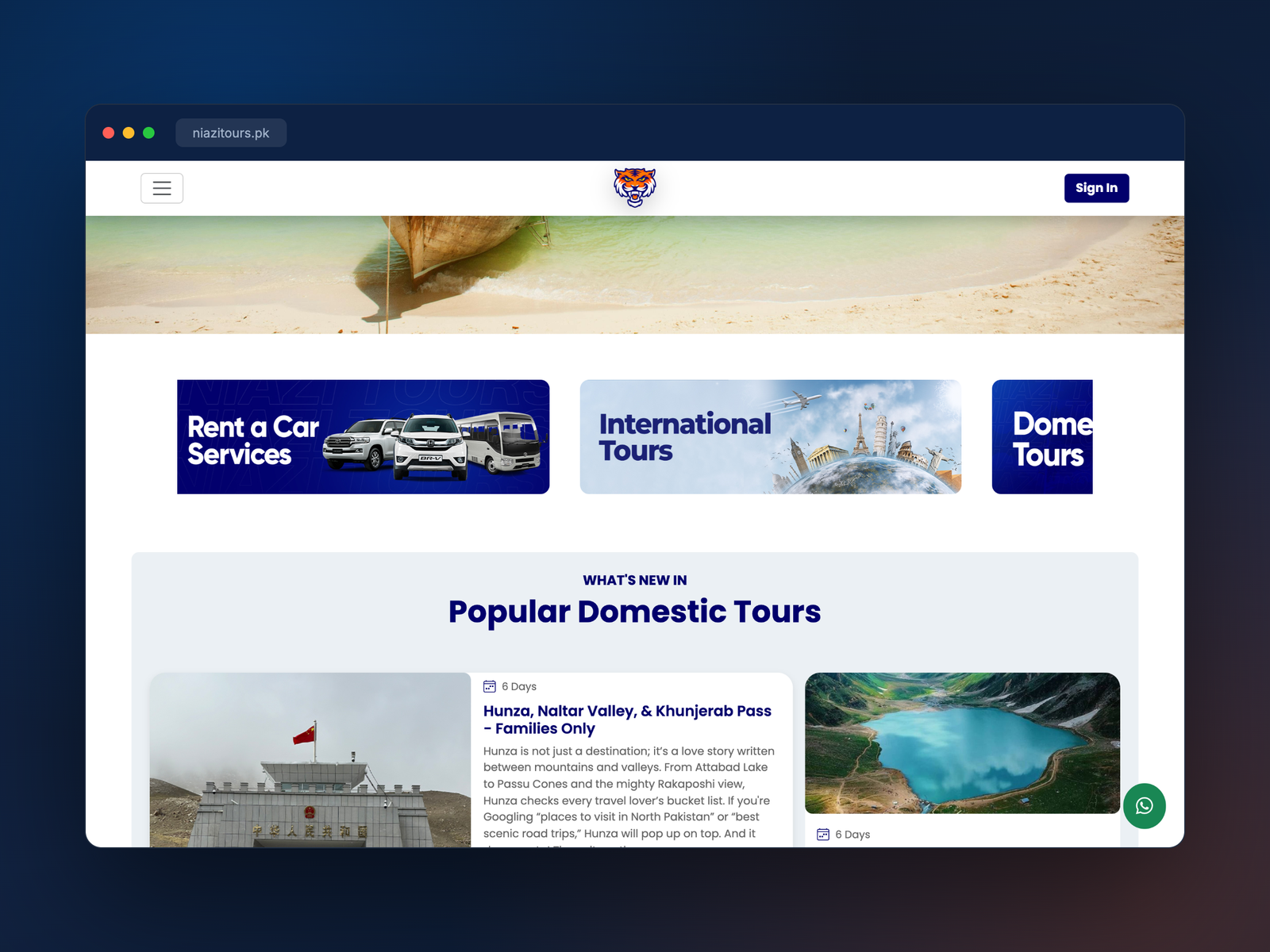
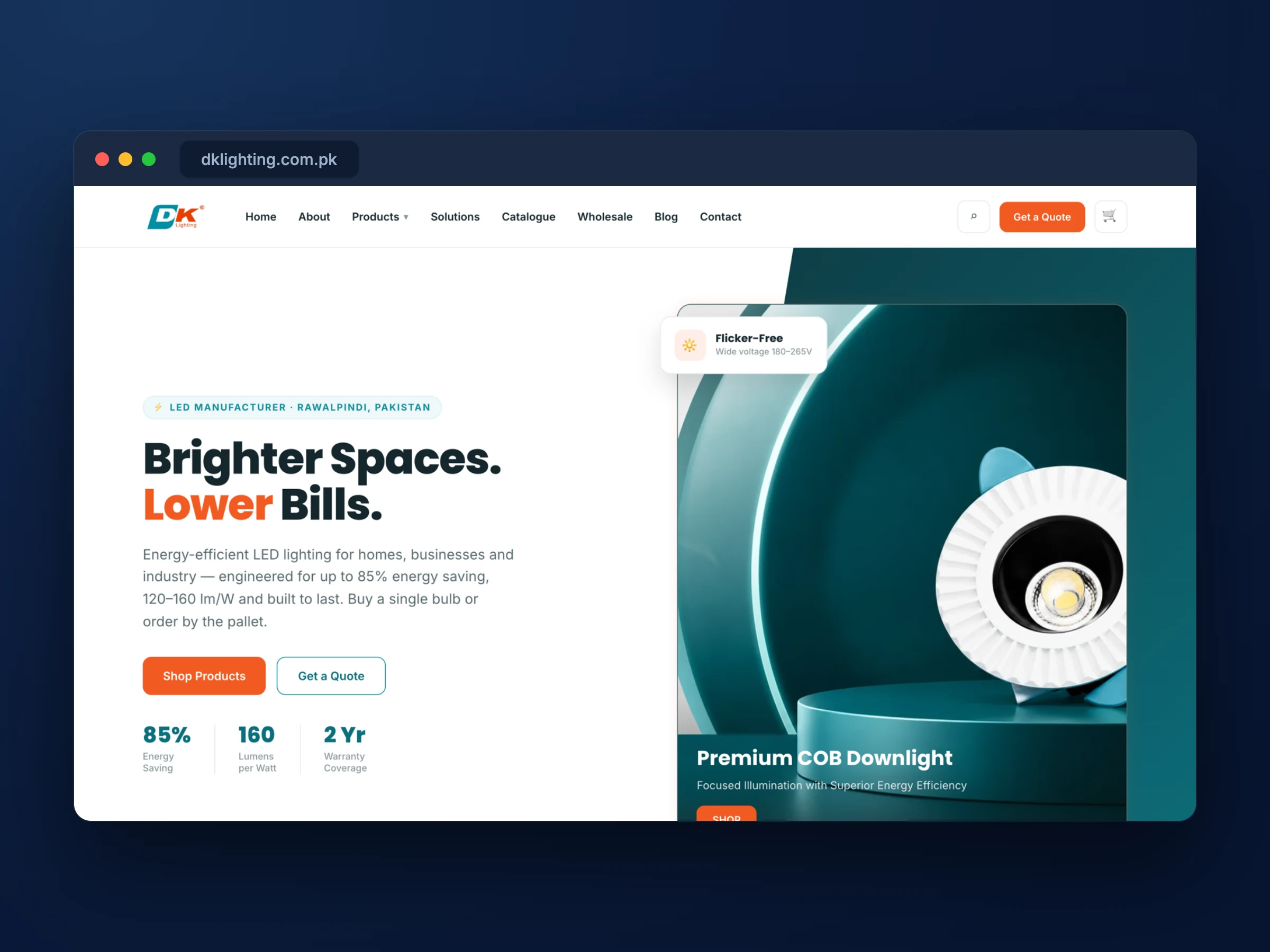
Seven platforms, none of them American.


What an American buyer should press on
We are an Islamabad studio with no US entity and no US office. The platforms above were delivered for operators in Britain and Pakistan, and we have not yet published a bespoke build for an American client. That is a real gap in the shelf and you should weigh it — but weigh it for the right reason. A Laravel booking engine with an enquiry system inside it is the same artefact whether the operator is in Leeds or Louisville; what changes across the border is narrower and more specific than most agencies admit, and it is this.
Where does the data actually live?
Where the servers sit is a hosting choice and a cheap one — a US region is a dropdown on every major provider, and if your data must not leave the country we configure that at the start and it costs essentially nothing. Who can access it is the harder half and it is a legal question rather than a technical one: our engineers are in Pakistan, and any honest answer begins there. If you handle health records, financial data, criminal justice information or anything with a state privacy statute attached, get your own counsel's view on offshore processing before you shortlist anybody, us included. An agency that resolves that for you in a sales call has not read the rules either.
What does it have to integrate with?
Most bespoke systems are only as useful as the things they plug into, and in this market that list is fairly consistent: an accounting package, a payment processor, one or two carriers, a tax engine once you are selling across state lines, and increasingly an identity check. Those are all well-documented APIs and none of them is exotic. What bites is the one bespoke integration nobody mentions until week six — the legacy system in the back office with no API and a nightly CSV export. Say it at scoping. It is almost always solvable and it is never free.
What happens during your working day?
Nothing, and that is the honest answer. Our day ends as yours begins. For a build phase that is genuinely an advantage: you review and comment at the end of your day, we work a full day on it, and the next version is there before your morning coffee. For live incident response it is a real limitation, and the answer is a support arrangement agreed in writing rather than an implied promise. If you need someone reachable at 3pm Central, that is a specific thing to buy and we will tell you what it costs rather than pretending it is included.
How it runs
You see the price at step two.
Teardown
Free, written, inside 48 hours. What you have, what it needs, and whether a bespoke build is even the right answer.
Scope and fixed price
Every screen, every integration, everything explicitly out. Approved before a line is written.
Build overnight
A staging URL from week one. You send notes at close of business and open finished work the next morning.
Launch and hand over
Repository, hosting, domain and every account in your name — and a walkthrough for whoever maintains it next.
Money
How we quote a bespoke build.
Fixed-scope build
The default and the right shape for most of these. One written scope, one price in dollars, sent inside 48 hours of the discovery call, and it moves only when the ask changes.
- ✓Free teardown first
- ✓Every screen listed up front
- ✓Out-of-scope stated explicitly
Phased build
For systems too large to specify honestly in one go. Phase one is fixed-scope and shippable on its own; later phases are quoted once phase one is live and you know more than you did.
- ✓Each phase priced separately
- ✓Stop after any phase
- ✓No commitment to phase two
Takeover and recovery
A stalled build or an inherited codebase. Quoted once we have read what is actually there — and we say plainly when continuing beats restarting, even though restarting pays us better.
- ✓Written assessment first
- ✓Continue-or-rebuild answer
- ✓Full credential handover
There is no day rate on this site, in any currency, deliberately. A published figure is either wrong for your project or padded enough to cover all of them. What is fixed is the process: free teardown, written scope, one price, agreed before anyone starts.
FAQ
Straight answers.
Built and run by us
Our own products, in production.
More from GOFTECH
Where to look next.
Custom Software Development for UK Operators
Custom software development UK operators can maintain after we leave: booking platforms, CRMs and portals. Two live British platforms, full…
Custom Software Development in Pakistan
Custom software development in Pakistan from an Islamabad team: CRMs, portals, booking engines and admin panels. Fixed price, full…
Web Development for Karachi
A web development company for Karachi trading, distribution and logistics businesses, run from an Islamabad studio. No fabricated local…