GOFTECH is a registered software house with the Pakistan Software Export Board, the government body for Pakistan's IT exporters.
How software gets bought here
The decision has three people in it and none of them agree.
B2B software in Karachi is rarely bought by one person, and the way it fails is specific to that. Three patterns, and all three are visible before anything is signed.
The brief was written by whoever is least affected
Requirements written by management describe the reports they want to see. The people who will actually enter the data every day are usually not in the room, and they are the ones who decide whether the system gets used or quietly bypassed. We insist on sitting with them, because a system the floor works around is worse than no system.
Comparison on price against different scopes
Three quotes arrive at very different numbers and get compared as though they cover the same thing. They almost never do — one has excluded the integration, one has excluded data migration, one has excluded training. A written scope listing what is out is the only way to compare them, and it is the thing most quotes leave vague on purpose.
Nobody owns the data migration
Years of records in spreadsheets, an old package and one person's head. Moving that is frequently a larger job than building the system, and it is the single most common reason a launch date slips. If it is not a priced line in the quote, it has not been thought about.
What Karachi clients come for
Operations, integration and the reporting on top.
Stock, dispatch and receivables
Multiple depots, credit terms, part payments and returns, built around how the trade actually works rather than a package's assumptions.
Customer and dealer portals
Orders, statements and documents behind a login, with roles and an audit trail that survives a disagreement.
Integration with what you already run
The accounting package, the courier API, a POS or an existing ERP. Connecting them is cheaper and safer than replacing them.
Field apps for teams on the road
Delivery, collection, inspection and merchandising — working offline where the signal is not, syncing when it returns.
A site that stands up to due diligence
For B2B the website is a credibility document, not a funnel. Fast, clear, honest about what you do and who you have done it for.
Selling direct, when it is time
If a distribution business is adding a consumer channel, that is a different build, and the ecommerce page is the honest starting point.
Systems in daily use
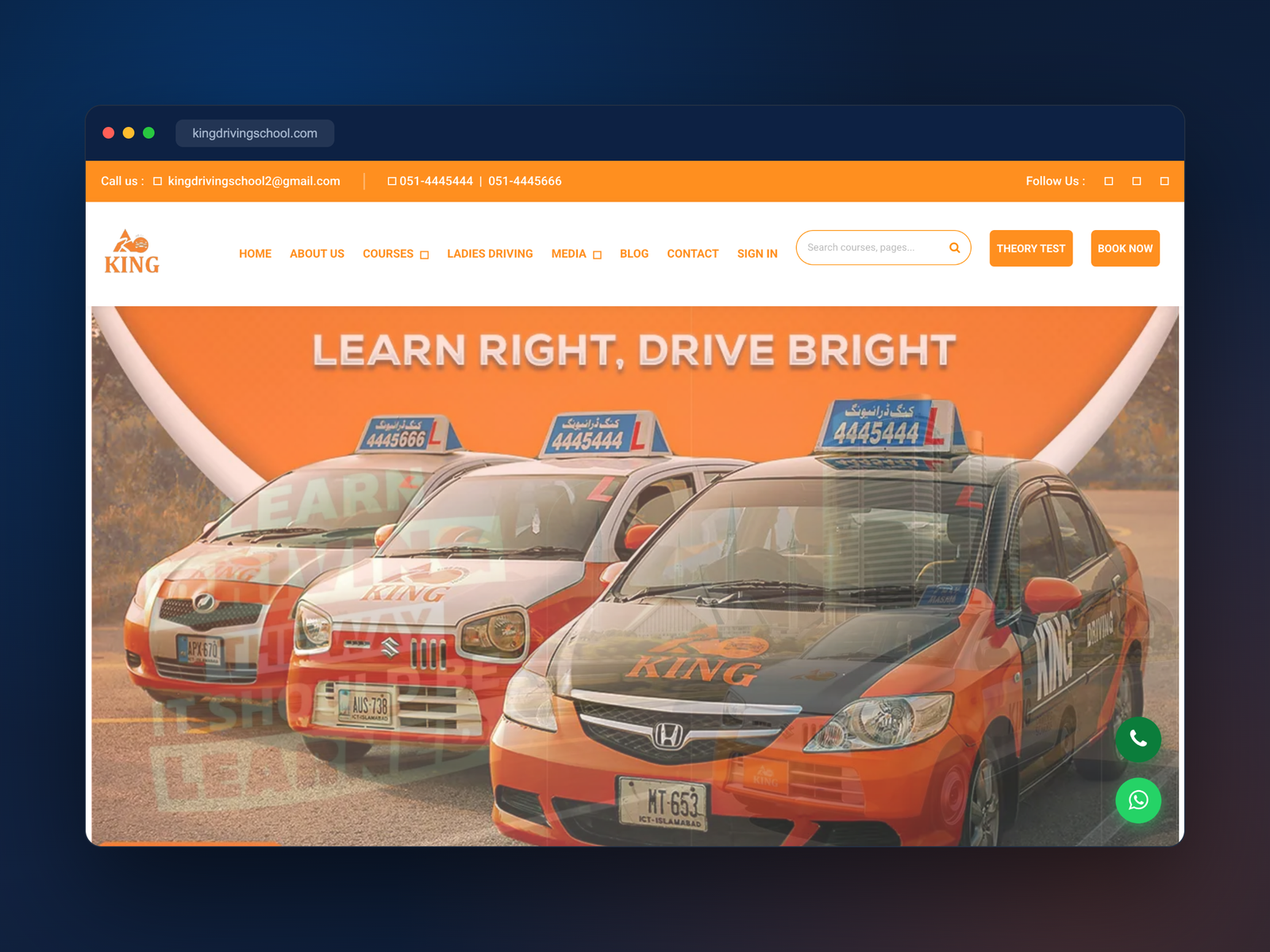
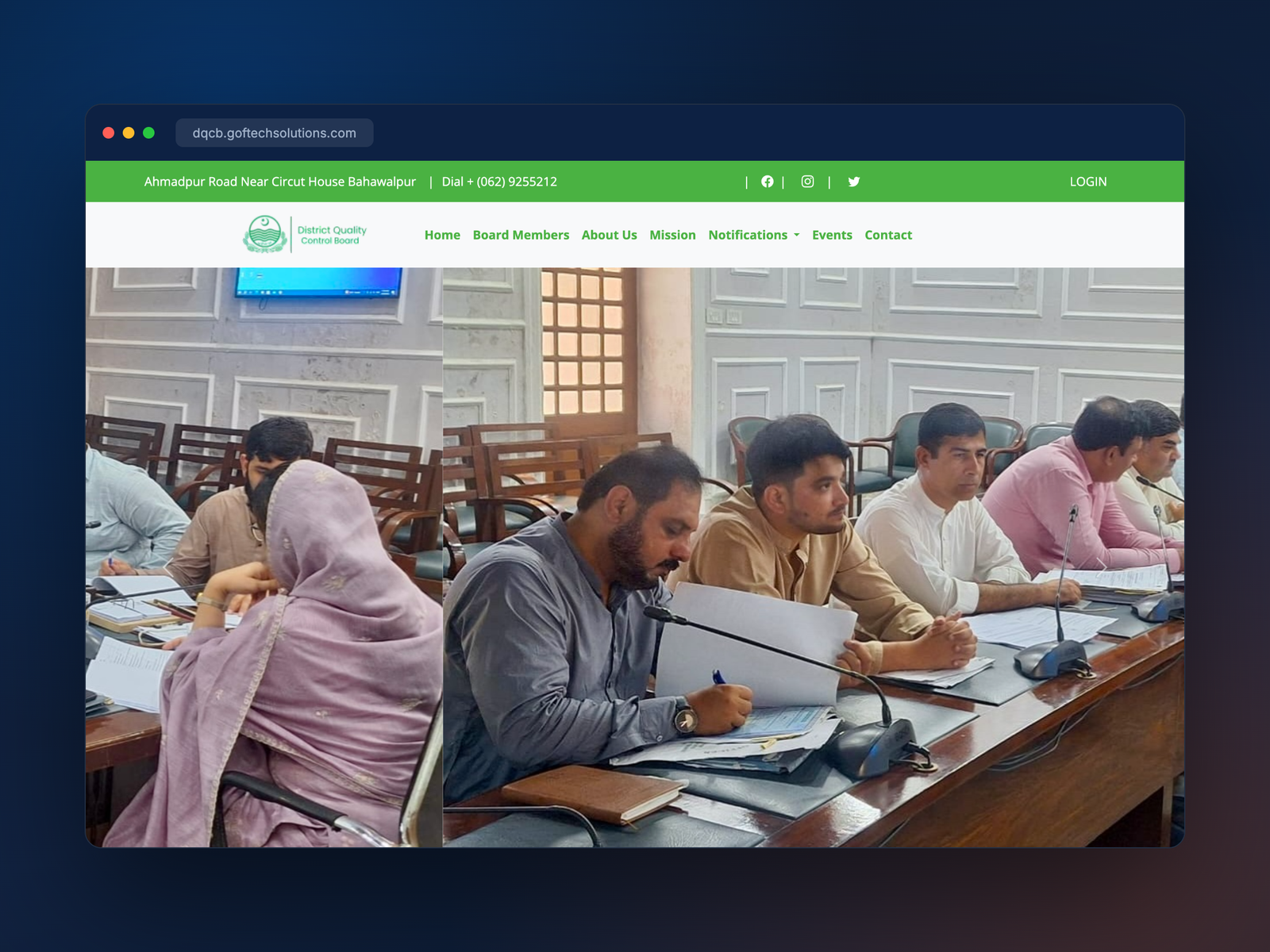
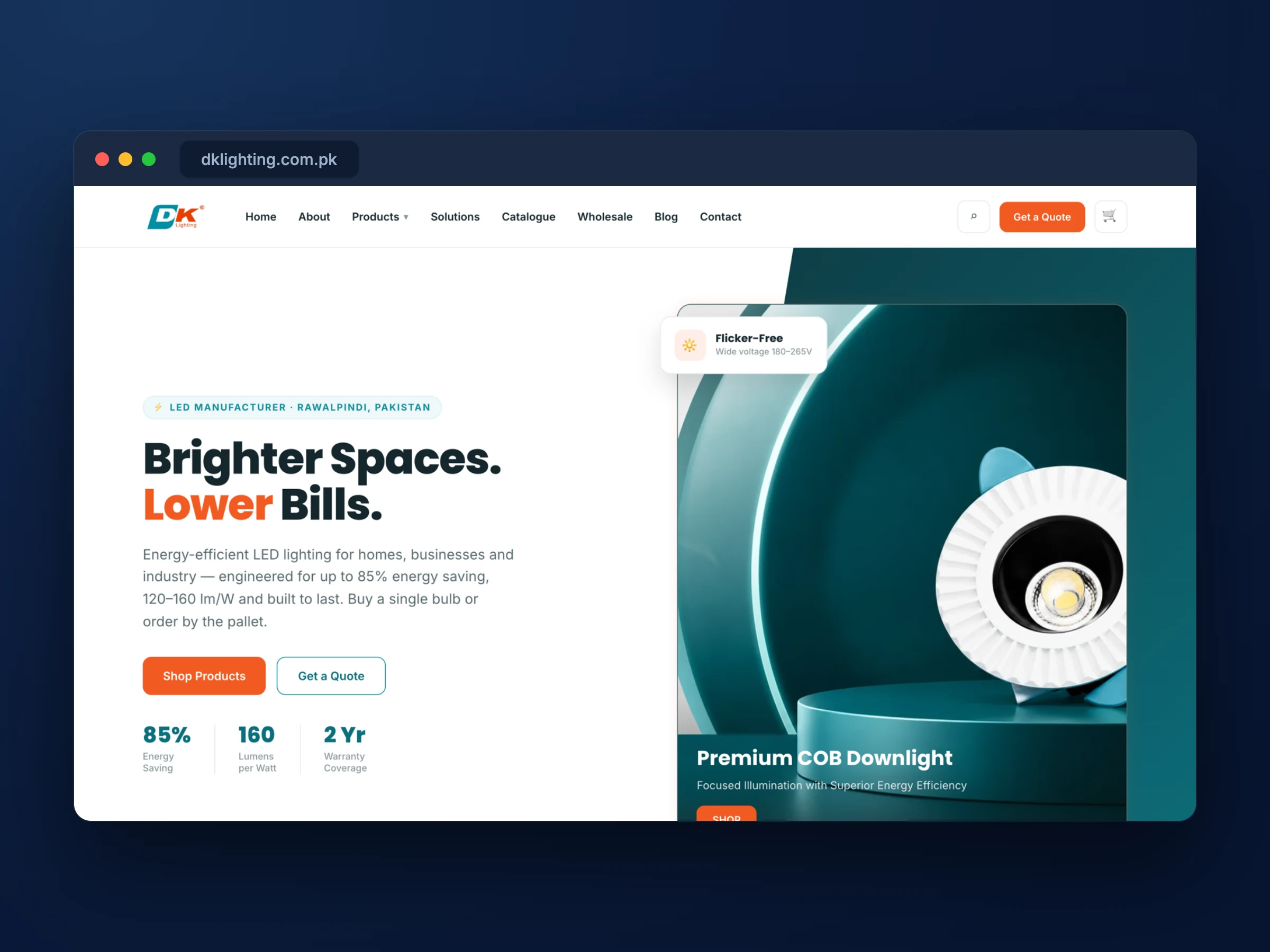
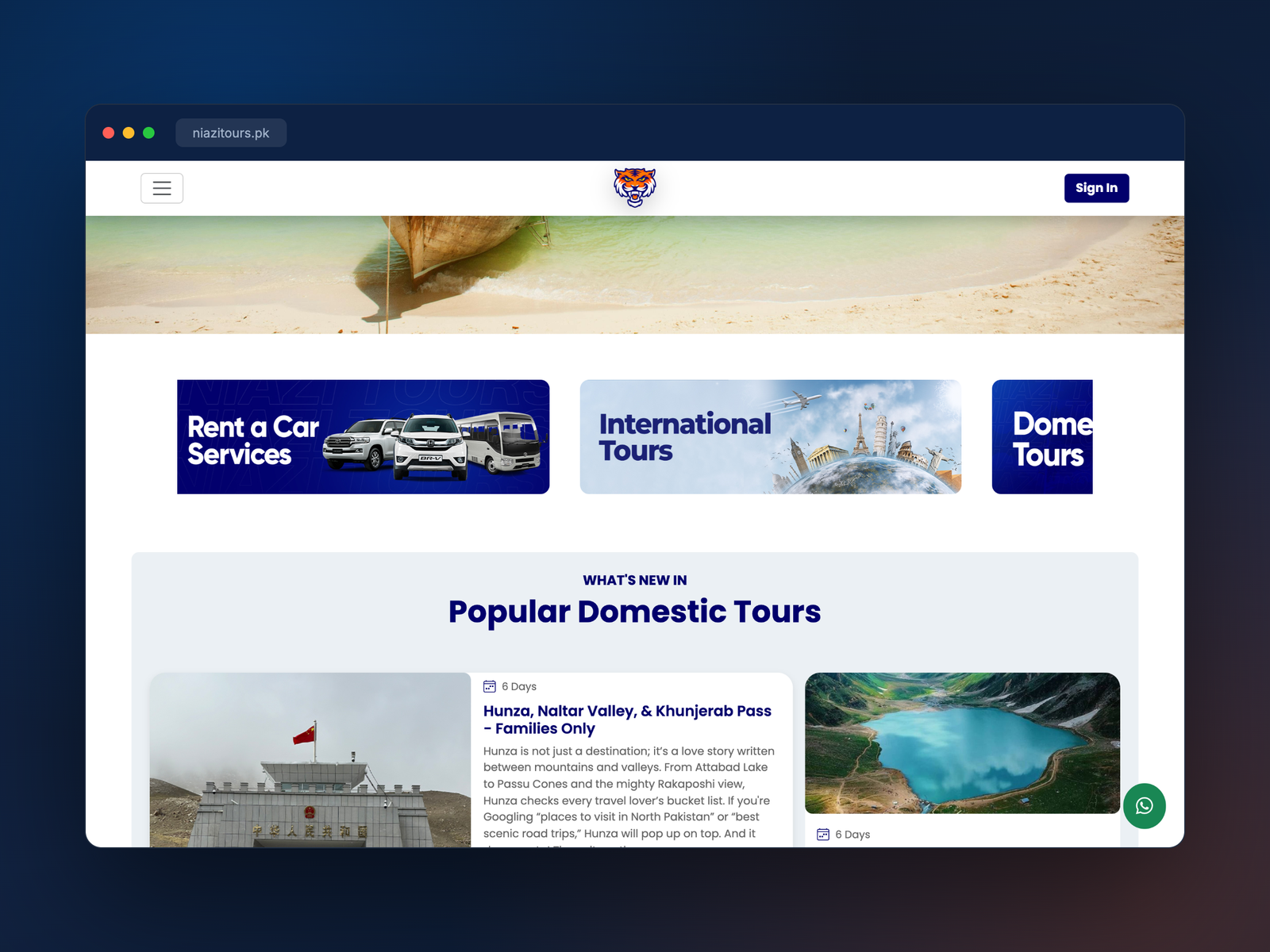
Four builds behind the scenes.
Working at distance when the buyer is an organisation
Shortlisting a web development company in Karachi for an internal system raises a bigger question about distance than a storefront ever would, because a system has users who need training and data that needs moving. So the arrangement is more explicit than it would be for a website, and you should hold any remote firm to something equally concrete.
Discovery happens where the work happens. For an operational build the first sessions are on site, with the people who will enter the data. That is a flight, and it is not billed as travel. This is the part of the project we will not do over a call, because the requirement that matters is always the exception somebody mentions in passing while doing their job.
Everything after that runs on a live URL and a weekly call. A staging environment your team can log into from the first weeks, with real-shaped data. Managers see progress without a report; users see the thing they will have to use, early enough for their objections to be cheap.
Data migration is a priced line, not a footnote. Extracting years of records, reconciling them and loading them is scoped and quoted separately, with a dry run before the real one. A migration discovered late is the most reliable way to lose a launch date, and it is the line most quotes leave out.
Training is recorded. Sessions with the people who will use it, recorded and left with you, because staff change and a system nobody can teach is a system with a shelf life. For a go-live we are on site again.
When a Karachi firm is the better hire
If the project needs somebody in your building every week — a long roll-out across many branches, continuous floor support, integration with equipment that has to be physically present — hire locally, and we will say so on the first call. Distance is manageable for design, build and launch. It is not manageable as a substitute for daily presence, and a firm that claims otherwise is describing an arrangement it will not honour by month three.
What we will not claim
There is one office and it is at Second Floor, Office No 02, Above Minnie Minors, Main PWD Road, Islamabad, Pakistan 44000, on a verified Google Business Profile. No Karachi address, no Karachi landline, no branch. If a shortlisted firm lists a local office, look it up before you shortlist them — a fabricated address is the cheapest thing to publish and the most expensive thing to be caught with, and in a procurement process it is the sort of discovery that ends a conversation.
How it runs
On site to start, on site to launch.
On-site discovery
Sessions with management and with the people who do the entry. Free, not billed as travel, and where the real requirements surface.
Written scope and one price
Every screen, every integration, the migration priced separately, and what is explicitly out — so competing quotes can be compared honestly.
Phased build on a live environment
Your team logged in from the first weeks. Phase one is whatever is currently costing money, judged before phase two is agreed.
Migration, training, go-live
A dry-run migration before the real one, recorded training sessions, and us in the building on the day it goes live.
Money
Scoped so three quotes can be compared.
Discovery and specification
The on-site sessions and a written specification precise enough to put out to tender. Yours to keep and to take elsewhere, which is a legitimate outcome and priced as one.
- ✓Every screen and state listed
- ✓Exclusions stated explicitly
- ✓Usable as a tender document
Phased build
Each phase scoped, priced and signed off separately, with data migration as its own line. You can stop after any phase without stranding the work.
- ✓Migration priced separately
- ✓Stop after any phase
- ✓Recorded training included
Support and extension
Monthly once people depend on it, covering fixes, small changes and the reporting that only gets requested after go-live.
- ✓Defined response times
- ✓Your servers and accounts
- ✓Cancel with notice
No figures on this site, and no out-of-city surcharge. What differs between two similar-sounding briefs is the number of exceptions in the process and the state of the data being migrated, and neither is visible before discovery — so the quote follows the on-site sessions rather than preceding them.
FAQ
Questions from buying committees.
More from GOFTECH
Where to look next.
Web Development for Lahore
A web development company for Lahore brands, run remotely from an Islamabad studio — stores, sites and apps, with a live preview from week…
Custom Software Development for UK Operators
Custom software development UK operators can maintain after we leave: booking platforms, CRMs and portals. Two live British platforms, full…
SaaS Development in Pakistan
A SaaS development company in Pakistan building multi-tenant products: accounts, roles, subscriptions and the admin behind them. Repository…