GOFTECH is a registered software house with the Pakistan Software Export Board, the government body for Pakistan's IT exporters.
The failure nobody warns you about
The build finishes. The app never ships.
Ask anyone who has commissioned an app here and lost the money — it is almost never that the app did not get built. It is that it never reached a phone that was not a developer's.
Handed over as a file
The project ends with an .apk emailed to you and an invoice. That is not a shipped app; it is a build artefact. Store submission is a separate discipline with its own rejections — privacy labels, data-deletion routes, permission justifications, screenshots at the right sizes — and it is where projects quietly die. Ask, in writing, whether store submission is inside the scope or outside it.
Accounts in the agency's name
If the app is published under the developer's Apple and Google accounts, your listing, your reviews and your update path belong to them. Migration afterwards is possible and unpleasant. Both accounts should be registered to your company before the first submission, and we set them up that way even though it is the slower start.
No plan for the second release
Apple and Google both change requirements on their own schedule, and an app that is not updated for a year starts failing policy checks and eventually gets delisted. An app is a subscription commitment, not a one-off purchase, and any quote that does not mention what happens in month thirteen is incomplete.
What we build
Four shapes, one codebase each.
Consumer apps with accounts
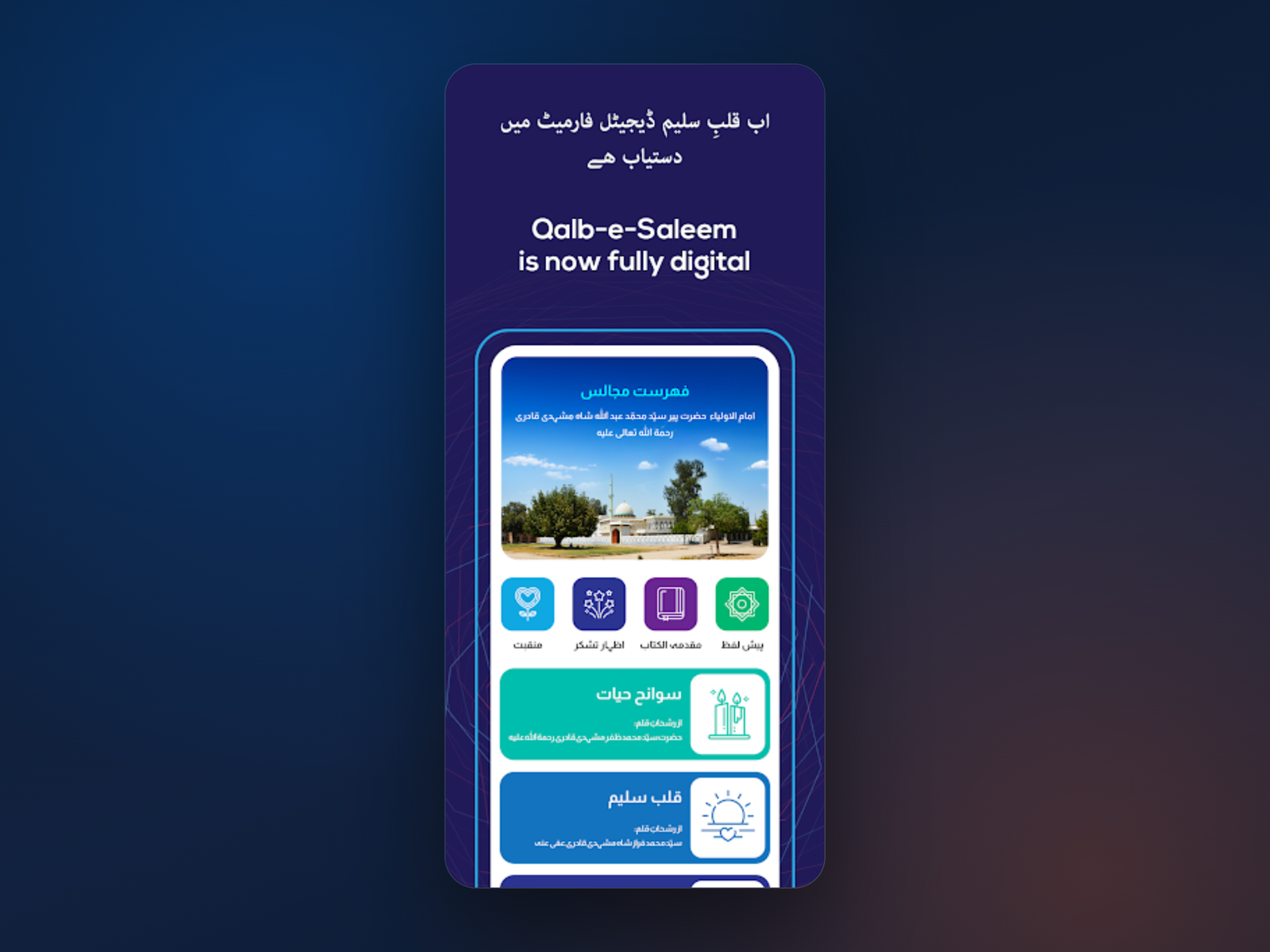
Sign-up, profiles, notifications and content that changes — the shape behind Qalb-e-Saleem and its 4.9-star rating.
Marketplaces
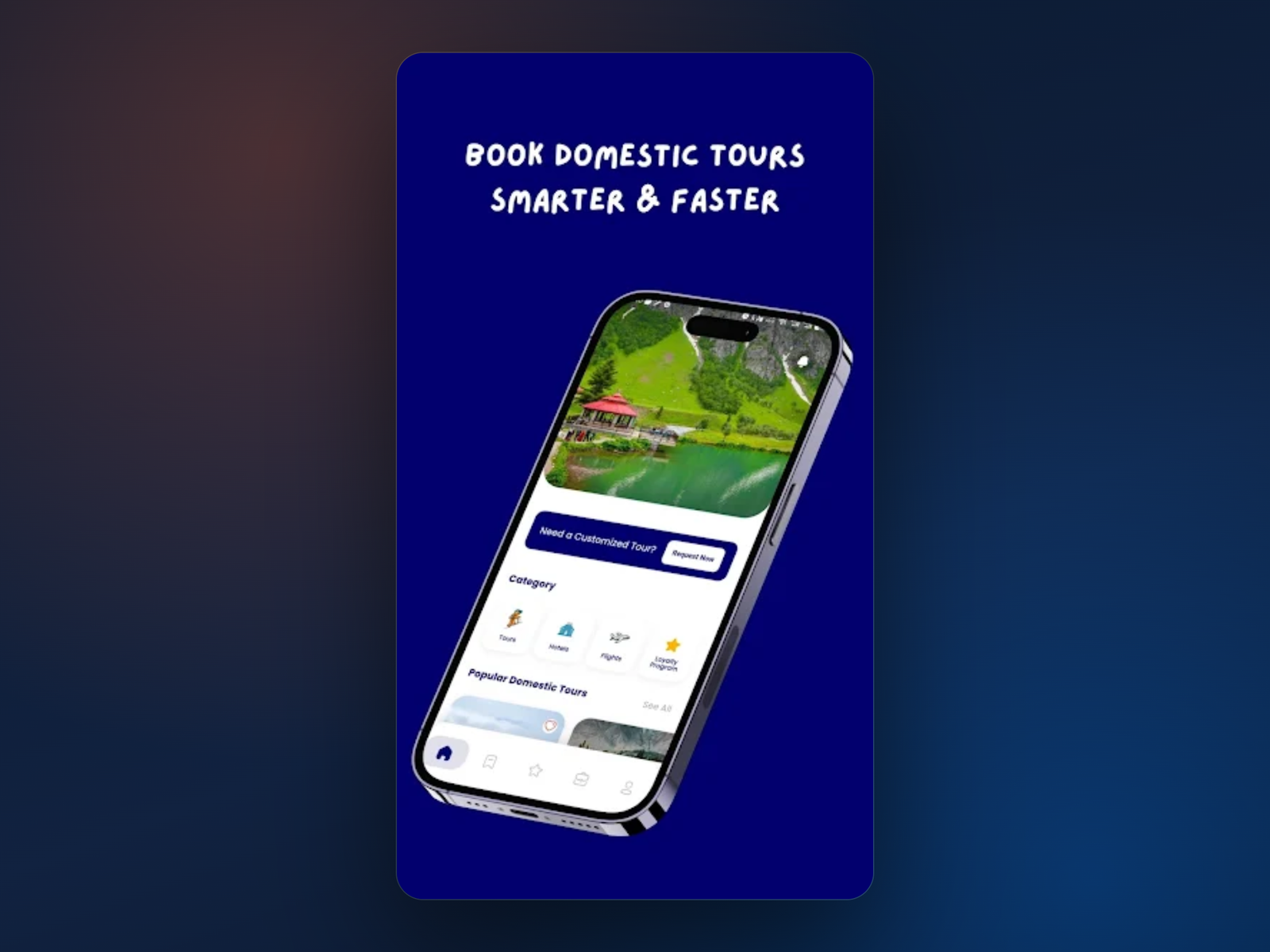
Two sides, two experiences, one economy. Traveloup was the first of its kind here; Just Book runs the same pattern in Britain.
Field and operations apps
Jobs, routes, photos and offline capture for teams who work where the signal does not reach. Sync is the hard part, not the screens.
Companion apps to a system you own
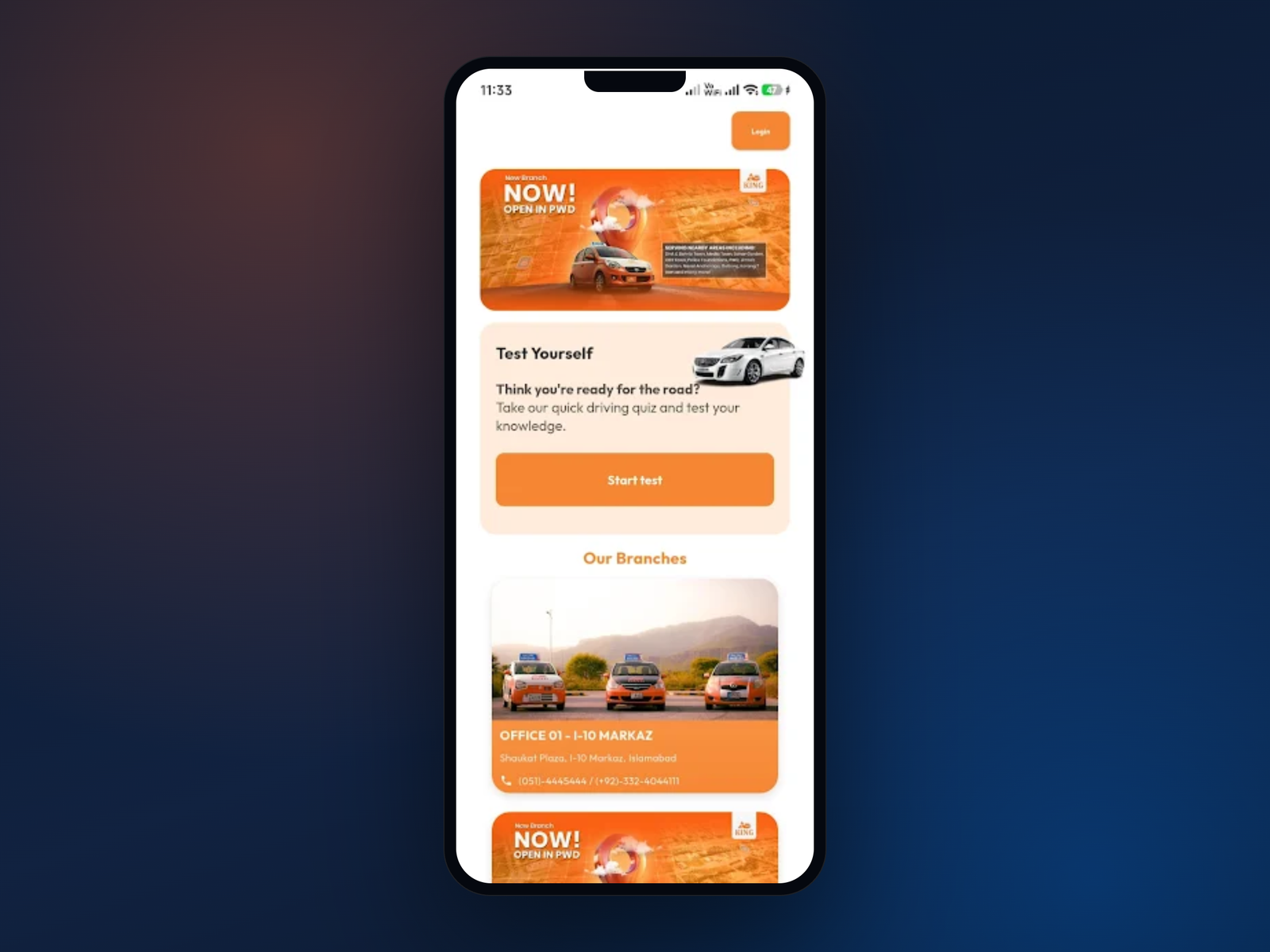
The same backend that runs your CRM or store, in a hand. King Driving School runs its web CRM and its app off one platform.
Payments inside the app
Local gateways, wallets, and the in-app purchase rules Apple enforces on digital goods — which catch more Pakistani teams than anything else.
Store submission and release
Listings, privacy declarations, screenshots, review responses and the first three updates. Inside scope, not a change request.
On the stores now
Four apps you can download today.

Why one codebase, and when that is the wrong answer
Everything above is Flutter, and the reason is arithmetic rather than fashion. Two native codebases means two teams, two release cycles and every feature specified twice; for the great majority of apps commissioned in this market that doubles the cost to buy a difference nobody using the app can perceive. One codebase, both stores, one set of bugs to fix.
It is the wrong answer in three cases, and we will say so rather than sell what we prefer. If the app's entire value is a platform-specific capability — deep ARKit work, a Watch or Wear complication, heavy on-device machine learning — native earns its cost. If you are building a video-editing or 3D-heavy product, native earns it. And if you already employ iOS engineers, matching your team beats matching our preference.
What store review actually asks for
The rejections that hit Pakistani apps most often are boring and entirely preventable. A privacy policy URL that has to be live and reachable before submission. A data-deletion route inside the app, not an email address, if you have accounts. A justification for every permission, so an app requesting location without an obvious reason gets bounced. Screenshots at exact device sizes. And for anything selling digital content, Apple's in-app purchase rules, which are a business-model constraint disguised as a technical one and are worth checking before you decide what to charge for.
None of this is difficult. It is simply work that has to be scoped, and the reason we list it here is that it is the most common thing to find missing from a cheaper quote. A mobile app development company in Pakistan quoting materially below everyone else is usually quoting for the build and not the release.
Getting downloaded is a separate problem
Publishing is not distribution. An app with no store listing work, no landing page and no launch plan gets installed by the founder's family and stops. Store listing copy, screenshots that show the value in the first frame, and a web page the app can be linked from are all cheap next to the build, and they are the difference between an app that exists and an app that is used. We build the page and write the listing as part of a launch, not as an upsell afterwards.
How it runs
Store review is inside the timeline, not after it.
Flows and screens
Every screen and every state drawn before code, including the empty ones and the offline ones. This is where scope stops moving.
Fixed price, both stores
One number covering build, submission and the first release on iOS and Android. Sent within 48 hours of the scoping call.
Build with real builds
TestFlight and internal testing from the first weeks, so you are using it on your own phone long before launch.
Publish under your accounts
Apple and Google accounts in your company's name, listings written, review handled, and the keys handed over with the code.
Money
One price to the store, not to the .apk.
First release
Design, build, both platforms, store submission and the first two post-launch fixes. Scoped from the screen list, quoted once, and moving only if you change the screens.
- ✓Both stores included
- ✓Your developer accounts
- ✓Review handled by us
Takeover of an unfinished app
Someone else built it and it is not on a store, or it is and cannot be updated. Assessed in writing first, because roughly half of these are cheaper to finish than to restart.
- ✓Written continue-or-rebuild call
- ✓Account migration handled
- ✓Source audit before quoting
Ongoing releases
Monthly, for the OS updates, policy changes and small features every live app needs. Optional, cancellable, and separate from the build.
- ✓Policy changes tracked
- ✓Both stores maintained
- ✓Cancel with notice
No figures on this site. App costs move by an order of magnitude depending on whether there are accounts, payments and a backend, so a published number would mislead nearly everyone reading it. The quote follows the screen list and arrives within 48 hours.
FAQ
What buyers ask before commissioning an app.
Built and run by us
Our own products, in production.
More from GOFTECH
Where to look next.
Mobile App Development for UK Businesses
A mobile app development company UK founders can get a real date from. Two British apps shipped, taken through store review, accounts in…
App Development in Islamabad
An app development company in Islamabad shipping Flutter apps to both stores under your own developer accounts. Four apps live, paperwork…
Mobile App Development for US Businesses
A mobile app development company USA businesses can ship with: five published apps, one codebase for both stores, developer accounts in…