Before you shortlist on the framework
Picking the framework is the cheap decision.
By the time somebody is searching for a framework by name, the choice is usually most of the way made — and it is rarely the choice that decides whether the app works. Three things do, and none of them appear on a comparison chart.
Flutter does not remove the need for a native engineer
It removes the need for two of them. Push notifications, background location, biometrics, deep links, in-app purchase, anything touching the camera at a low level — all of it eventually reaches Swift or Kotlin through a platform channel. A team that cannot read the native side gets as far as the first unusual requirement and then stalls, and you find out during the build rather than during the pitch. Ask who on the team has shipped native code, not whether they have.
Half your app is somebody else's package
A normal Flutter app pulls in dozens of pub.dev dependencies, and a meaningful share of them are maintained by one person in their spare time. When one is abandoned two releases before a breaking Android change, that is your problem and not theirs. We pin versions, prefer first-party and federated plugins where one exists, and wrap the riskier third-party ones behind an interface of our own so replacing one is a day rather than a re-architecture.
An app that is not updated stops being installable
Google Play raises its required target API level every year and Apple periodically raises the SDK an upload must be built against. Miss those and you cannot ship an update at all — not a bad update, no update — until somebody spends a fortnight dragging the toolchain forward. Flutter and Dart move underneath you too. This is the single largest hidden cost in any app and the thing most quotes are silent about, so ask what happens in month thirteen before you sign anything.
What we build with it
Five shapes we have shipped more than once.
Two-sided marketplaces
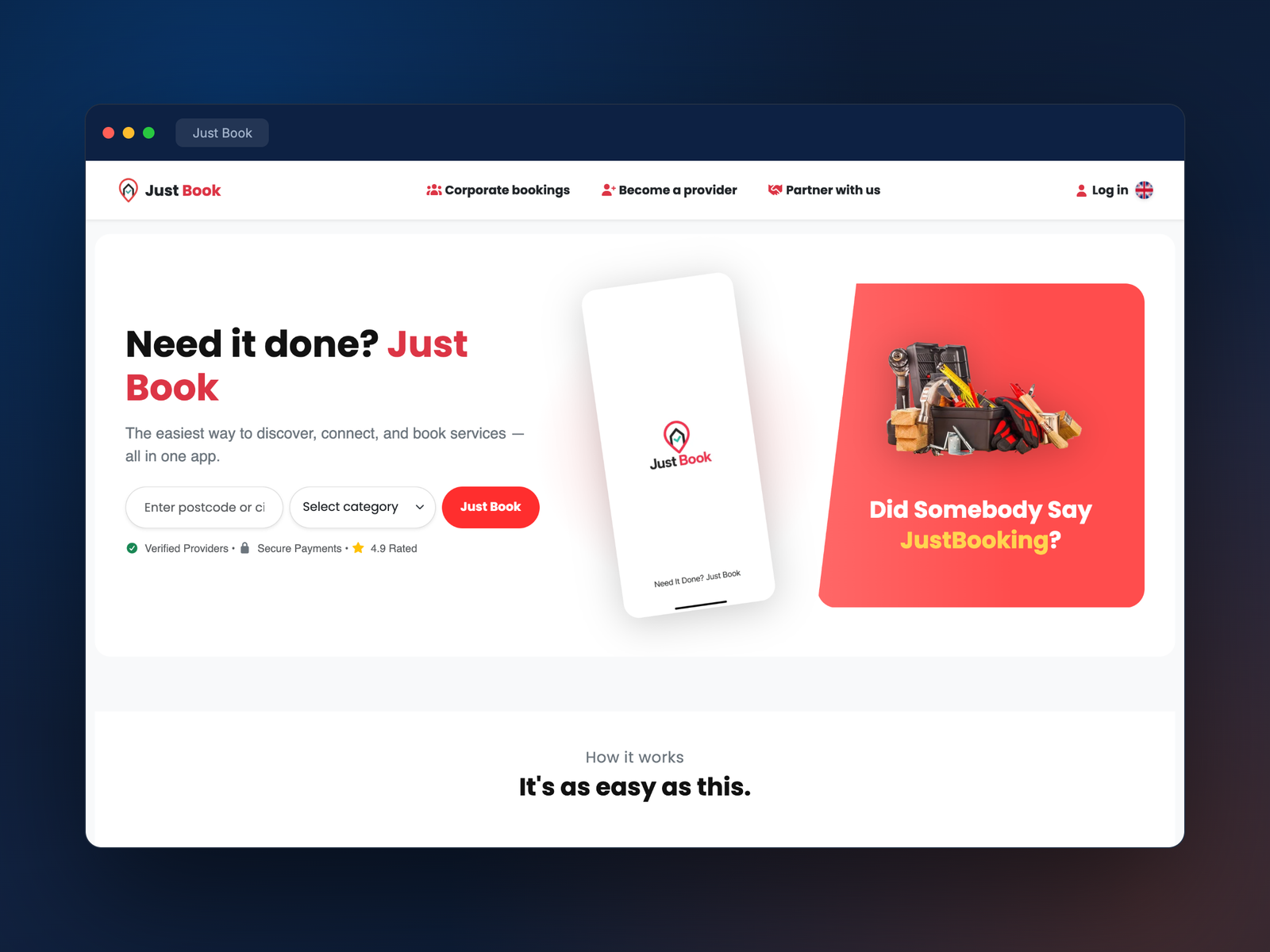
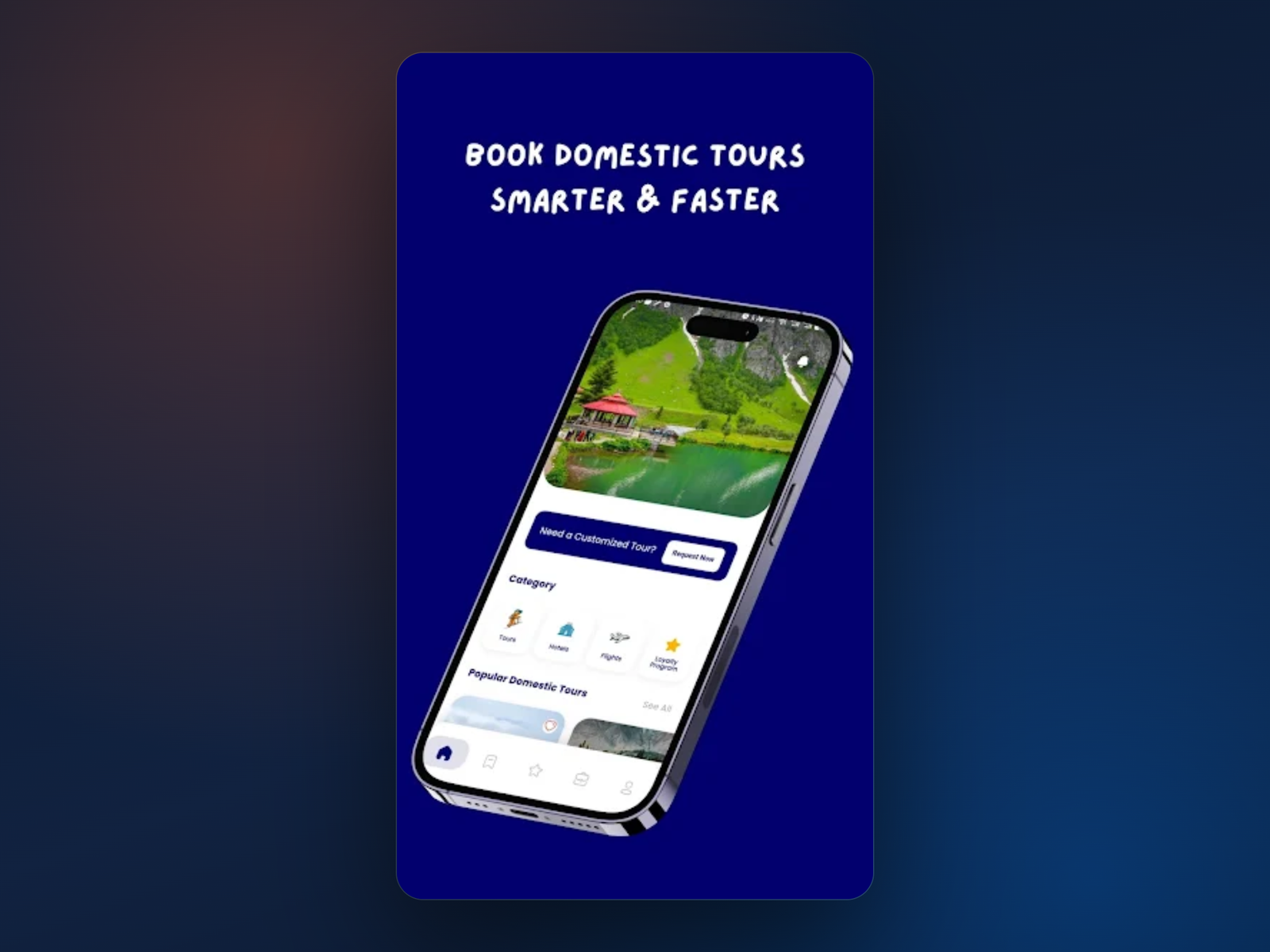
Two audiences, two experiences, one economy underneath. Just Book runs this in Britain across 10,000+ services; Traveloup was the first of its kind in Pakistan.
Field and admin apps
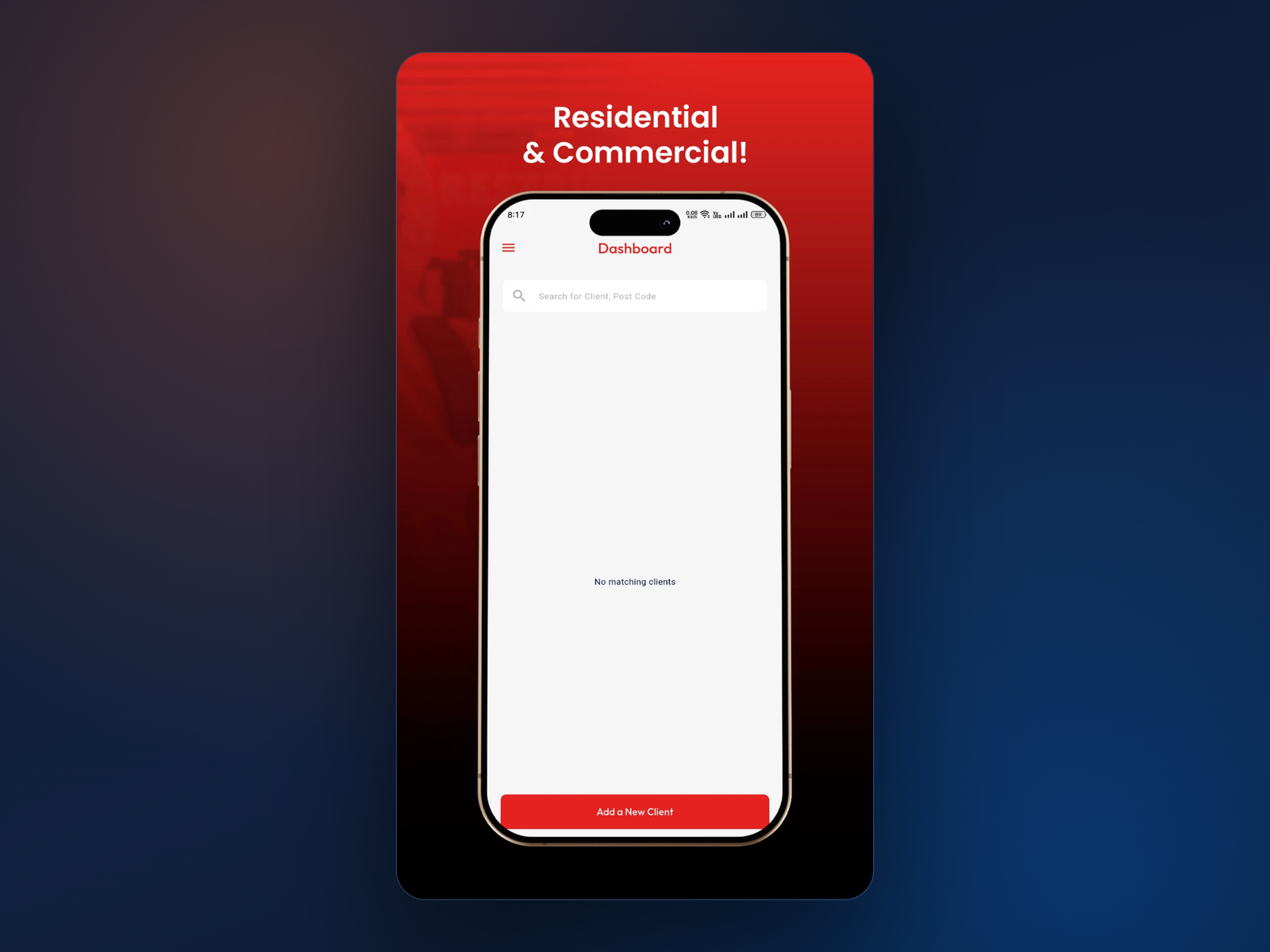
Jobs, clients, invoices and PDFs for teams working away from a desk. RapidKill went from an empty repository to a live store listing in six weeks.
Consumer apps with accounts
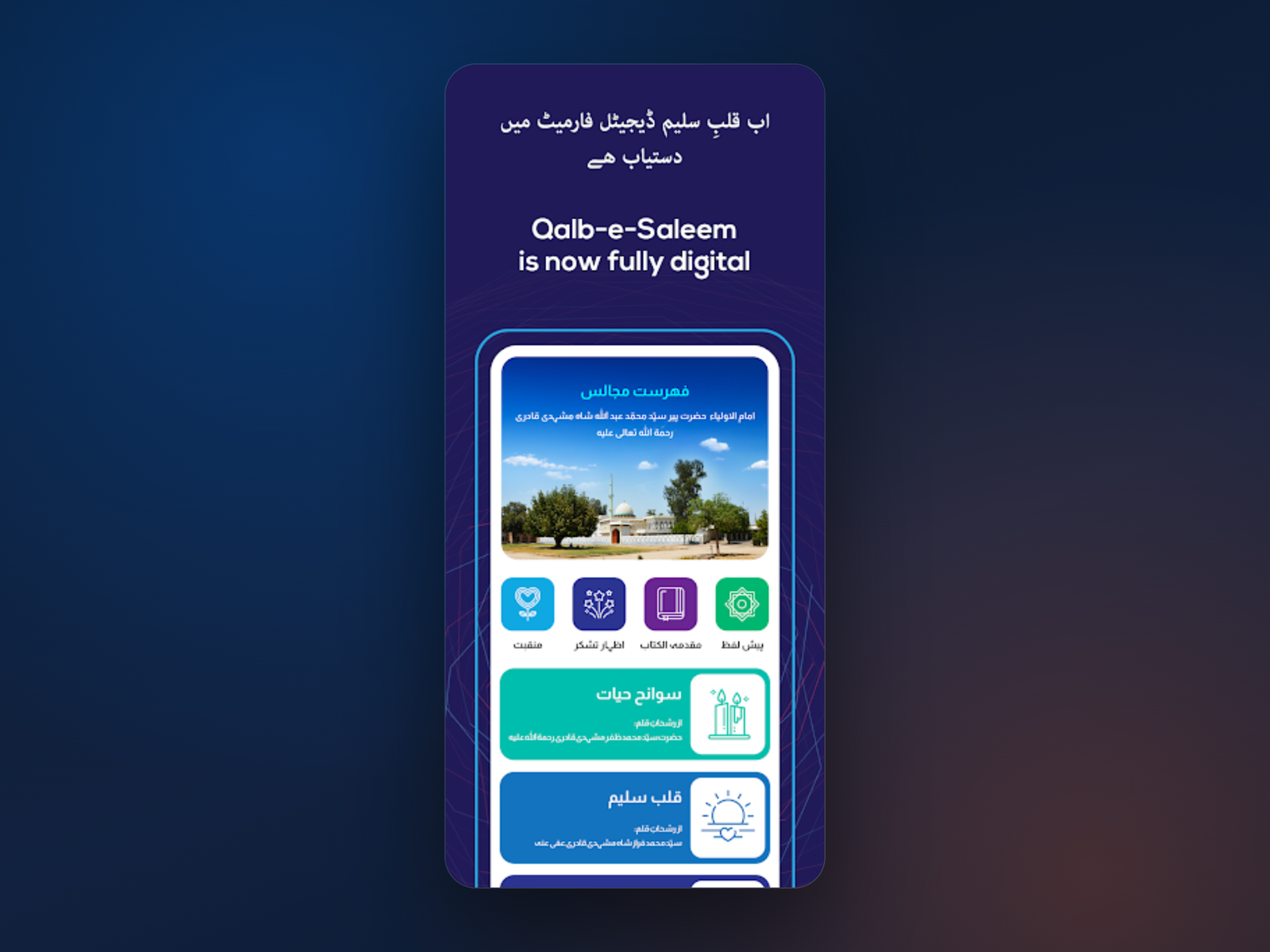
Sign-up, profiles, notifications, content that changes, and offline reading — the shape behind Qalb-e-Saleem and its 4.9-star rating.
Companion apps to a system you already run
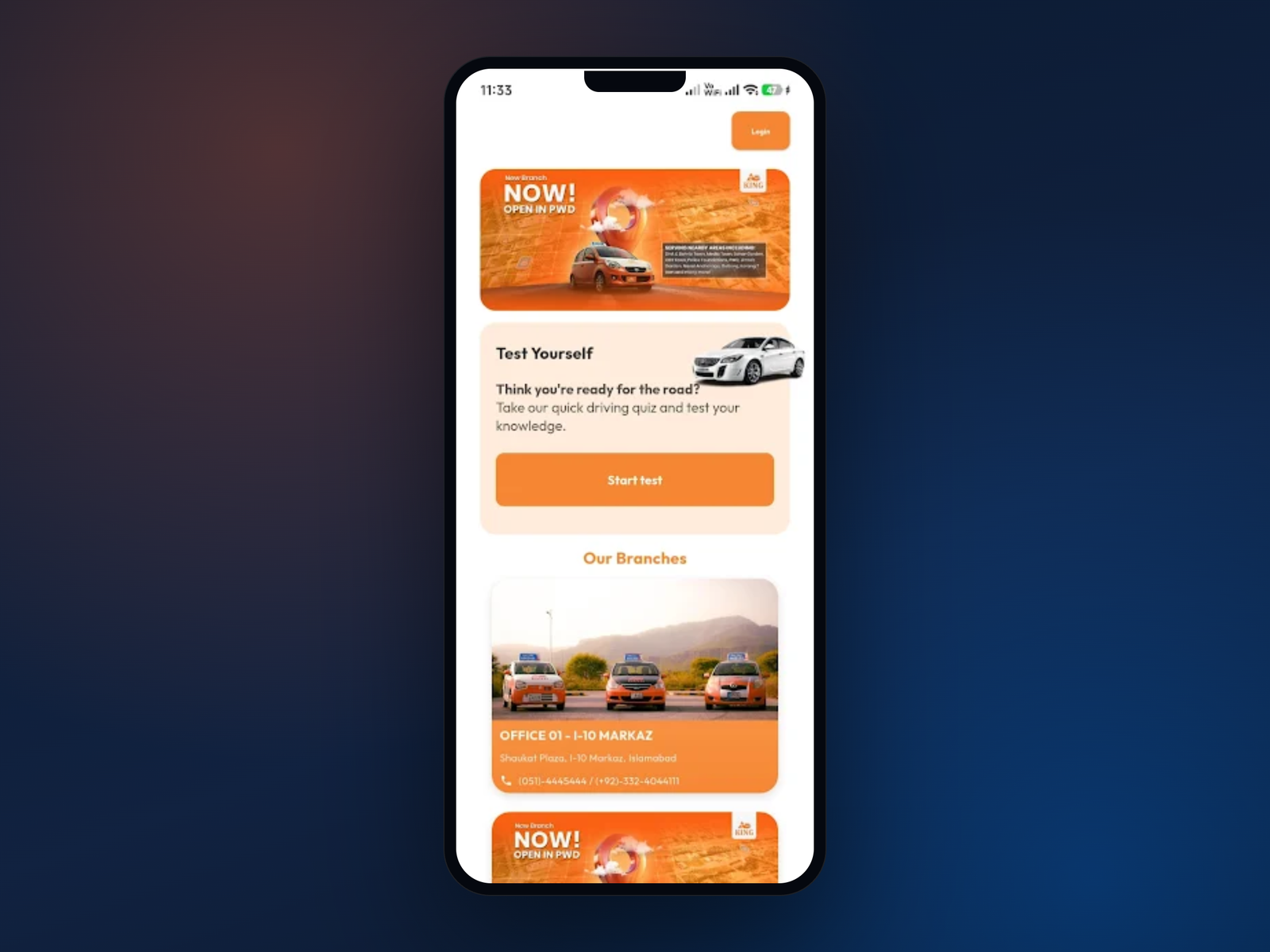
The same backend as your CRM, store or booking platform, in a hand — not a second copy of the truth. King Driving School runs web and app off one Laravel platform.
Booking and payment flows
Real gateways, real refunds, and Apple's in-app purchase rules for anything digital — a business-model constraint dressed up as a technical one.
Rescue of a half-built Flutter app
Somebody started it and stopped. We read the source and give you a written continue-or-restart answer before anyone quotes a build.
Downloadable today
Six Flutter apps, two countries, both stores.

When Flutter is the wrong answer
We build in it because the arithmetic usually favours it, not because we are attached to it. Two native codebases means two teams, two release cycles and every feature specified twice, to buy a difference most people using the app cannot perceive. That is the case for one codebase and it holds for the great majority of apps anyone commissions.
It stops holding in four places, and we would rather lose the enquiry than take a project into the wrong tool. If the product's entire value is a platform capability — serious ARKit work, a Watch or Wear complication, heavy on-device machine learning — native earns its cost. If it is video editing or 3D, native earns it. If your app must be a few megabytes, Flutter's runtime is a real tax. And if you already employ iOS or Android engineers, matching your team beats matching our preference every time; an app your own people cannot maintain is a liability we handed you.
React Native is the closer call, and the honest answer is that the framework matters less than the team. If your web stack is React and the same engineers will maintain the app, that argument is worth more than any benchmark. We would tell you so.
What you are actually buying
People searching for Flutter developers in the USA are generally not buying Dart. They are buying a shipped listing, a signing setup they own, a build that still compiles next year, and somebody who answers when review rejects the submission. So the scope we quote includes store submission, the developer accounts registered to your company rather than ours, the privacy declarations and data-deletion route that review asks for, and the first releases after launch. A quote materially below everyone else's is usually a quote for the build with the release left out.
The same is true of cross platform app development for the USA generally: the saving is real, but it comes from writing the product once, not from skipping the parts that turn a build into a product. Anyone selling the second saving is selling you the .apk.
About the offshore question
Islamabad is our only office and we do not claim otherwise anywhere on this site. In practice that means five hours of live overlap with London and very little with New York on a standard 09:00–18:00 PKT day, which is why an American engagement gets a shifted schedule agreed in the scoping call and written into the contract instead of a coverage promise on a landing page. Just Book and RapidKill were both built this way for British clients, and a store listing does not carry a nationality.
How a build runs
Submission is inside the timeline, not after it.
Screens and states first
Every screen drawn before any code, including the empty, offline and error ones. This is where scope stops moving and the estimate becomes possible.
One fixed price, both platforms
Build, submission and first release on iOS and Android in a single number, sent within 48 hours of the scoping call and moving only if the screen list moves.
On your phone from week two
TestFlight and Play internal testing from the first builds, so you are using the real thing on your own device long before anyone calls it finished.
Published under your accounts, keys handed over
Apple and Google accounts in your company's name before the first submission, listings written, review handled, signing keys and source delivered together.
Money
Priced to a live listing, not to a build folder.
First release
Design, build, both platforms, store submission and the first post-launch fixes. Scoped from the screen list and quoted once.
- ✓Both stores included
- ✓Your developer accounts
- ✓Review handled by us
Takeover of an existing Flutter app
Someone else built it and left, or it builds locally and has never shipped. Assessed in writing first — roughly half are cheaper to finish than to restart, and we will say which yours is.
- ✓Written continue-or-rebuild call
- ✓Source and dependency audit
- ✓Account migration handled
Ongoing releases
Monthly, for the SDK deadlines, policy changes and small features every live app needs. Optional, cancellable, and quoted separately from the build.
- ✓Target API deadlines tracked
- ✓Both stores maintained
- ✓Cancel with notice
No figures appear on this site, in any currency. App cost moves by an order of magnitude depending on whether there are accounts, payments and a backend behind it, so a published number would mislead almost everyone reading it. Send the screen list and the quote follows within 48 hours.
FAQ
What people ask before committing to the framework.
Built and run by us
Our own products, in production.
More from GOFTECH
Where to look next.
WhatsApp Chatbot Development
WhatsApp chatbot development for the USA, UK and Pakistan — starting with a free check of whether your customers use the channel at all.
Shopify Migration Services
Shopify migration services USA and UK merchants can trust with their rankings: every old URL mapped as a named deliverable, store trading…
Build — Products that ship
Mobile apps in Flutter, custom web systems in Laravel and React, Shopify and WordPress stores, AI automation and UI/UX design…