Where the money actually leaks
Almost nobody's problem is the store's appearance.
Retailers arrive asking for a redesign. The teardown usually finds the loss somewhere else entirely, and in three places more often than anywhere else.
The phone experience nobody tested on a phone
Most British ecommerce traffic is mobile, a good share of it on a moving train with two bars of signal. Stores are designed on a 27-inch monitor and signed off on one. The gap between those two experiences is where the conversion rate goes: a hero image at four times the size it displays, a cookie banner covering the add-to-basket button, a filter panel that needs three taps to close. Good ecommerce website development UK retailers pay for starts on the worst device, not the best one.
The checkout you have never completed yourself
Buy something from your own store, with a real card, on a phone, while standing up. Almost everyone who does this finds something — a required field that should not be, a delivery option that does not explain when it arrives, a total that changes at the last step. That last one is the single largest cause of abandonment and it is usually a delivery cost revealed too late rather than a delivery cost that is too high.
Nobody owns the boring half of retail
Returns, exchanges, out-of-stock behaviour, back-in-stock notifications, and what a customer sees when they order the last one at the same moment as somebody else. None of it is glamorous, all of it happens weekly, and it is almost never in a build scope. The first January after launch is when a retailer discovers whether their agency thought about returns.
Delivered
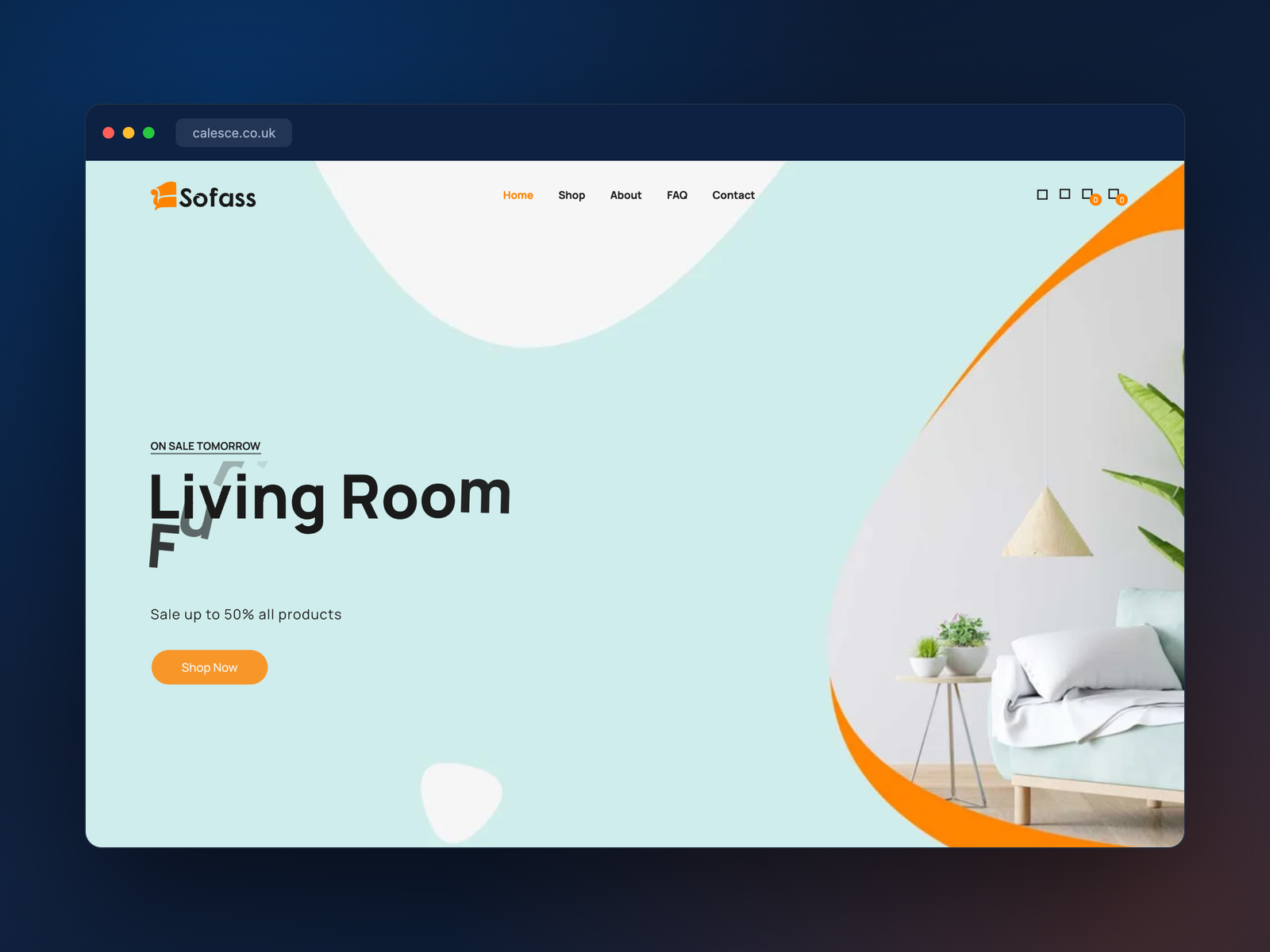
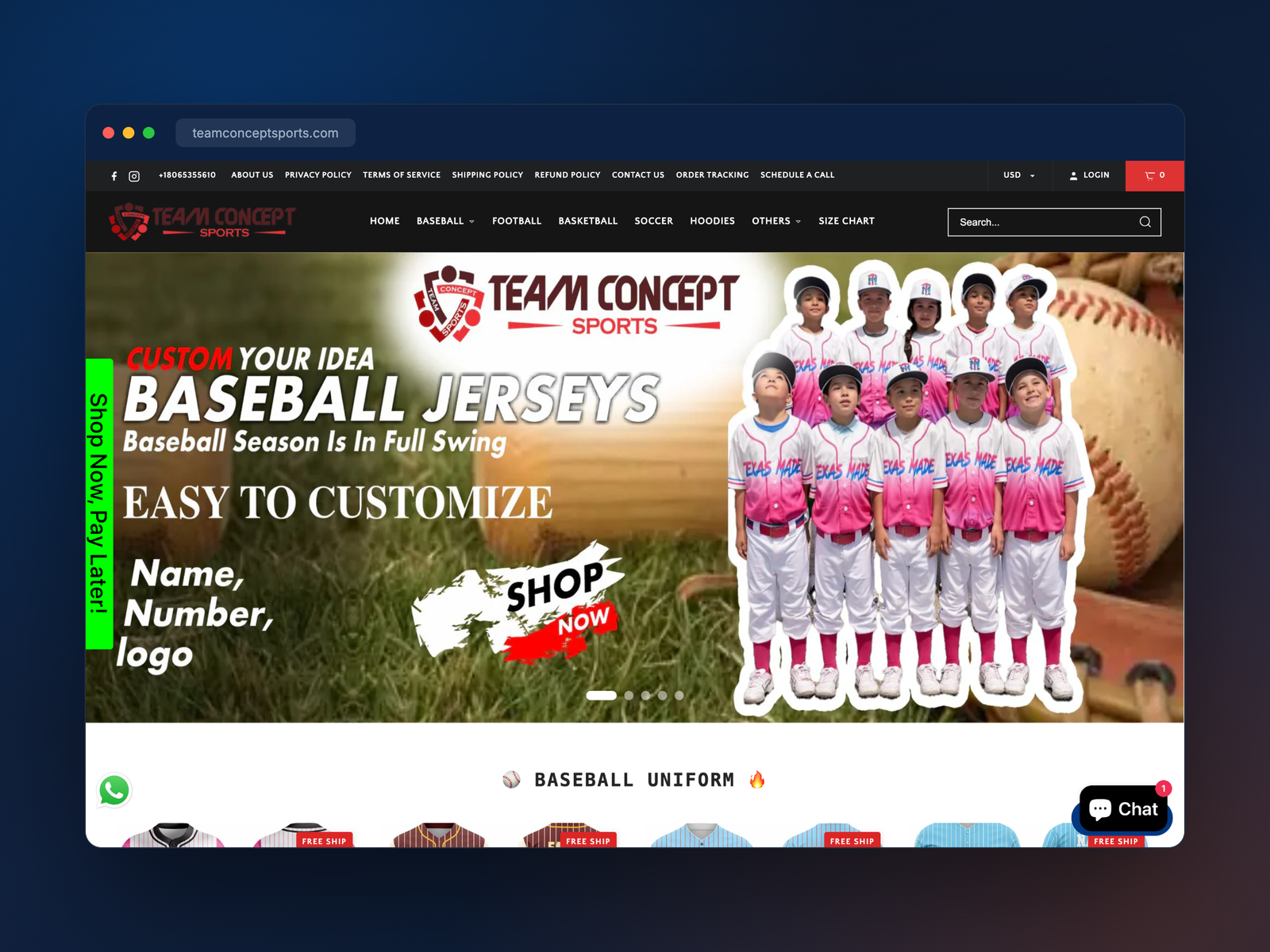
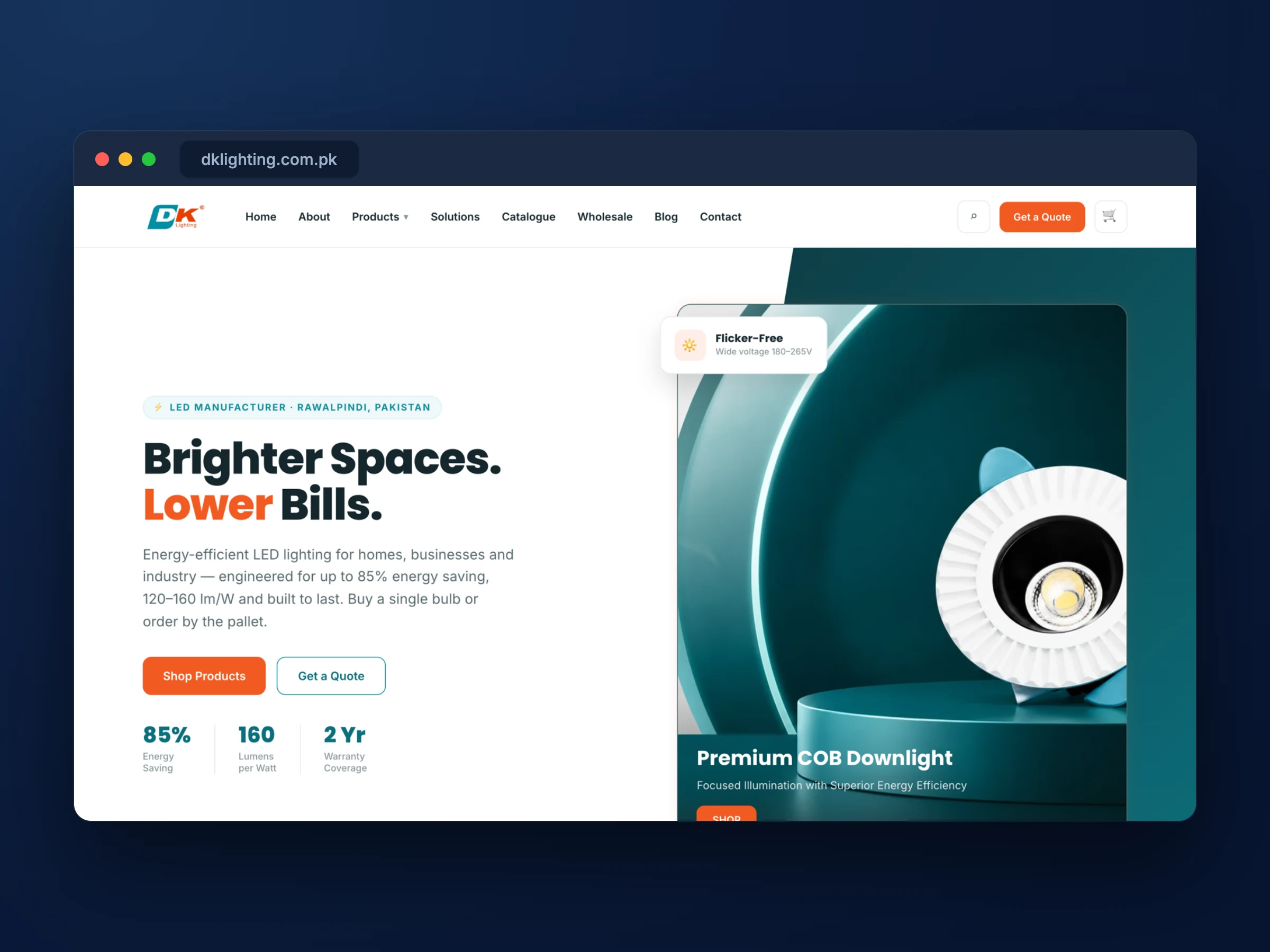
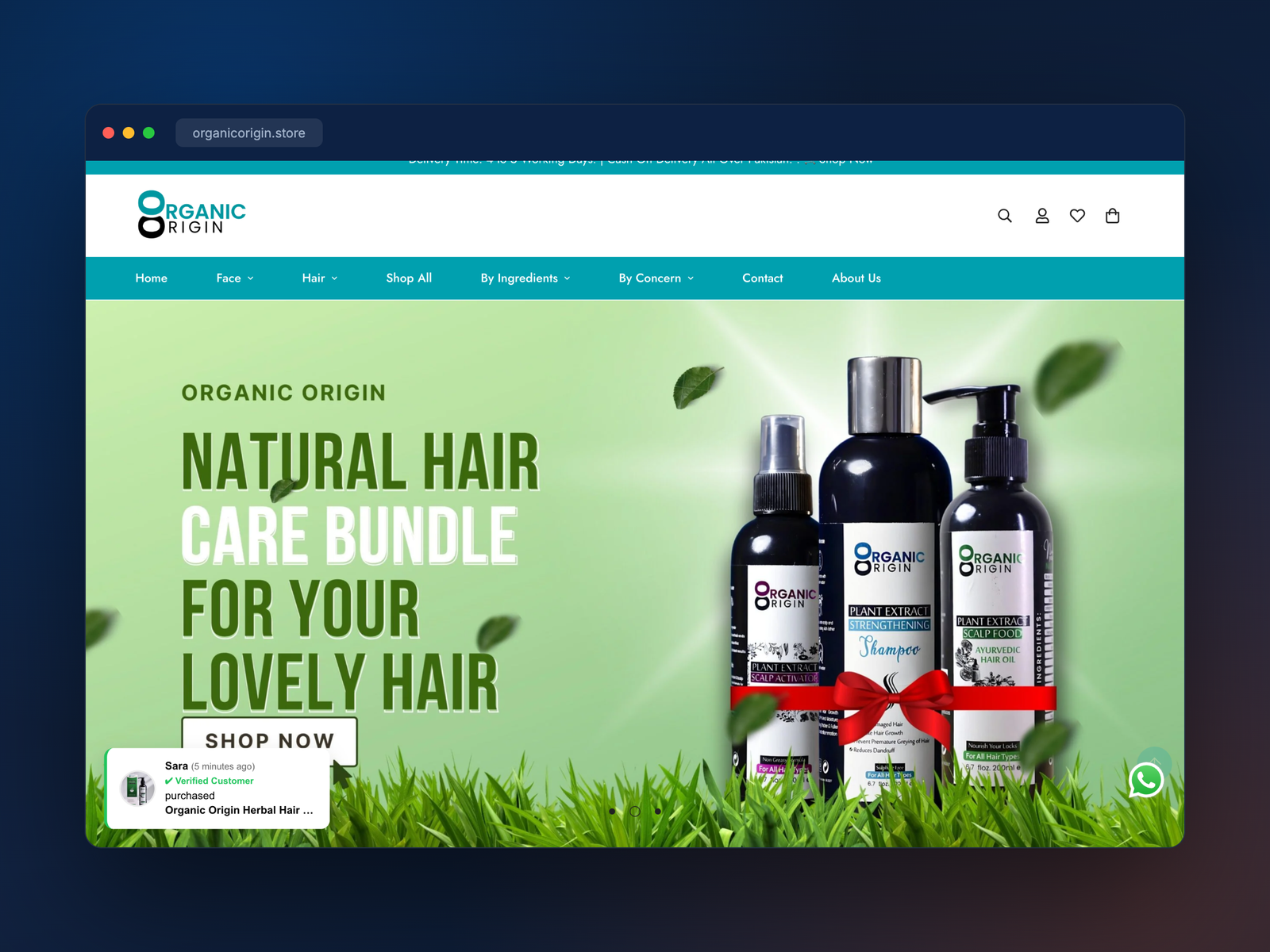
Four platforms, real catalogues.

What we can prove, and what we cannot
This page is answerable in two halves, and only one of them is currently backed by published evidence. Being clear about which is which is more useful to you than a page that blurs them.
The build half, which is checkable
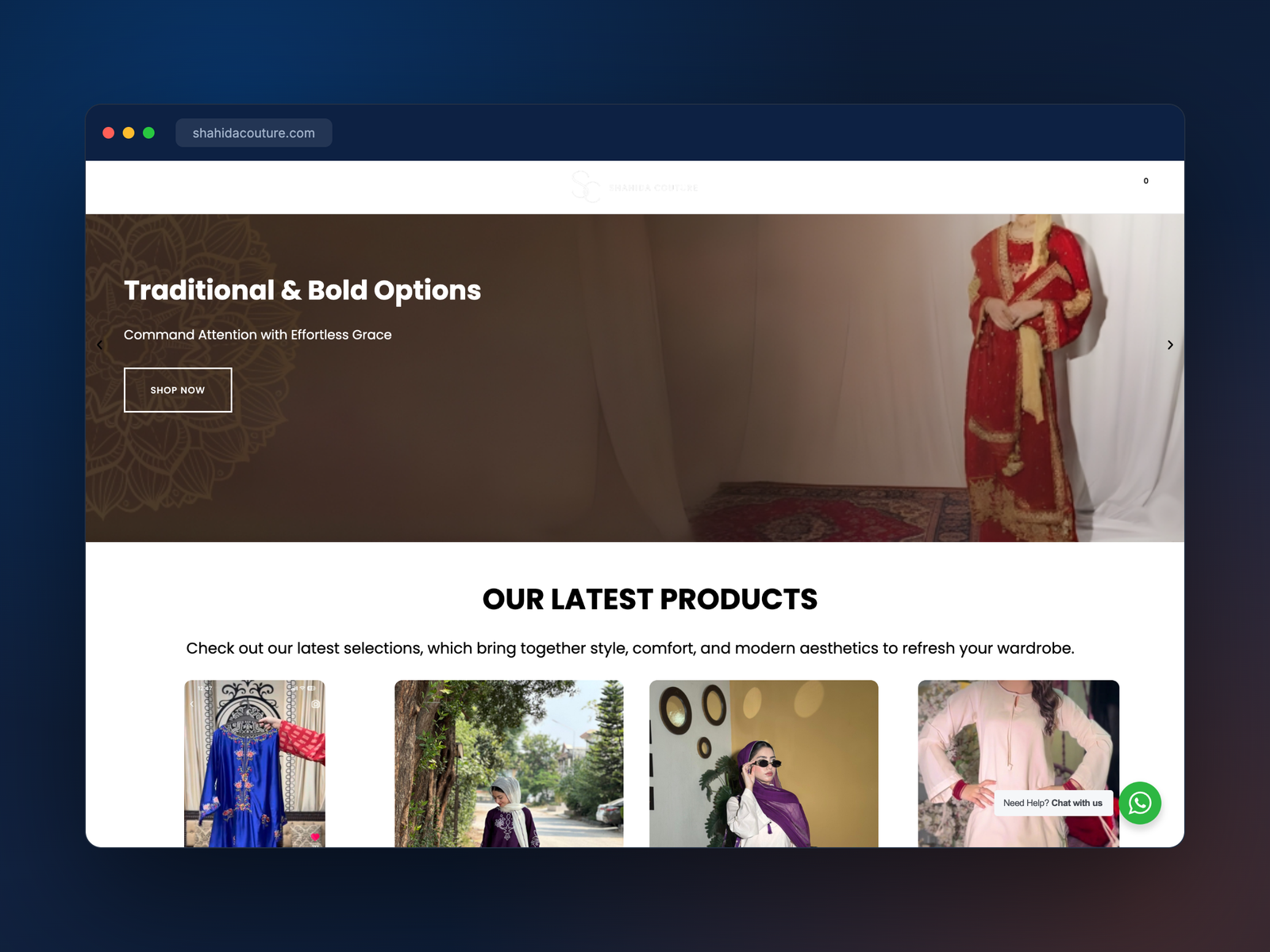
Fourteen published stores across four platforms. Calesce is a British WooCommerce furniture retailer whose catalogue has grown to 32 products since handover without us touching it. Team Concept is Shopify, in the United States. DK Lighting is a custom React storefront with dual retail and wholesale pricing, a guest quote builder for contractors and an admin panel the client runs it from — 84 products, 126 indexable pages, two weeks. Organic Origin carries a 4.9-star rating. All of them are openable and none of them is a mockup.
The growth half, which is not
An ecommerce growth agency UK retailers hire on results should be able to show you those results. Ours are not published: every campaign write-up in our library is still in draft, and the decision has been to leave them there rather than activate a stack of four-sentence stubs to inflate a count. So this page does not claim campaign outcomes it cannot link to. What it offers instead is the account teardown — free, written, 48 hours — which reads your actual store and ad accounts and tells you what is leaking. That is checkable in a way a case study you cannot verify is not.
Choosing a platform, honestly
Shopify if you want the hard parts rented and your catalogue is conventional. WooCommerce if you want to own it and someone will keep it patched. A custom build almost never, and only when your commercial model does not fit either — DK Lighting needed retail and wholesale pricing on every product with a guest quote flow for contractors, which is genuinely awkward on both platforms. Any ecommerce development agency in the UK or elsewhere that opens with a platform recommendation before reading your catalogue is selling what they already know.
Go deeper
By platform.
Shopify
Theme and section work, app reduction, and the honest note about British references.
WooCommerce and WordPress
Where the British store proof is — and what Calesce says about handover.
Something bespoke
For commercial models neither platform expresses well, like retail and wholesale on one catalogue.
A shopping app
When repeat purchase frequency genuinely justifies one — and the honest test for whether yours does.
How it runs
The teardown comes first.
Store teardown
Free, written, inside 48 hours. Where the funnel leaks, on a real phone, with the specific offenders named.
Scope and fixed price
Platform decision, every template, the returns and stock behaviour written down — and what is out.
Build without closing the shop
Work happens on staging or a duplicate theme. Your live store keeps selling throughout.
Launch and hand over
Redirects mapped, admin and hosting in your name, and a walkthrough for whoever runs the catalogue.
Money
How we quote store work.
New store, fixed scope
Platform, templates, catalogue structure and launch. One written scope, one price in pounds, sent inside 48 hours of the teardown call.
- ✓Platform recommended, not assumed
- ✓Returns and stock behaviour scoped
- ✓Full handover
Fix the funnel
A store that gets traffic and does not convert. Scoped from the free teardown as a fixed piece of work against named problems.
- ✓Measured before and after
- ✓Named offenders, not a report
- ✓No retainer required
Replatform
Moving between systems. Quoted after we have read your catalogue, because product structure is what makes a migration easy or awful.
- ✓Redirect map as a deliverable
- ✓Order and customer history moved
- ✓Live store keeps trading
No figures on this site, in any currency. A store quote turns on how unusual your product structure is and how much merchandising needs custom work — both knowable only after the teardown, which is free and yours whether or not you hire us.
FAQ
Straight answers.
Built and run by us
Our own products, in production.
More from GOFTECH
Where to look next.
Ecommerce Development for US Retailers
An ecommerce development agency USA retailers can check: catalogue, checkout, shipping zones, tax and returns. Two American stores…
WordPress & WooCommerce Development for UK Businesses
A WooCommerce and WordPress agency UK owners stop needing: eleven published builds, including a British WooCommerce store the client runs…
Ecommerce Development for Australian Stores
An ecommerce development company Australia's subscription stores can check: FleaMail's plan builder, checkout and recurring billing…