GOFTECH is a registered software house with the Pakistan Software Export Board, the government body for Pakistan's IT exporters.
What we see from this side of the twin cities
The first system usually replaces a register, not a website.
Rawalpindi work looks different from capital-side work. It is older businesses with real operations, and the software question arrives late and under pressure.
The ledger is the system
Stock, credit, receivables and who owes what all live in a book and in one person's memory. It works, until that person is unavailable or until two branches need the same number at once. The first build is almost never a website — it is the thing that turns the ledger into something two people can read at the same time.
A previous attempt already failed
A great many businesses here have already paid for software once. It was usually a generic package that did not match how the trade actually works, abandoned within months, and the memory of it makes the second attempt harder to justify internally. That history is worth talking about openly rather than around.
Nobody in the company is technical
Which means the system has to be usable by people who did not choose it, in Urdu-speaking workflows, on the phones they already have. Software written for a technical buyer fails here for reasons that have nothing to do with quality.
What gets built for businesses here
Operations first, marketing second.
Stock, sales and receivables
The ledger, made shared. Branches, credit, returns and the reports the owner actually checks, built around the trade rather than a template.
Booking and scheduling
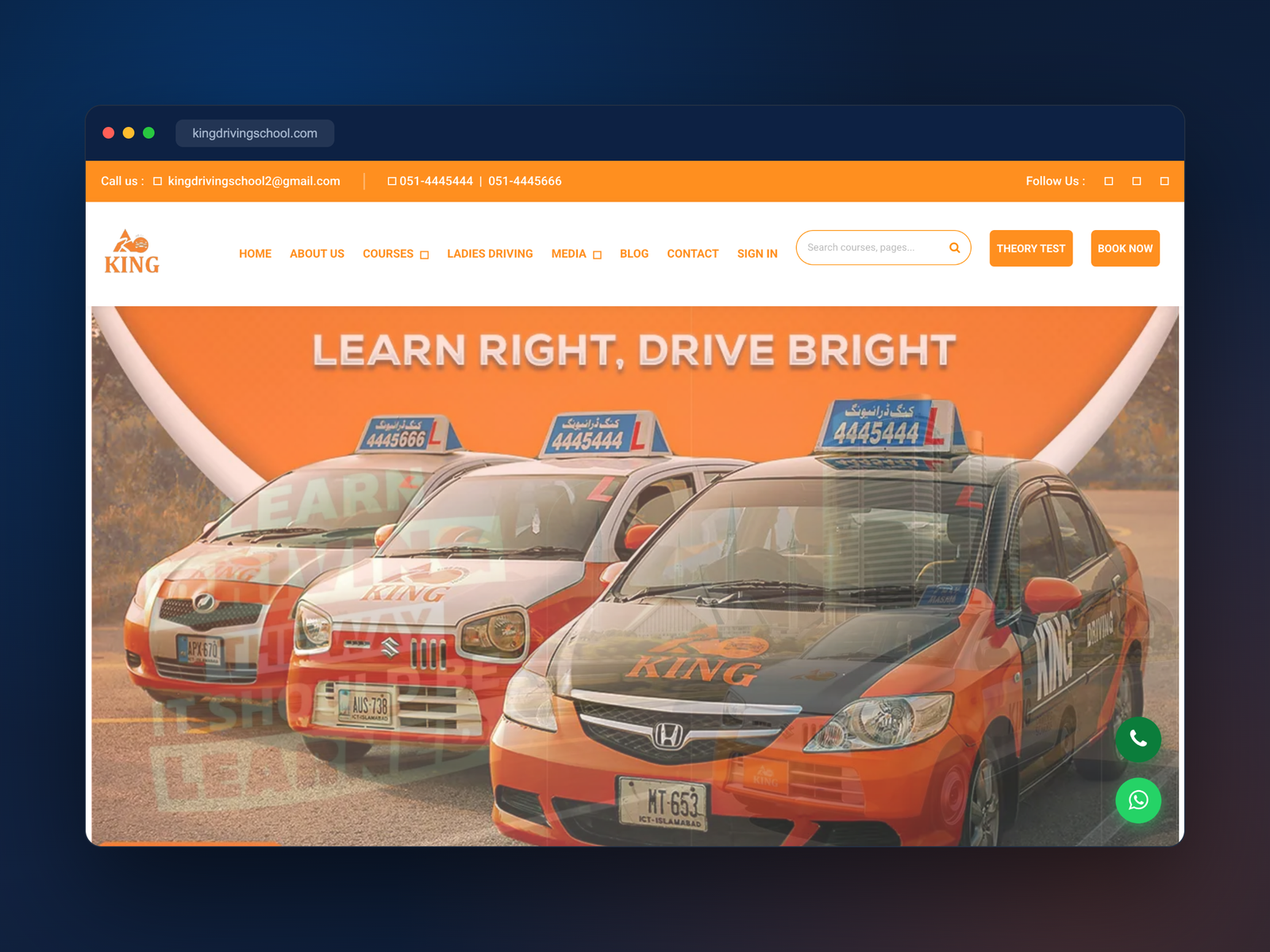
Clinics, driving schools, workshops and academies. King Driving School runs on one of these, with over two hundred thousand records behind it.
An online store, when it is the right time
Cash on delivery, courier booking and confirmation before dispatch. We will tell you if your business is not ready for one.
A site that works as a phone number
For most trading businesses the website's job is to be found, be trusted and start a WhatsApp conversation. That is a small, cheap build.
An app for the field
Delivery, collection and inspection teams. Works offline, syncs later, and does not assume signal that is not there.
Being findable locally
The Business Profile, the details agreeing across the web, and the map results your customers use. Cheap and usually neglected.
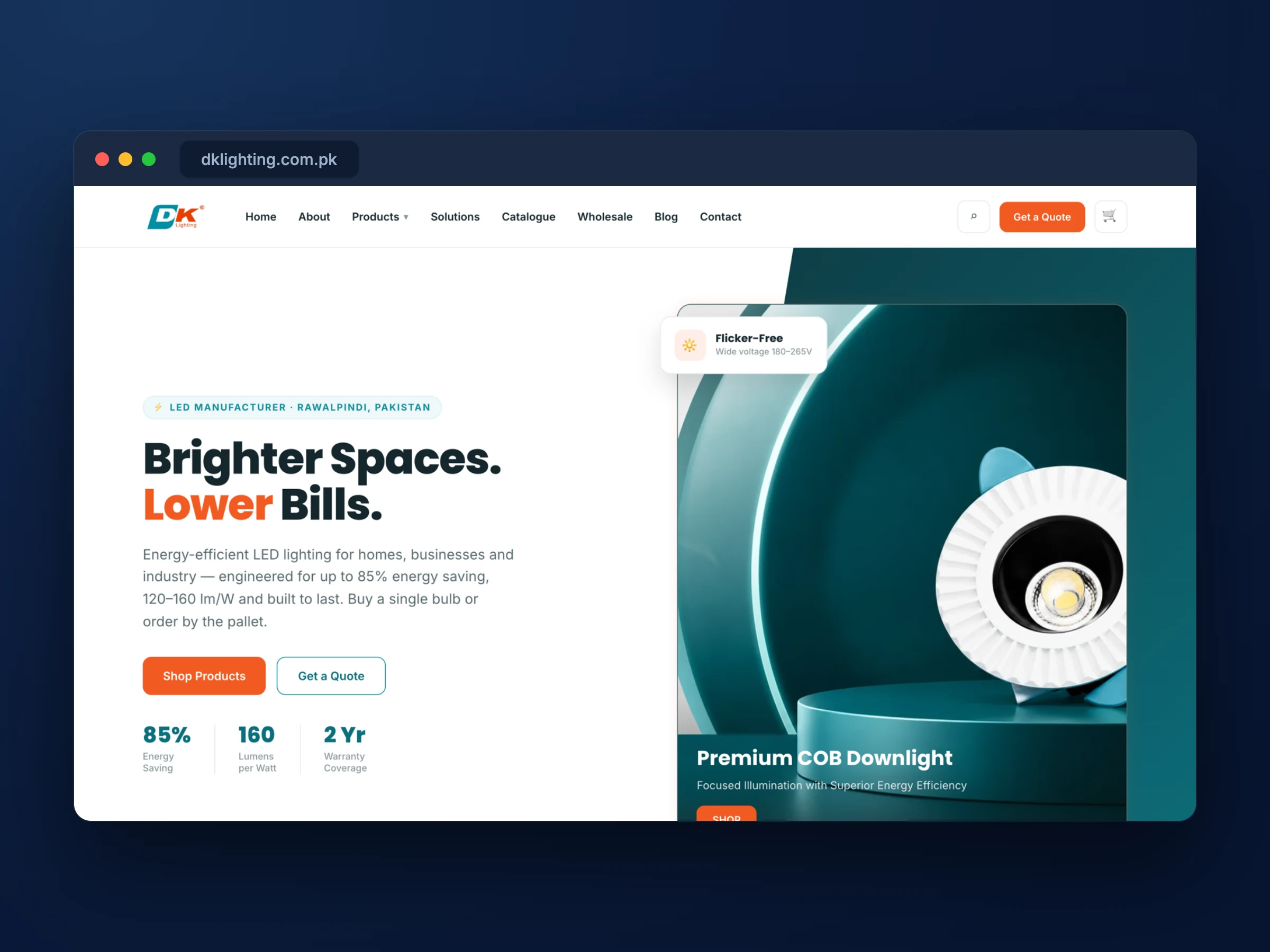
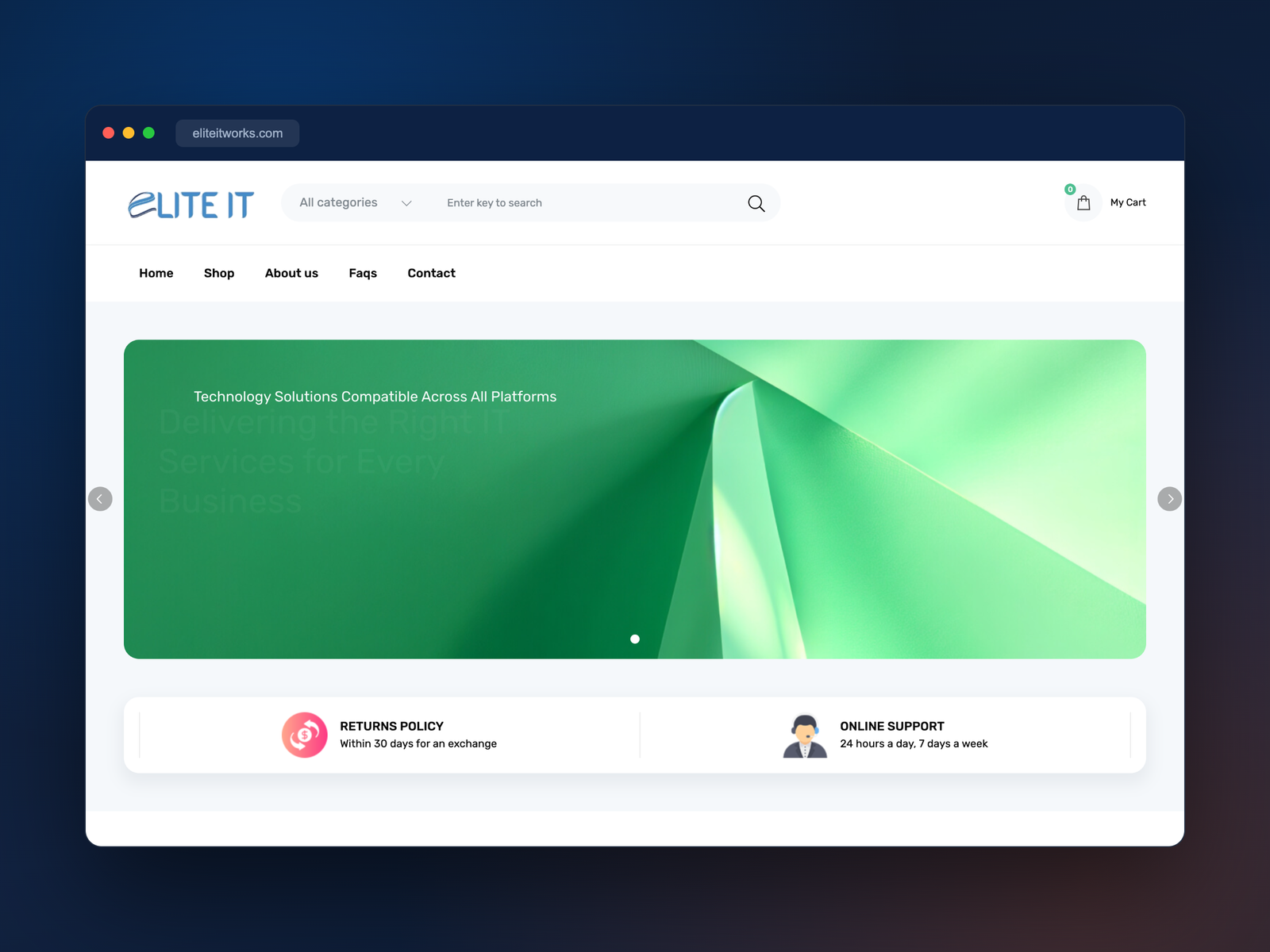
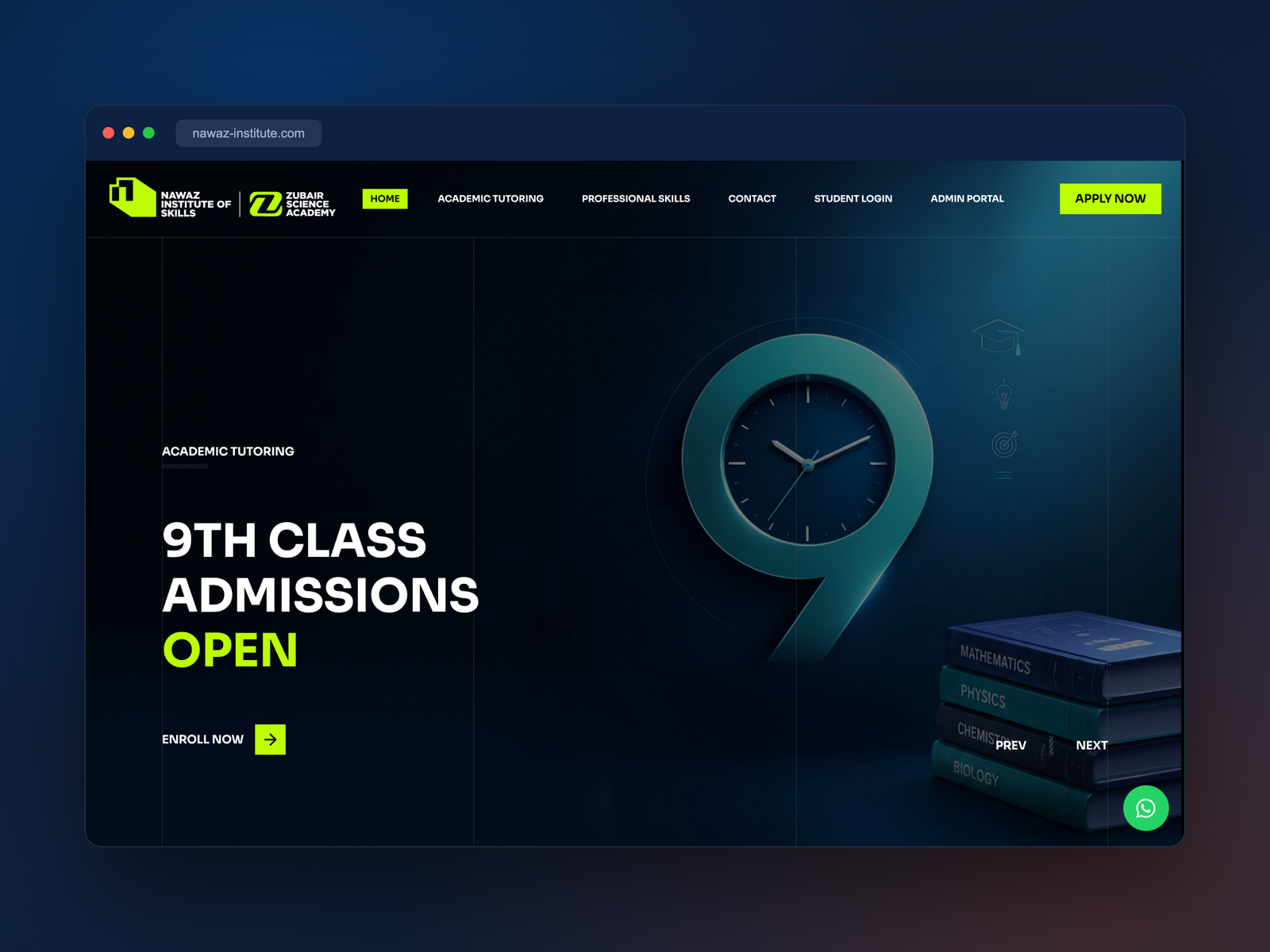
Systems in daily use
Built for operators, not for a portfolio.
One office, and why that is the honest answer
We do not have a Rawalpindi address and this page is not going to invent one. There is one office: Second Floor, Office No 02, Above Minnie Minors, Main PWD Road, Islamabad, Pakistan 44000, on a verified Google Business Profile, open Monday to Friday 9am to 6pm and Saturday 10am to 4pm. It sits on the Islamabad side of the boundary and it is a twenty-minute drive from most of Rawalpindi — closer to Saddar than plenty of Islamabad addresses are.
So a Rawalpindi client is treated as a local client in every way that matters. Meetings happen in person when they help. Visits are not billed as travel. A Friday afternoon problem gets a Friday afternoon answer. There is no separate rate, no minimum project size for out-of-city work, and no coordinator standing between you and the person building the thing.
The reason to say all this plainly is that a fabricated second address is the single easiest thing for a buyer to catch and the hardest thing to recover from — and several firms competing for this search have one. Ask any shortlisted firm for their address, then look it up. It is a five-minute test and it is more informative than a portfolio.
Where the money actually goes wrong on a first system
Two failures, both avoidable. The first is buying software shaped like somebody else's business. Generic trading or accounting packages assume a standard process, and most established Rawalpindi businesses do not have one — they have a specific way of handling credit, returns and part payments that took twenty years to settle and is genuinely better than the standard. Software that fights that gets abandoned. The build here starts by writing your process down, exactly as it is.
The second is building everything at once. The right first phase is the part currently breaking — usually stock across branches, or receivables — and nothing else. It is live in weeks, it is judged on whether it helped, and the next phase is decided after that rather than before. That is also how you keep the option of stopping, which is worth more than any discount.
How it runs
We come to you first.
A visit, not a call
For an operational business the first meeting should be where the work happens. Free, and it is where the real requirements surface.
Your process, written down
Exactly as you run it, including the exceptions. This document is the scope, and you own it whoever builds the system.
Phase one is the part that hurts
Live in weeks, in use by your team, judged on whether it helped. Nothing else is built until that answer is yes.
Handover in your name
Server, database, code and every account registered to your business, plus documentation for whoever comes after us.
Money
Phased, so a first attempt cannot be a large mistake.
Process write-up
A visit and a written description of how your business actually runs, with the software decision at the end of it. Yours to keep, including if you go elsewhere.
- ✓Written in plain language
- ✓Yours either way
- ✓Fixed, quoted up front
Phase one
The single part of the operation that is currently costing you money, built and in use. Small enough to judge, and priced on its own.
- ✓Live in weeks
- ✓Stop after it if it is enough
- ✓Fixed price
Support and extension
Monthly, once something is live and people depend on it. Optional — the handover is complete whether or not you take it.
- ✓No lock-in
- ✓Your servers and accounts
- ✓Cancel with notice
No figures on this site. The same brief costs very different amounts depending on how many exceptions your process carries, and we cannot know that until we have seen it, so the number follows the visit rather than preceding it — within 48 hours.
FAQ
Straight answers.
Built and run by us
Our own products, in production.
More from GOFTECH
Where to look next.
Software House in Islamabad
A software house in Islamabad with a real office on Main PWD Road. Web systems, mobile apps and stores — 110+ projects delivered, full…
Web Development in Australia
A web development company Australia can check: an Islamabad studio with three Australian clients, a WordPress-to-Next.js re-platform, fixed…
Web Development in Pakistan
An Islamabad-based web development company in Pakistan building sites, stores, apps and internal systems. 110+ projects delivered, full…