What you are actually buying
Three different jobs are sold under two letters.
Most disappointing search retainers are a mismatch rather than a fraud: the business needed one of these and bought another. They have different costs, different timescales and different people doing them.
The technical job
Whether search engines can crawl, render and understand your site at all. Indexability, speed on a real phone on a real connection, structured data, canonical handling, redirect maps after a rebuild, and whether your content exists in the HTML or arrives later via JavaScript. It is finite, it is verifiable, and it is the half we can actually evidence. A technical SEO agency USA buyers hire for this should hand over a list of specific defects with locations, not a score out of a hundred.
The content job
Whether anything on your site answers the question somebody typed. This is writing, it is slow, and it is where most of the value sits once the technical floor is met. The failure mode is a monthly quota of eight-hundred-word posts about nothing, produced because the retainer needs a deliverable. Fewer, better, aimed at queries with actual intent behind them beats volume every time, and it is harder to sell because it produces less to show at the monthly call.
The authority job
Whether anyone credible references you. The slowest, the least controllable, and the one where the industry's worst practices live — bought links, guest post networks, directory packages. It is also the reason a competitor with a worse site outranks you. Be suspicious of anyone who promises it on a timetable, and more suspicious of anyone who will not say where the links come from.
What we can prove, and what we cannot
Every campaign write-up in our library is still a draft, in every market. We have chosen to leave them there rather than activate a set of four-sentence stubs so this page can display a number, and the consequence is that we cannot show you an American client whose traffic doubled. Plenty of competing pages will. Ask them for the Search Console screenshot with the property name visible and the date range unedited, and see what comes back.
What is checkable right now
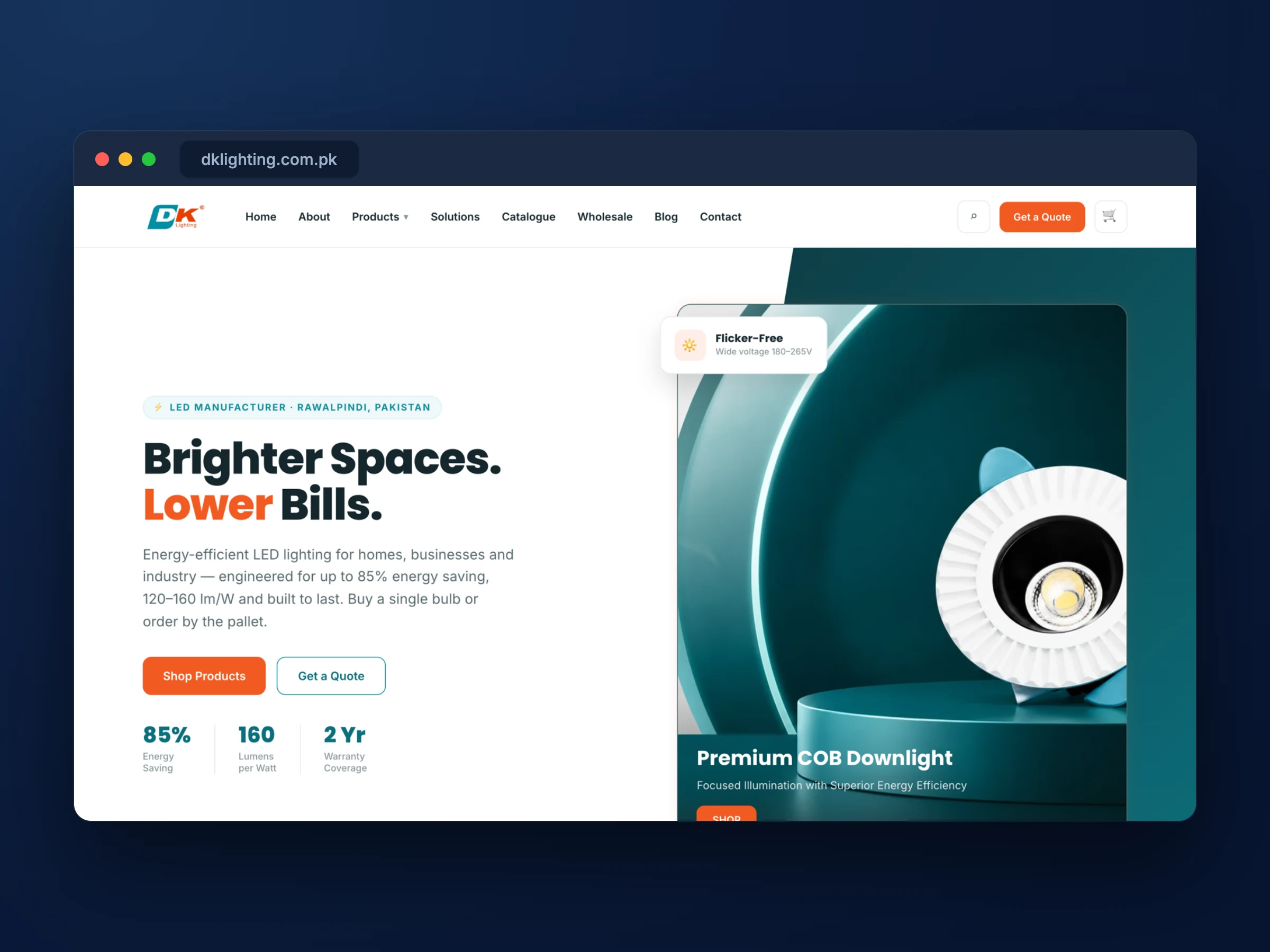
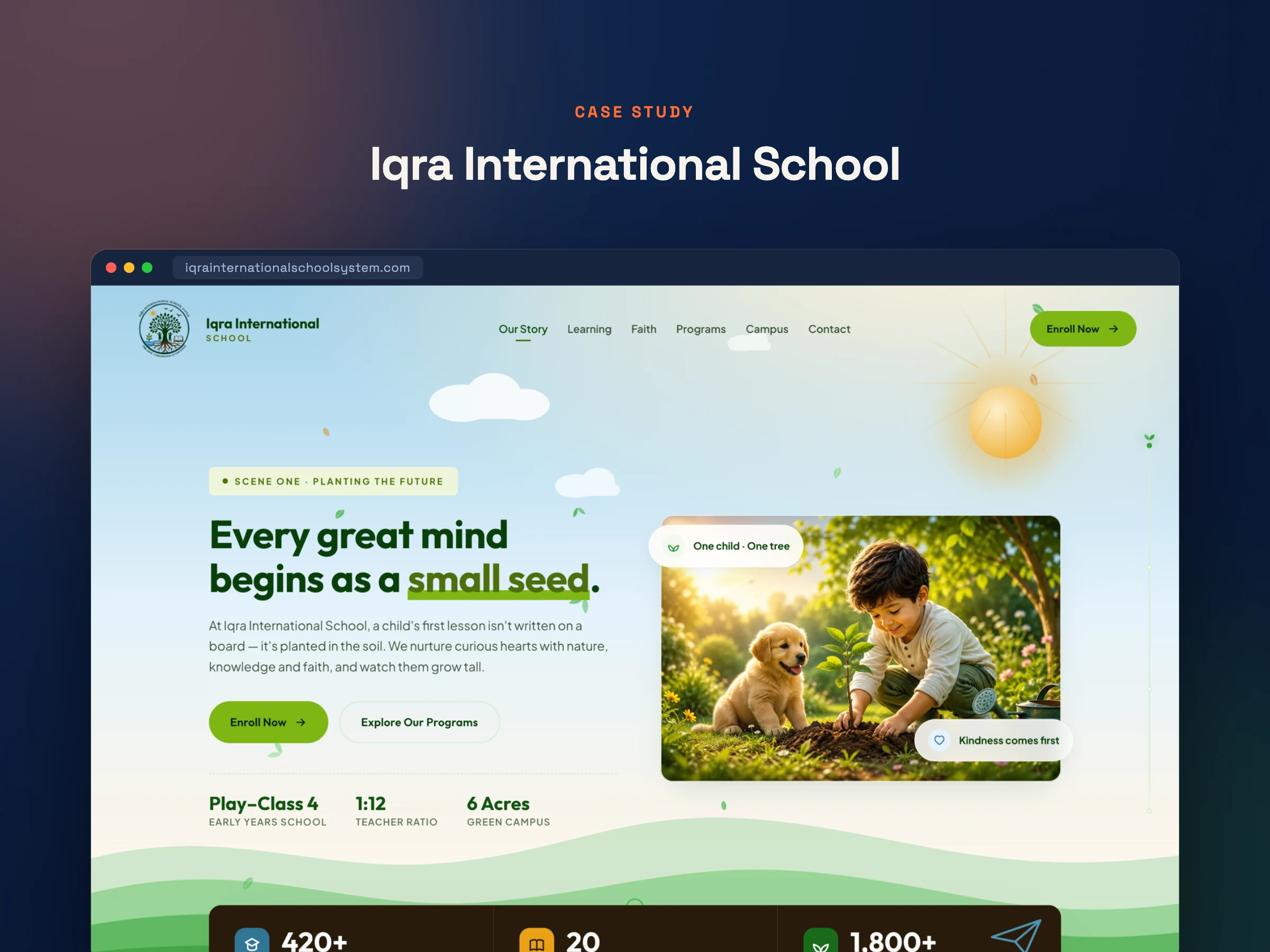
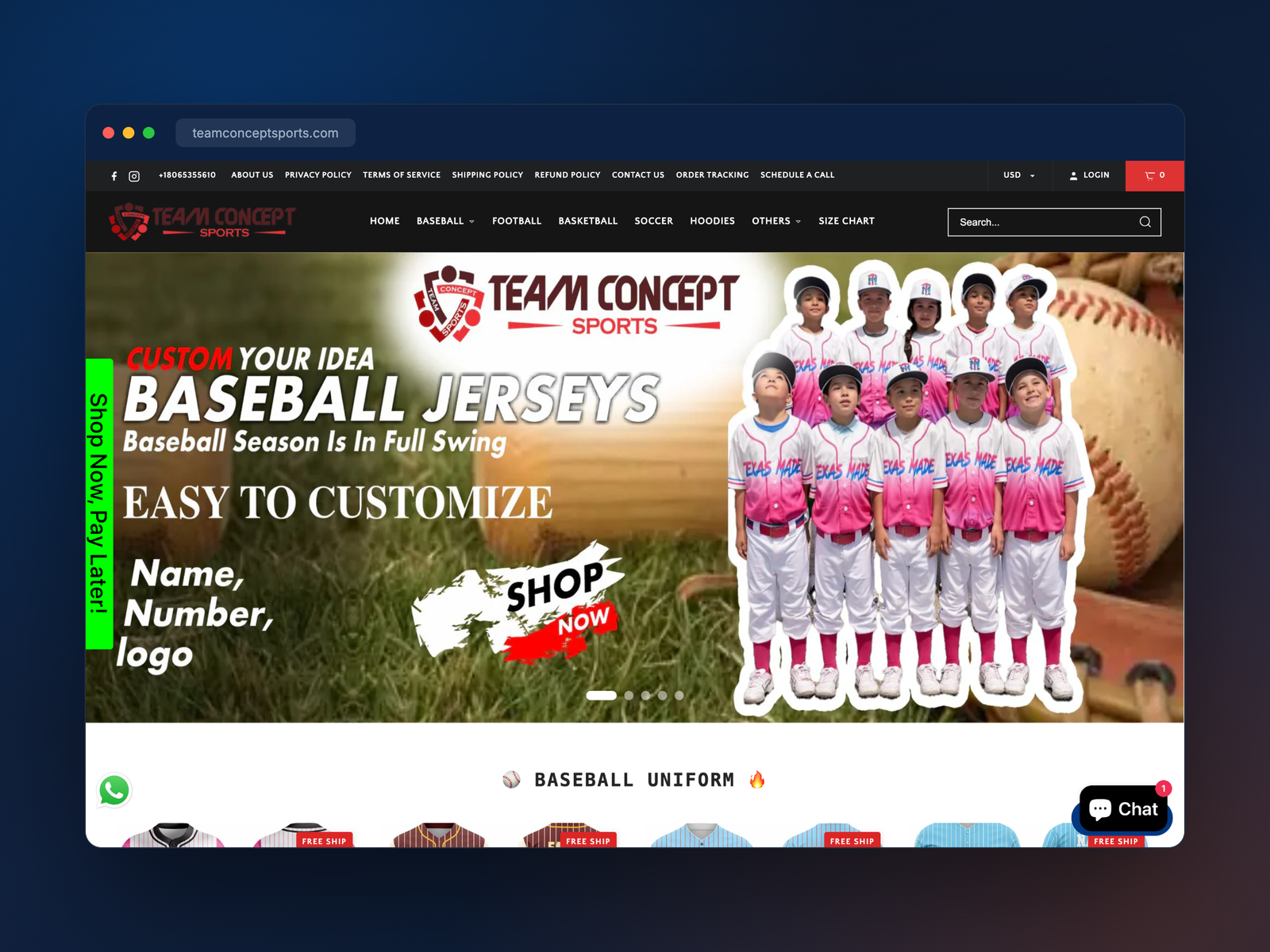
The technical half, which is the half most agencies subcontract and the half a technically-minded buyer is usually trying to assess anyway. DK Lighting ships 126 indexable pages with server-side meta, Open Graph, canonicals and JSON-LD injected before the HTML leaves the server rather than painted on afterwards by JavaScript. Iqra ships School and Course schema. The American store we built, Team Concept, runs 675 products through 45 collections — and catalogue structure at that scale is a search problem long before it is a design one, because it determines what can be crawled, what competes with itself and what is reachable in two clicks.
And this site, which you are reading
This domain runs a documented keyword program: a fixed placement budget per page, an automated check that fails a build for over-optimisation, a corpus check for two pages competing on the same query, and a published log of what shipped each month including what did not work. You can read the pages and judge whether they are written for a reader or for a crawler. That is a demonstration rather than a result — this program started recently and the analytics baseline is newer still, so anyone claiming a ranking outcome from it this early would be inventing one.
The part about maps, which we cannot do for you
We have no American office, so we cannot rank in the local pack for an American city and will not imply we can. If your customers search with a city attached and the map results are where the business comes from, what you need is a Google Business Profile at a real address with real reviews — which is largely not an agency purchase at all, and we will tell you so rather than sell you a retainer that cannot touch it. Where we compete is the organic results underneath the map, which are winnable from anywhere and are what most ecommerce SEO agency USA retainers are actually fighting over.
The technical half, evidenced
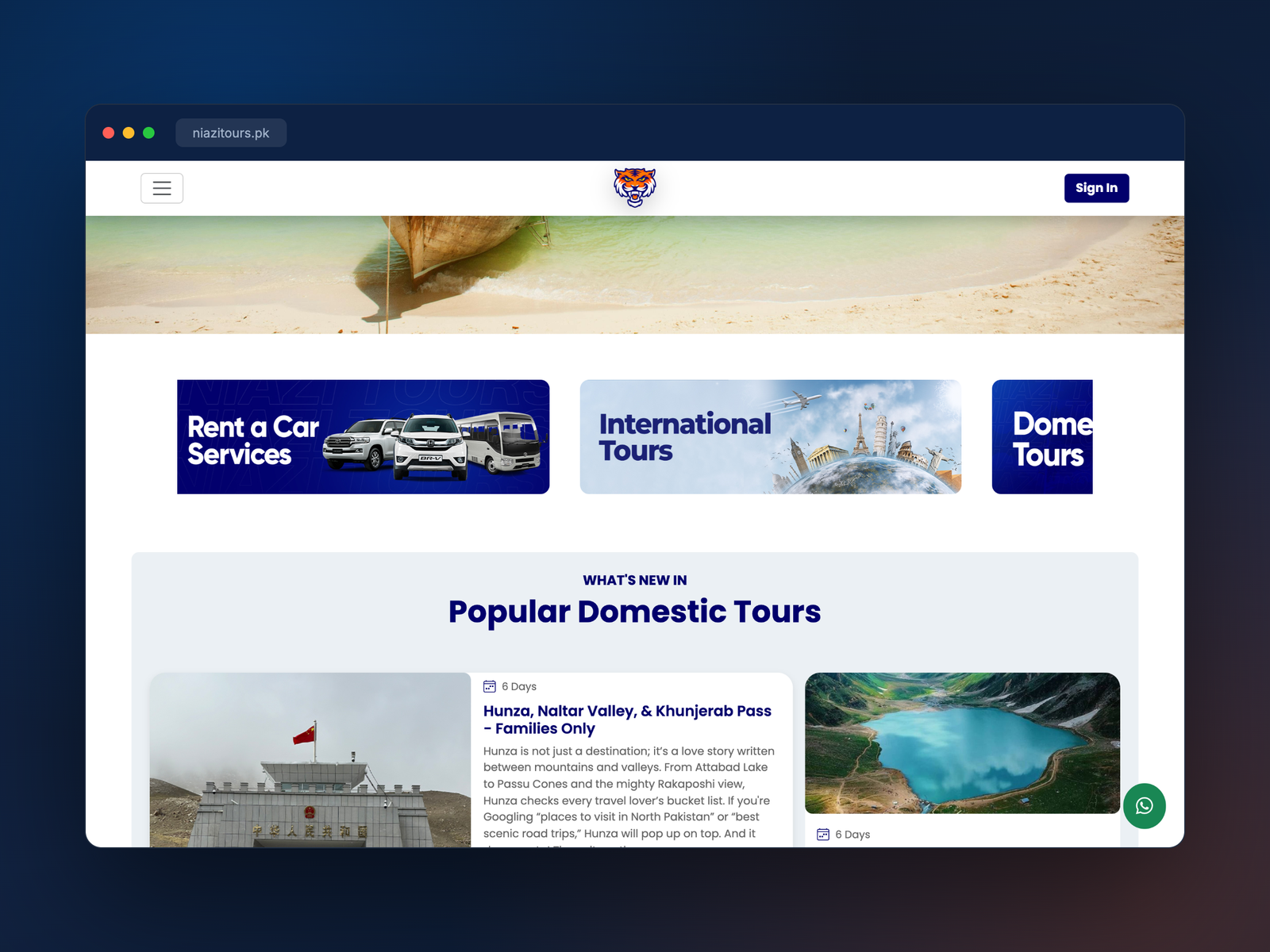
Builds where the search work is in the HTML.
How it runs
You see the price at step two.
Free teardown
Written, inside 48 hours. Specific defects with their locations, ranked by what would move first — not a score.
Fix the technical floor
Usually a fixed-scope piece of work rather than a retainer, because it is finite and it should end.
Then content, if it is worth it
Aimed at queries with intent behind them. Fewer pieces, each one answering something somebody actually typed.
Reported from Search Console
Your property, your data, impressions and clicks — not a third-party visibility index that only we can see.
Money
How we quote search work.
Technical fix, fixed scope
The right first purchase for most sites. A defined list of defects, fixed for one price, with a before-and-after you can verify yourself. It ends rather than renewing.
- ✓Free teardown first
- ✓Specific defects, specific fixes
- ✓No ongoing commitment
Content, monthly
Only once the technical floor is met, because content on an uncrawlable site is money set on fire. Scoped by query rather than by word count.
- ✓Cancel with notice
- ✓Briefed against real queries
- ✓No volume quota
Retainer
Ongoing technical plus content, for sites large enough to need both continuously. Reported against Search Console rather than a tool that estimates.
- ✓Your GSC property
- ✓Impressions and clicks, unedited
- ✓No link-buying, ever
There is no rate card on this site, in any currency, deliberately. What is fixed is the process: free teardown, written scope, one price, agreed before anyone starts.
FAQ
Straight answers.
More from GOFTECH
Where to look next.
SEO for UK Businesses
An SEO agency UK businesses can audit before paying: we read your site free and name the specific defects. Reported from your own Search…
SEO in Pakistan
An SEO agency in Pakistan reporting from Search Console rather than tool estimates: technical repair first, agreed target lists, free audit.
Mobile App Development for US Businesses
A mobile app development company USA businesses can ship with: five published apps, one codebase for both stores, developer accounts in…