Where product builds go wrong
Three failures, and none of them is the feature list.
Products die for structural reasons, and the structure is decided in the first fortnight when it is cheap to change and nobody is looking at it.
Built for one customer, sold to many
The commonest and most expensive mistake. A system built for the first client with their assumptions baked into the schema works beautifully until the second customer needs something slightly different, and then every feature costs twice. Multi-tenancy is not a feature you add in version two — it is a decision about the data model taken in week one. Most of what separates a web app development company USA founders should hire from one they should not is whether that conversation happens before the build or after the second customer.
The admin side is an afterthought
Founders specify the customer-facing screens in detail and leave the operator side as "we'll use the database". Then the product launches, support starts, and somebody is running SQL against production to refund a customer. The admin side is where the business actually runs and it deserves the same design attention as the part the customer sees. Every platform we have shipped has one, and it is usually the part the client ends up living in.
Nobody asked who maintains it in year two
A product is a decade-long commitment made on a three-month budget. If the codebase can only be extended by the people who wrote it, you have bought a dependency rather than an asset — and the day you raise money and hire engineers, they will tell you to rewrite it. Conventional framework, readable schema, no invented abstractions. Boring is the feature.
Adjacent work — read the distinction below
Platforms with roles, tenancy and an operator side.

The distinction we are not going to blur
Everything in the block above is a build for one client. None of it is a subscription product with self-serve signup, plan tiers and recurring billing, and we are not going to describe it as though it were. We have never shipped one. If you want a supplier who can point at a live product they took from zero to paying subscribers, that is a fair requirement and we do not meet it.
What the work above genuinely demonstrates
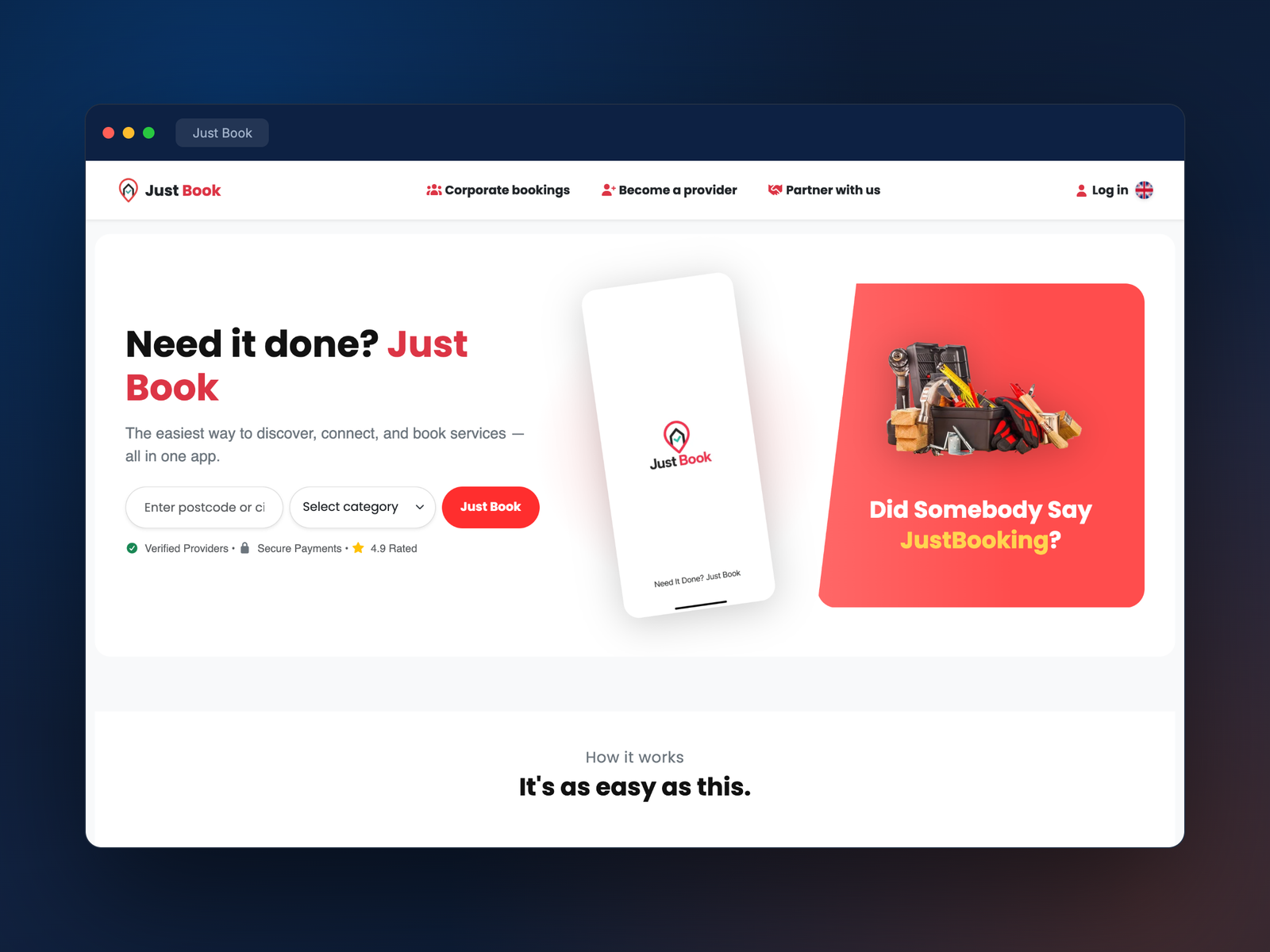
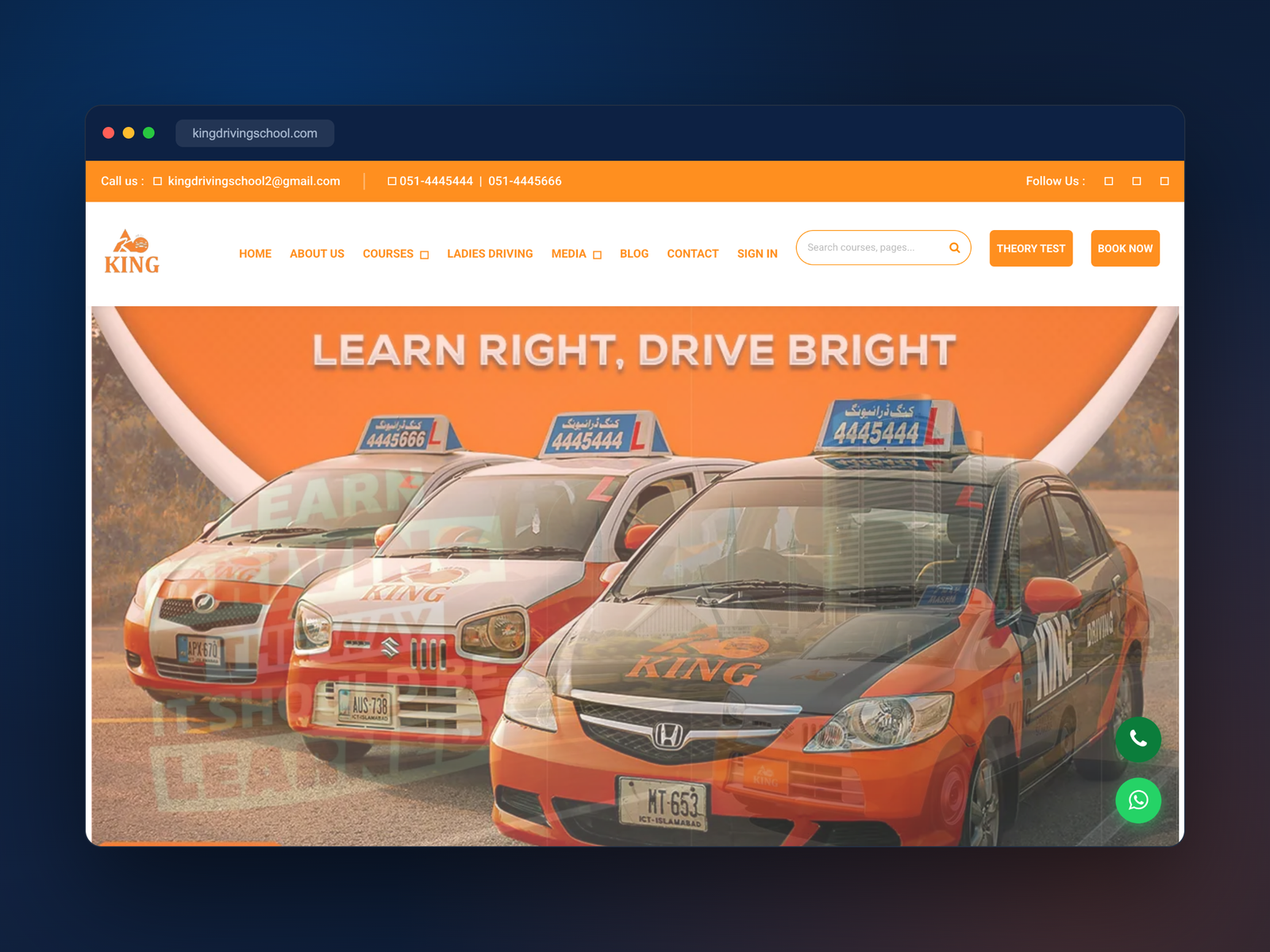
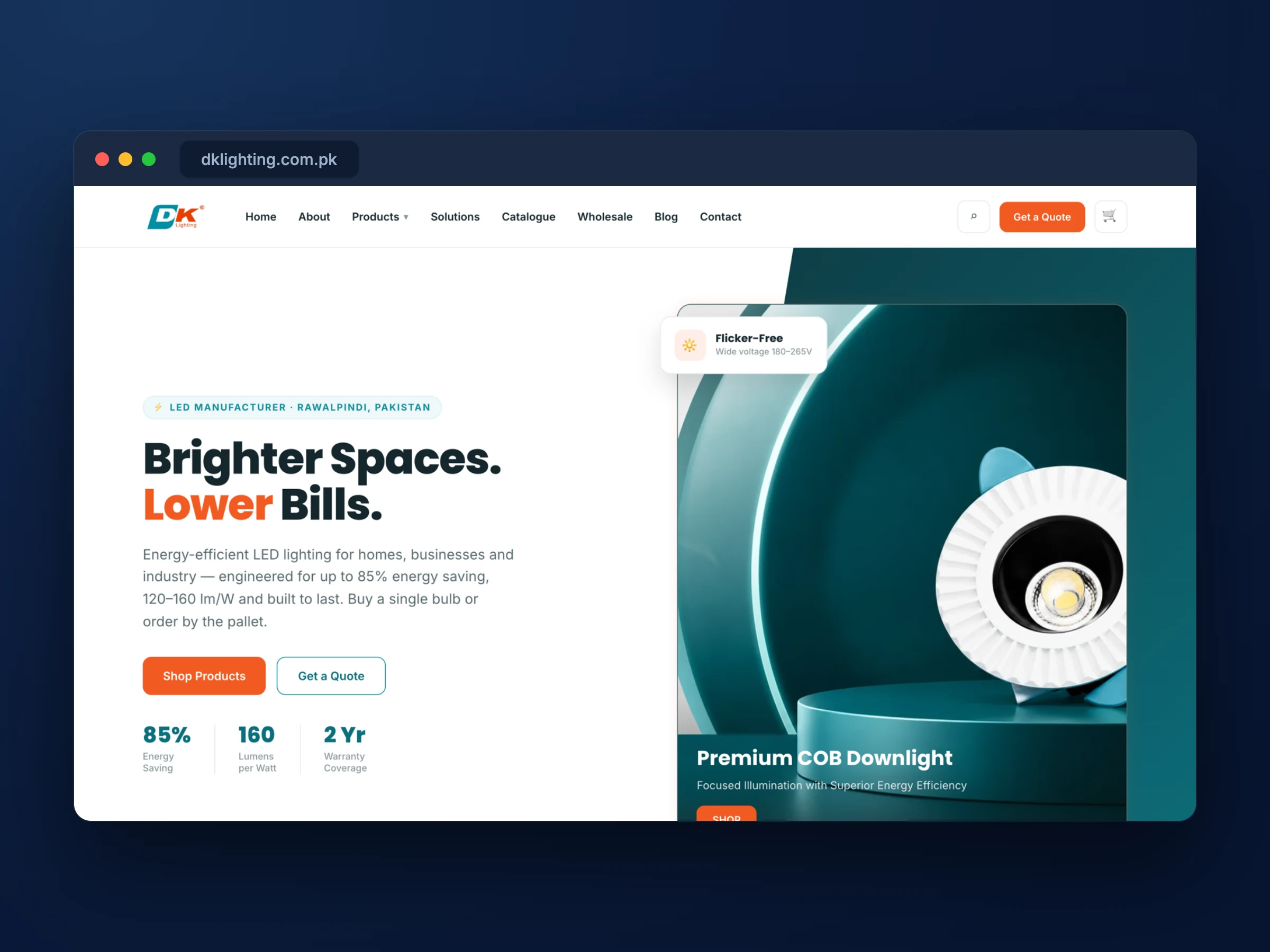
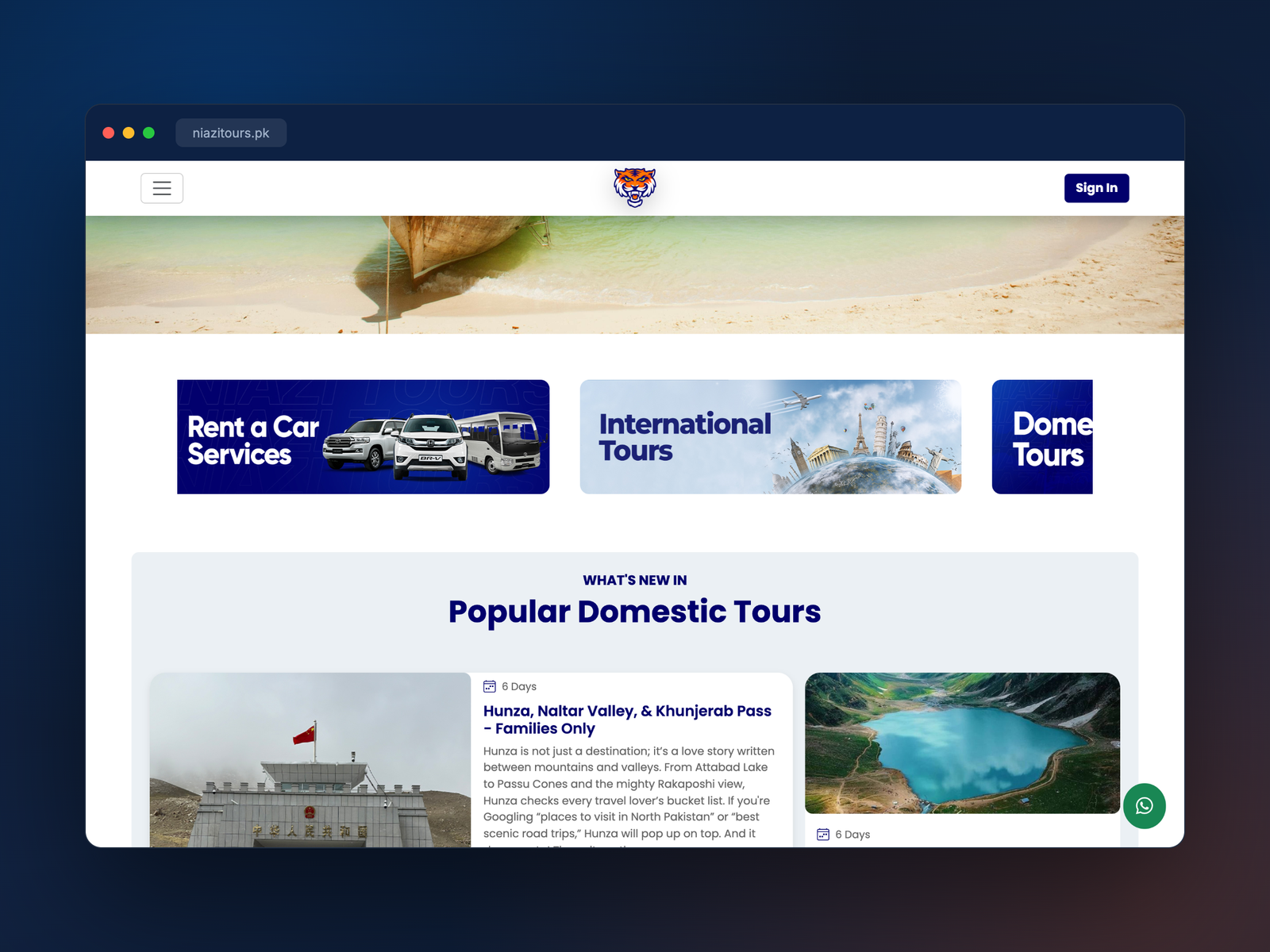
The hard parts of a product build are not the marketing site and the Stripe integration; they are tenancy, roles, permissions and an operator surface that does not require a developer. Just Book is a marketplace with two distinct user sides and an admin over the top, listing more than ten thousand services, delivered across five months. KDS and Niazi are CRMs where staff roles determine what each person can see and do. DK Lighting runs a storefront and a separate admin panel against the same data. Those are the components a product is assembled from, built repeatedly, for clients who are still running them.
What we would insist on before starting
That the first version is embarrassingly small. The failure mode we see most in this category is a founder specifying eighteen months of product and running out of money at month nine with nothing shippable, and the cause is almost always that the scope was set by the pitch deck rather than by the first real user. A first release should do one thing for one kind of user well enough that somebody pays for it. Everything else is version two, and version two should be specified by what the first users actually did rather than by what the plan predicted.
The clock, for a product build specifically
Our working day ends as yours begins, which suits this kind of work better than most. Product development is iterative and asynchronous by nature: you use the build, you write down what is wrong with it, we work a full day on that list overnight and it is there in the morning. Where the zero overlap genuinely hurts is a launch — the day you go live and something breaks at 2pm Eastern, we are asleep. That is a specific risk with a specific answer, which is a support window agreed and paid for rather than assumed, and we would rather scope it in than have you find out on launch day.
How it runs
You see the price at step two.
Teardown
Free, written, inside 48 hours — including an honest read on whether the first version you have described is too big.
Scope and fixed price
Every screen, every role, every integration, and everything explicitly out. Approved before a line is written.
Build overnight
A staging URL from week one. You use it at the end of your day; the next version is waiting at the start of the next.
Launch and hand over
Repository, hosting, domain and every account in your name, with a walkthrough for the engineers you hire next.
Money
How we quote a product build.
First release, fixed scope
One written scope for a version small enough to finish, one price in dollars, inside 48 hours of the discovery call. It moves only when you change the ask.
- ✓Free teardown first
- ✓Every screen and role listed
- ✓Out-of-scope stated explicitly
Phased build
For products too large to specify honestly in one go. Phase one is fixed-scope and shippable alone; later phases are quoted once phase one has real users and you know more than you did.
- ✓Each phase priced separately
- ✓Stop after any phase
- ✓No commitment to phase two
Takeover and recovery
A half-built product or an inherited codebase. Quoted after we have read what is actually there — and we say plainly when continuing beats restarting, even though restarting pays us better.
- ✓Written assessment first
- ✓Continue-or-rebuild answer
- ✓Full credential handover
There is no rate card on this site, in any currency, deliberately. A published figure is either wrong for your product or padded enough to cover all of them. What is fixed is the process: free teardown, written scope, one price, agreed before anyone starts.
FAQ
Straight answers.
Built and run by us
Our own products, in production.
More from GOFTECH
Where to look next.
SaaS & Web App Development for UK Founders
A SaaS development company UK founders can leave: multi-tenant products with roles, permissions and a real admin side. Fixed-scope version…
SaaS Development in Pakistan
A SaaS development company in Pakistan building multi-tenant products: accounts, roles, subscriptions and the admin behind them. Repository…
Custom Software Development for US Operators
Custom software development USA operators can maintain after we leave: booking platforms, CRMs and portals. Seven published builds…